
Going back to university
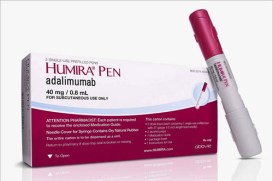
When I finally returned to university in the autumn of 2018, I was so excited to be back. Although most of my friends from first year and my old flatmates had moved off campus, as a “disabled” student I was entitled to remain in a dorm. This meant that I would be living with a whole bunch of new people- perfect for a fresh start. For the first few weeks it was going well; I was eating normally, I had good attendance, I met up with some of my old friends and I was even indulging in the odd night out with my new ones. I was doing my Humira injection every other Friday morning and was getting supplies delivered to my dorm by a drug company. But the patchy symptoms that I began to develop just a couple of weeks before whilst on holiday hadn’t quite warn off. I tried not to be concerned and to just carry on, I was determined that this year would work out. But soon things began to slip from my control again. My appetite was starting to decrease, unlike my loo frequency which seemed to be creeping up once more. I quickly got in touch with my doctors with the aim of catching things before they got any worse, and they referred me for a blood test at my nearest hospital which was about an hour away by bus. When the results came in I was told by my consultant that my inflammation levels had gone up again.
Methotrexate and yet another liquid diet
Knowing how desperate I was to remain at university after last year’s disruption, they told me to increase my adalimumab injections to every week instead of every 2 weeks and prescribed me methotrexate- an immunomodulator originally used in the treatment of cancer. But after a few weeks, things were far worse again and I was back to the misery of being unable to leave my dorm room (I had my own private en suite and bedroom, but I shared a kitchen with about 10 flatmates). I have never been too open about my health, especially with new people, but it was pretty obvious to my flatmates that something was up after I went from my bubbly, chatty self to a complete no-show for over a week and a half. And soon I was so desperate that I had to tell someone, and a couple of my new flatmates really helped me get through. They would bring me things and check up on me- one of them even left the library to run to the pharmacy and sort out an urgent prescription!
Noticing my ridiculously low attendance, my personal tutor, who had previously helped me when my health had declined, got in touch and began suggesting that I take some time out of university. This time it would be 12 months withdrawal to try and improve my health and I would then tackle university again when I was more ready. But, being a notoriously stubborn individual, I was convinced that I could save this. I was willing to do anything. So, I got myself back on the liquid diet. Sure, this meant frequent trips to the university pharmacy, which I left wheeling a suspiciously large suitcase filled with endless bottles of Fresubin. It also meant that some of my other flatmates thought I was slightly weird for not eating anything, but I thought that this was my best chance.
But even with the liquid diet, I was missing so many classes that it got to the point where I was almost too nervous to go back as I was so behind. I wasn’t sleeping at all, so I tried to spend my nights catching up on all the work I’d missed from weeks before, but it was a futile battle and worrying about course work was only making me more unwell. I then started having the occasional “episode” where I passed out from exhaustion and dehydration. Throughout all this I was having weekly blood tests and my doctors soon confirmed that adalimumab was not working and that, in actual fact, it probably never had. The issue was that I’d been on the liquid diet since starting the adalimumab and because the liquid diet had a soothing effect on my digestive system, they had wrongly assumed that the drug was working when in reality it was having next to no effect. That meant that as soon as I started eating again upon returning to university, my symptoms got far worse as I no longer had the crutch of the Fresubin to numb them.
Leaving university
So, in December, after almost 2 months of struggling, I finally had to give in and make the decision to leave university (not that it was much of a decision by then). I would take a retrospective withdrawal for 12 months and re-start my second year in 2019. I still stayed in my dorm room until we broke up for Christmas, but at least as the decision to withdraw had already been made, I no longer needed to stress about anything. I simply spent my last few weeks resting and chatting with my friends and flatmates, having eventually explained to all of them the most part of what was going on. And after some hard goodbyes, I left university on the 16th December.
Now again in discussion with my doctors about what on earth to do next, it became apparent that my options were starting to look rather slim. I was offered two pathways. The first was to try a drug called Ustekinumab, another biologic but one which worked in a different manner to the ones I had previously tried. The other was to try and get enrolled in a clinical trial for a drug called Risankizumab, a process of receiving treatment that I had never considered before. I was incredibly confused about what to do, with both options having a lengthy list of pros and cons. If I opted for the Ustekinumab, I could start it much sooner and, as it was already approved for open label use, my doctors could easily monitor it. Risankizumab, on the other hand, had not yet been legalised and so, I would have to spend several months “screening” to enter the trial and the study was double-blind i.e. neither I, nor my doctors, would know if I was actually receiving the drug or just a placebo! Although that didn’t sound attractive at all, the early results for Risankizumab were far more promising than those for Ustekinumab and, given my lack of luck so far on the biologic front, maybe I needed something different. But I knew it would be the toughest thing I had ever done. Being on an exclusive liquid diet wasn’t allowed in the study and I knew that my symptoms would get MILES worse than they already were over a long period of time. But I also knew that if I opted for Ustekinumab and it failed, I would no longer be eligible for the trial! I had just under a year to fix all this so I could go back to university in 2019. So much to think about…
But after much deliberation and several meetings with the study team, I was persuaded to enter the trial. That may have been the point where I officially went mad.
Looking back
My experience with adalimumab taught me one of the most important lessons I could learn about Crohn’s: try not to overlap treatments. Because I was on a liquid diet when I started the drug, there were too many intervening variables. In other words, it was virtually impossible to clearly see the effects of the drug because the liquid diet itself was improving my symptoms. I know its difficult as many of the drugs used in IBD can take weeks, if not months, to show an effect and if your symptoms are particularly bad, it may not seem like a good idea to leave you untreated in the meantime. But just be wary of the role that things like steroids or a liquid diet may be having and be careful that your and your hospital’s judgement about a drug’s effectiveness isn’t clouded by other factors.
Another important message I took from this period of my life came from my decision to leave university. Sending my withdrawal application was still one of the hardest things I’ve ever had to do. I felt like my disease was winning and I was losing my new independent lifestyle, my friends and my degree. But sometimes rather than being stubborn, its important to realise that your health has to come first. And sitting here now knowing what happened next, boy am I glad that I was responsible enough to leave when I did. Still, coming to terms with the fact that my illness means that I may be living my life at a slightly different pace to other people my age is incredibly difficult. I just have to keep reminding myself that there are no rules about at which age you should achieve a certain thing. People can get degrees at any stage in their life, everyone is different. Sometimes the best thing you can do for yourself is take some time out, whether that be from education or work, and figure things out with your health. There is nothing worse than stress on top of a flare up and at the end of the day, your wellbeing is what matters most. After all, my university wasn’t going anywhere and, even though the people I met were moving on with their lives, my true friends stayed by my side. I may not graduate alongside my first-year friends as I had originally planned, but that’s okay. I’ll do it in my own time, I’ll get there eventually and I’ll make lots of new friends along the way too.
 Me and My Crohn's