
Ustekinumab
After my nightmare stay in hospital, I was finally feeling hopeful that Ustekinumab may be the drug I’d been looking for. Nothing is ever quick however, so I spent the first few weeks back at home just getting by, waiting for the day that I would wake up and feel something other than terrible. And after about 4 weeks, that day finally came. I had been keeping track of the amount of times I’d been to the toilet for several months- that was always key in determining how bad things were, and it had decreased slowly until one day I realised that I wasn’t in anywhere near as much pain and I’d only been to the loo twice! I was over the moon, after months of the worst flare up I’d had since being diagnosed, I thought I was finally out of the woods. That week I enjoyed all the home cooked food I’d long been craving but couldn’t manage to eat, and I indulged in my first uninterrupted lie-in for months.
But my relief was short lived. After merely a few days, I started to notice things slipping backwards again. I tried not to panic or jump to conclusions. Maybe it was just a blip? Maybe it was something I ate? But things weren’t sorting themselves out and after a few more days I quickly decided that, rather than let my symptoms go back to rock bottom, I would salvage the situation by putting myself back on Fresubin as I still had a quite a bit left over in my garage from before. At first I tried to balance a couple of doses of Fresubin with some food, hoping this would be enough to keep my symptoms at a stable level. But with more decline I decided to stop eating again and go back on an exclusive liquid diet. What had happened? I thought the Ustekinumab was starting to work?
Anaemia and abscesses
Then my doctors decided that my anaemia was probably contributing to how ill I was feeling again, and they told me to try some iron tablets, seeing as iron infusions clearly aren’t for me! But apparently iron tablets aren’t for me either, as a couple of days after starting them I went from 3 vaguely solid bowel movements a day to about 5 completely liquid ones and, without trying to be too graphic, the blackness of the stool clearly proved the iron was the culprit. My doctors told me to stop taking the iron which did clear things up a little, but I was still far from feeling fantastic. Since my surgery I had still found it uncomfortable to sit down. The major lump that was initially preventing me from sitting had gone, but things were still very sore, and putting pressure on the area obviously made it worse. I put this down to the fact that I now had an open wound which also wasn’t overly comfortable. I decided to invest in something to help me out: the humble donut cushion. It proved incredibly useful and I spent most of my days sitting on the cushion for support. It wasn’t until I tried to take a quick trip to the doctor’s surgery in my mum’s car without the cushion that I noticed that I couldn’t sit down again at all. It had definitely gotten worse; I just hadn’t noticed because I’d spent all day every day sitting on the cushion! By this time, it was May and I was due my second dose of Ustekinumab; the dose that would essentially decide if I were to stick with it or if it was ineffective. When we got to the hospital, I explained that I couldn’t sit down again and that I feared the abscess had come back, or that I had a new one- not that any explanation was needed as it didn’t take long for the nurse to notice my incredibly awkward sitting position on the infusion chair! She called the IBD registrar to take a look and informed me that if I had another suspected abscess, I may not be able to have the second dose of Ustekinumab.
I explained my previous surgery and my symptoms to the registrar i.e. I couldn’t sit down because it felt like I was sitting on a golf ball and I kept getting a downward rushing sensation in that area. He said that he couldn’t feel anything and that it was probably just the remanence of the last abscess or that I simply hadn’t got used to the seton yet; exactly the response I got from my consultant when I emailed her before the appointment. I was unconvinced. I told him that these symptoms were similar to what I experienced before the surgery and that they had gotten a lot worse recently. I asked if I could have another pelvic MRI to see if anything was wrong- I did not want to leave it to develop even more just because no one would believe me! He agreed to refer me and after some deliberation, it was decided that I would get the second dose of Ustekinumab anyway. It was unclear whether the drug caused abscesses or whether it could actually help them, but all we knew was that this was the first time I had responded to anything for months. Even though it was only for a pathetic 7 odd days, it was something, and I didn’t want to ruin the drug induction by not receiving the second dose when I should have. Some people only fully respond after two doses and I wanted to give Ustekinumab every chance of working.
MRI scan
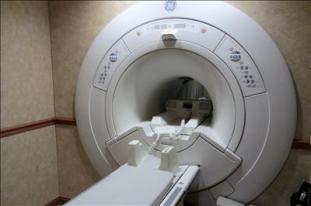
About a week later I received an appointment for the MRI I’d requested: the 6th June. It wasn’t at my usual hospital, but that was the only way I could get one soon enough. That was definitely the most uncomfortable MRI scan I’ve ever had. It was done in a mobile unit in a hospital car park and it was FREEZING! You only wear a paper-thin hospital gown for the scan and the unit was like a refrigerator, which subsequently meant that the few tiny traces of veins I had went into hibernation and it took over half an hour to get my canula fitted. The machine was also the tiniest one I’d ever seen- lucky I was still pretty underweight from my flare up! But all that aside, I got the scan done (eventually) and soon I heard the results. My suspicions were correct; I had now had an even bigger abscess than I’d started out with and a series of incredibly complex fistulae all over the place. I was told that I needed urgent surgery and that a seton probably wouldn’t cut it this time (if you pardon the pun). I was immediately put back on antibiotics to prevent septicaemia, but this meant that I had to stop the liquid diet again, as the combination of both always made me sick. My symptoms rapidly declined to rock bottom again, it was clear that the Ustekinumab had failed me. Because of this, I now had to resort back to starving myself for several days before going to my pre-assessment at the hospital, and before going up to London again for the surgery which was scheduled on the 28th June.
Surgery take two
I was given a morning appointment, which meant that I had to get up at around 4am to make it to the hospital before 7 am when the department opened. After about an hour I was called to be pre-assessed and spoken to by an anaesthetist. By now I was in so much pain and discomfort that I didn’t even care about being seen in public with a giant donut cushion. I did get many strange stares and even the nurse doing my blood test and another doing my pre-assessment both quizzed me about why I was carrying it- even though the latter had paperwork in front of her telling her why I was there! I will never understand how people can be so ignorant. Anyway, after another hour or so I was called through for the last time, so I said my goodbyes, left my mum with my luggage and went through to the patient changing area. I was told that there were only a couple of people before me and that their operations would only take about 30 minutes, so I expected to be waiting for no longer than an hour or so. But time went on and on and on, and I was still sitting there. Trying not to look impatient, I waited for 3 hours before asking what was going on, only to be told that the admin staff had no idea who I was or what I was waiting for! It took the nurse about another hour to even find my file and then she told me she would get back to me. By this time, I had been waiting alone in my hospital gown for over 4 and a half hours. I had seen other people come and go; a couple of people had even been called through to get changed, had their surgery, gone to recovery, come back, got changed and gone home- and I was still waiting to be called! Eventually I was told that they were still expecting me but that there had been some kind of “issue”. No one could tell me what was going on, so I just had to sit and wait. Luckily I still had my phone- not that it was much use as there is never any signal in the hospital. I wondered round for a bit seeking just one bar so I could phone my mum and tell her that I hadn’t even gone in for surgery yet as she’d expected to have met me in recovery by now! All the while I obviously wasn’t supposed to eat or drink anything, but because they kept me waiting for so long and I was already so dehydrated, the nurse had to give me literally a thimble of water every hour to keep me going. Finally, at about 5:30pm, the surgeon came to get me after a staggering 10 and a half hours in the department. He still didn’t tell me what had actually happened, he just told me that they weren’t sure if they’d actually be able to see me in the end. What a joke, I thought! It’s just as well they did, for their sake!
I wasn’t sure what they would do in the surgery, I only knew that it was far more serious than before and clearly the original seton hadn’t kept the perianal disease at bay. I asked if I would have the fistula tracks laid open as this was the only other main treatment for fistulas that I knew of, but I was told that that probably wouldn’t be possible given the position of the tracks. They ran all between the sphincter muscles which control your bowel movements and if they were to be cut, I could become incontinent- just about the final straw in my disease at this point and something I obviously needed to avoid at all costs.
I woke up in the recovery room just like before; still out of it and not registering the pain because I was on morphine. Later on, I was taken up to the surgical ward that I would be staying on for goodness knows how long and after some time I was reunited with my mum and my dad came over after work. Even though I didn’t have full feeling in that area, I knew that something quite drastic had been done given the amount of padding all over my bum! Naturally, as a Crohn’s patient, my first fear was that I would need the toilet immediately and that I wouldn’t be able to go with all that stuff attached to me! But the nurse assured me that despite how severe my symptoms were before my surgery, the anaesthetic would “put my gut to sleep” and I shouldn’t need to go for a bit. I basically just went straight to bed that day, hoping that when I woke up I wouldn’t feel as bad as I feared and having absolutely no clue what was next for me in terms of treatment after Ustekinumab. I had taken a gamble opting for that instead of re-starting the Risankinumab trial and it hadn’t paid off.
Looking back
Firstly, I just want to highlight how important it is to be heard when it comes to your health. As I’ve said before, no one knows your body better than you. Don’t let your instinct get pushed aside or your voice be silenced, make it known if you think something is wrong and don’t take no for an answer. If I hadn’t requested that MRI scan, I would have ended up in a much worse state. Even if you aren’t 100% sure that there is anything drastically wrong, if it will give you peace of mind, asking for an appointment or scan is well worth it.
Secondly, this experience really taught me a thing or two about being patient. I’ve done my fair share of waiting throughout my Crohn’s journey- and not just for test results or for treatments to work. Once in paediatrics, the receptionist lost my notes after signing me in. The clinic was closing and they still hadn’t called me. We had been waiting for hours and they were literally turning the lights off with us still sitting there! With anything medical you have to be patient; I’ve learnt that the hard way. All you can do is bring with you something to do or read and occasionally check up with someone in the know just to make sure they are aware of who you are and what you’re waiting for.
Lastly, my experience with Ustekinumab is probably one of the most bizarre of all the drugs I’ve ever been on. In the past I have either responded well to something initially, or simply not at all- there was never much in between. So, the fact that the drug seemed to work for a single week and then stop was weird even by my standards! It just shows that literally anything can happen, so never jump to conclusions about a treatment. But more importantly, as hard as it is, try not to think “what if…?” When I realised that Ustekinumab wasn’t working, I instantly thought: “I should have re-started the Risankinumab trial. Why didn’t I do that instead!” But I couldn’t possibly have predicted whether or not Ustekinumab would work, nor could I have known whether Risankinumab would have worked any better. Perhaps that would have failed as well. The point is, sometimes you have to make decisions, tough decisions. Although it’s natural to wonder about the other potential pathways you could have taken, try not to get caught up in regret- especially seeing as when it comes to health, there usually isn’t a “right” decision and a “wrong” decision. Embrace what you decided to do, accept that you can’t change that and realise that you’ll never know how the other option may or may not have panned out, so there really is little point in fretting over it.
 Me and My Crohn's