
If you have IBD, chances are at some point you will be prescribed a biologic. Now, some of these biologics are given intravenously, whilst others are given sub-cutaneously. I’m not going to ramble on too much about what biologics are or how they work, so if you would like to read more about that, then read my previous post about biologics and biosimilars. The purpose of this post is to familiarise you with the different methods of administering biologics and give you an idea of what to expect.
So, let’s crack on with the first method: intravenous (IV). If you are prescribed a biologic such as Infliximab or Ustekinumab, you can expect this to be administered through an IV, or a drip. You’ll be given an appointment at your primary hospital and when you arrive you will be weighed and asked some basic questions including if you’ve recently had a fever, and how you’re feeling that day etc. This isn’t just for their records; they need to be sure of a few things. Firstly, your weight will likely determine the dosage of the drug you receive. Secondly, the nurse needs to be satisfied that it is safe to give you the biologic and that you don’t have any infections which could potentially be aggravated by receiving the infusion. So, if you’ve been feeling any different to usual or a bit under the weather, let your nurse know. But assuming that’s all fine and you get the green light for the infusion, you’ll then be asked to take a seat in a big, fancy infusion chair with an IV rig. You may then get some blood tests taken if necessary and you’ll be fitted with a cannula.
Once you’re ready to go, your nurse will bring in a clear bag containing the prescribed biologic at the correct dose and connect it to your cannula. When you’re just starting out with biologic infusions, the rate (the speed at which the drug is given) will be much slower and the nurses will be more vigilant to ensure that you don’t have any adverse reactions. I believe my first Infliximab infusion lasted for around 2 hours and I was then observed for at least another hour after the infusion had ended. But once you’re a dab hand at receiving infusions and you’re passed the initial phase of worrying about a reaction occurring, the rate of the infusion can be increased to around 30 minutes regardless of whether you’re on a single or a double dose.
Getting your first infusion may be a bit daunting, and not just because of the fact that you’re starting a new unknown drug. I was 15 when I started my first biologic, and for me it symbolised my transition into the much heftier side of treatment for Crohn’s. I was becoming more and more aware that with every treatment I took that didn’t work, I was getting closer to the end of the treatment road. On the day of my first infusion this revelation hit me like a ton of bricks, and I remember being quite emotional. But looking back in 2020 after everything I’ve been through, I’m still here and I’ve gone through so many treatments and surgeries that starting Infliximab seems insignificant to me now. But I guess that’s the way life works- at the time everything seems scary and enormous, but once you get passed it and move onto the next scary and enormous thing, the previous one suddenly seems like nothing! I just want anyone who is nervous about starting a biologic to know that it does get easier. In fact, by my second infusion, having realised that the drug wasn’t going to kill me and that things weren’t suddenly going to be really different in the short term, I had accepted that this was my new normal and that things would be okay. After that, I just turned up to my hospital every 8 weeks and got to know the nurses and some of the other patients and filled the time reading or chatting. So, trust me, you’ll adapt to the infusion process quickly!
You may well start out like I did with infusions, but you may equally be prescribed a sub-cutaneous injection as your first biologic, the most common one being Adalimumab. I was so used to infusions when I started Humira in 2018 and, although I was more than used to needles at this point, I had never injected myself before. I was told that I would get some kind of “training”, but when I arrived at the hospital for my first dose, I discovered that this “training” was basically just the nurse doing one injection with me watching, and then me doing the other three. Initially I was sceptical as to whether I would know what I was doing after watching one injection, but it really was much simpler than I anticipated. For any self-injection newbies, here is the basic step by step method for using a Hymiroz pre-filled pen:
- Take your injection out of the fridge about 20 minutes before you plan to use it (this makes it slightly less painful!)
- Wash your hands and make sure you have everything you need: your injection, an alcohol wipe, a yellow toxic waste bin and a small hypoallergenic plaster.
- Sit on the edge of a chair or bed and pull you trousers/ top out of the way- you’ll either be injecting your abdomen or your thigh, I prefer my thigh.
- Choose a site where there is enough flesh and no obvious veins and clean it with the alcohol wipe.
- While the site is drying, you need to check that your injection is suitable to use. 1) Check that the drug is actually Hymiroz/ Humira (or whatever biologic you were expecting)! 2) Check that the dose is correct and that it is within its use-by date. 3) Finally, gently turn the injection upside down and check that the fluid inside in clear with an air bubble floating about.
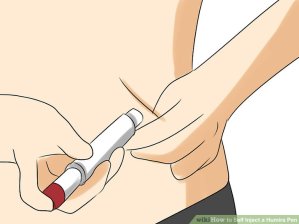
- Once you’ve done these basic checks, you want to pinch around the site you’ve chosen with your weaker hand (not the hand you write with/ want to hold the pen with!) I usually pinch my skin between my thumb and my other fingers so that there is a “pillow” of flesh (if you will!) about 4-5cm wide.
- Gently remove the cap from the injection and place it firmly against the injection site. When you’re ready, push down firmly and you should hear a click and see the drug being dispensed. Once the drug has been completely administered you should hear a second click. Now just carefully pull the pen away from the site.
- Place the cap loosely back onto the pen and dispose in your yellow bin.
- I now just give the site a clean with the alcohol wipe in case there’s any blood and stick a small plaster on it, that way if there’s any on-site reaction (a bruise/ rash etc.), I can monitor it over the next day- but usually there isn’t anything to look out for.
Note: If you’re using a Humira pen as opposed to a Hymiroz pen, the process is very similar, but the mechanism of the pen works slightly differently. Instead of firmly pressing the pen against your skin to start the injection, you just have to push the button at the end of the pen and then release after about 10 seconds. If you’re using a syringe and not a pen, the process will be slightly different again, but consult your nurse for more information about using this method of administering the drug.
In terms of pain, it’s really not that bad. I mean, it hurts as much as any injection, but you get used to it! Once I’d done my first two in the hospital I felt pretty confident in doing it myself at home (usually there are 4 pens as a loading dose, then 2 a couple of weeks later, then one every other week as a maintenance dose). That said, I did meet a man in hospital who was in his late 30’s and despite what he’d been through, he still professed to be scared of needles and couldn’t handle injecting himself. So, he went to the hospital every 2 weeks to get his injections done by a licensed nurse. And honestly that’s totally fine! Whatever you feel comfortable doing is what’s best. But personally, I felt fine about self-injecting- plus I didn’t really want to be travelling all the way to London every 2 weeks just for a 30 second injection! Doing it yourself really does save a lot of time and hassle on your part, so I would advise you to at least give it a try once to see if you can do it.
As for receiving the drug, if you’re having infusions you obviously won’t need to think about his, but for self-injecting at home, your hospital should set you up with a company like Healthcare at Home (HaH) who will then deliver your drugs discreetly to your doorstep. You don’t even need to place an order; they will keep track of how many injections you’ve used and when you’ll need more, and they should be in touch with your hospital in case your dose changes. They’ll also exchange your yellow bin every few visits and you should receive alcohol wipes, a DVD tutorial refreshing your memory about self-injecting and even some cute calendar stickers to remind you when to do your injections along with the biologics. They’ll give you a ring to book a delivery date when necessary and then a couple of days beforehand they’ll text you to inform you of your 3-hour time slot. Once they’ve been delivered, they need to be put straight into the fridge between 2-8 degrees until you use them- for this reason you have to be at home yourself to receive the delivery or pre-arrange to nominate someone else to receive the drugs for you. It really is as simple as that! Starting a biologic may seem a bit scary at first, but it quickly becomes routine and familiar, so try not to worry too much if you’re a newbie!
 Me and My Crohn's