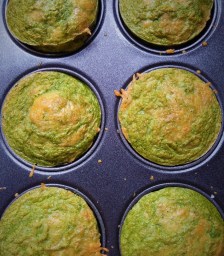
Green Frittata Cups.

IMG_20200702_1816262

These simple and yummy frittata cups are a great high-protein snack on the go, and the best part is that they’re totally customisable for most diets. These ones are naturally dairy free, and you can easily make them vegetarian by replacing the chicken with alternative protein sources or more veggies.

Time:

Preparation: 10 minutes

Cooking: 30 minutes

Total= 40 minutes (+ cooling)

Serves: 3 (makes 6-8 cups)

Ingredients:

50 g x petit pois

100 g x frozen spinach

4 x medium eggs

40 g x dairy free cheddar cheese

120ml x soya milk

3 x slices roast/ precooked chicken

Dairy free butter (to grease the tin)

Salt and pepper to taste


Instructions:

  1. Preheat the oven to 170 degrees, or about 160 degrees if using a fan oven.
  2. Boil the spinach for 2 minutes, drain and leave to cool. Meanwhile, cook the petit pois for 4-5 minutes, drain and set aside.
  3. Grate the cheese into a bowl and cut the roast chicken into small cubes.
  4. Place the eggs, milk and cooled spinach into a blender and pulse until well combined and no large chunks of spinach remain.
  5. Add most of the cheese and season with salt and pepper. Pulse gently until combined.
  6. Grease a muffin tin with butter and kitchen paper.
  7. Place a teaspoon or so of petit pois and diced chicken into each section of the muffin tin.
  8. Carefully pour the egg spinach mixture over the chicken and peas until each muffin cup is full.
  9. Sprinkle the remaining cheese on top of each muffin.
  10. Carefully transfer the muffin tray onto the middle shelf of the oven and bake for 20-25 minutes until golden and cooked through, or until a skewer comes out clean.
  11. Leave the muffins to cool in the tin for about 10 minutes before serving alongside salad, potatoes or whatever else you fancy!


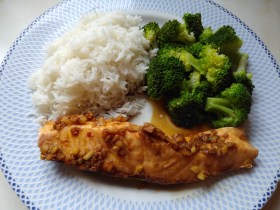
Soy Ginger Steamed Salmon, Basmati and Broccoli.

IMG_20200704_180828

This tasty Asian dish is a staple on my meal plan. It’s suitable for both Crohn’s sufferers and ileostomates, plus it tastes better than any Chinese takeaway I can remember eating! It’s also ready in under 25 minutes. I consider the dressing a healthier, less sugar-laden alternative to teriyaki sauce, but it’s equally delicious.

Time:

Preparation: 10 minutes

Cooking: 12 minutes

Total= 22 minutes

Serves: 1

Ingredients:

1 x boneless salmon fillet

60 g x Basmati rice

1 x cup broccoli florets

1 x teaspoon toasted sesame oil

2 x teaspoons soy sauce

1 x teaspoon finely cubed fresh ginger

1 x large crushed garlic clove

1 x pinch cinnamon

1 x handful finely shredded spring onion for garnish (if you’re an ostomate like me, just leave this off)


Instructions:

  1. Weigh and rinse the rice under a cool tap to get rid of the excess starch, place into a large saucepan.
  2. Chop about 1 cup’s worth of broccoli and place into a separate saucepan.
  3. Peel and finely dice an inch-sized piece of fresh ginger and place into a small mixing bowl. Crush the garlic in with the ginger.
  4. Add the sesame oil, soy sauce and cinnamon and combine well.
  5. Place the salmon fillet onto a bed of tin foil inside a single-tier bamboo steamer. If you don’t have a bamboo steamer, you could use a metal steamer basket, or just bake the salmon in the oven instead using a similar set up (see below for adaption).
  6. Pour the dressing over the salmon, making sure to distribute the ginger and garlic pieces evenly.
  7. Boil some water and put the rice on a gentle simmer to cook for 10 minutes.
  8. With about 8 minutes to go on the rice, boil the broccoli and then cook at a steady simmer.
  9. Now place the bamboo steamer lid firmly over the salmon and place the whole steamer in a wok/ wide-based saucepan.
  10. Pour enough boiling water into the base of the work so that the water level is about 1 cm above the base of the steamer. Keep the heat on low-medium, you should see little bubbles forming in the water around the base of the steamer and gentle steam coming from the steamer lid.
  11. Cook the salmon at a steady temperature without removing the steamer lid for about 8 minutes. If the water level gets too low (i.e. you can no longer see any water), pour more boiling water into the base of the wok as needed, just be careful not to pour in more than 1-2 centimetres as you might drown the salmon!
  12. At the end of the 8 minutes, drain the rice and broccoli. Remove the steamer lid and use a fork to check that the salmon is cooked. It should be light pink, flaky, and tender, and the ginger/ garlic pieces should have softened.
  13. Serve on a warm plate and pour the remaining dressing over the salmon.


Recipe adaption: If you don’t have a steamer, you can bake the salmon in the oven in a foil parcel on a tray. Use the same instructions above to make the dressing, pour it over the salmon and wrap in foil. Bake for about 18 minutes at 180 degrees, or until flaky and tender.


Quick Banana Oatmeal Pancakes.


IMG_20200606_084119

These quick, yummy pancakes are a great weekend breakfast treat. They are light, but also quite filling, so you won’t be reaching for snacks mid-morning!

Time:

Preparation: 5 minutes

Cook: 6 minutes per batch

Total= around 15 minutes

Serves: 1 (4 small/ 2 medium pancakes)

Ingredients:

1 x large banana

30 g x rolled oats

1 x medium egg

1 x teaspoon olive oil

1 tsp x maple syrup

1 x tsp cinnamon

Instructions:

  1. In a medium-sized bowl, mash the banana well with a fork (or 3/4 of the banana if you want some slices for decor).
  2. Next, beat the egg and banana together until slightly bubbly.
  3. Stir in the oats to combine.
  4. Using a pastry brush (or kitchen paper if you don’t have one), spread a thin layer of the oil onto a medium based non-stick frying pan.
  5. Heat the pan on low-medium heat. Ladle a small amount of batter into the pan and spread to a medium thickness pancake round. Depending on the side of your pan, you may want to do 2 batches, re-oiling the pan in between.
  6. Fry the pancakes for about 3 minutes a side, or until golden brown. Then, gently flip each pancake and cook for another 2-3 minutes before transferring to a serving plate. WARNING: These pancakes are delicate, so you need to be careful when flipping. I recommend using two small fish slices/ spatulas to keep them in one piece!
  7. Cook another batch if necessary until all the batter is cooked.
  8. Top with extra banana, maple syrup, cinnamon, or even peanut/ almond butter as desired.

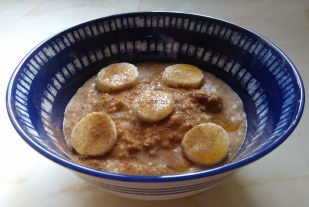
Banana Almond Porridge.

IMG_20200616_073858

This has become one of my favourite breakfasts. Its creamy, nutty and delicious on a chilly morning! Plus, it only takes a little over 5 minutes to cook, and it suits my ostomy well.

Time:

Preparation: 3 minutes

Cook: 5 minutes

Total= 8 minutes

Serves: 1

Ingredients:

1 x medium banana

250 ml x dairy-free milk (I like almond milk)

1/2 cup (50 g) x rolled oats

1 x teaspoon organic smooth almond butter

1 x teaspoon cinnamon

Maple syrup to serve, if desired


Instructions:

  1. Place the oats and milk into a medium-sized non-stick saucepan.
  2. Peel and roughly slice the banana width ways, and then length ways to get small half-moon chunks.
  3. Add the banana chunks into the saucepan (leave a few chunks for decor if you want to be pedantic!) and cook over a medium heat until bubbling- about 2 minutes. Once the mixture has boiled, turn down the heat and cook gently for another 3 minutes, stirring occasionally.
  4. At this point, the porridge should have a smooth, creamy texture and the banana should have gone soft and somewhat melted into the mixture.
  5. Add the almond butter and cinnamon and mix well on a low heat to combine.
  6. Serve with the remaining banana, extra cinnamon, or maple syrup if desired, and enjoy!


I Completed My 5K Walk It For CCUK!

Just a quick post today to share with you all that I managed to successfully complete my CCUK Walk It challenge last weekend! I walked a little over 6 kilometres in the countryside near where I live- so don’t worry, I respected social distancing measures, I only saw one other person walking their dog! This was the first real exercise I had done since my major surgeries at the end of last year, and although my legs were aching the following day, it was so worth it. The circuit took me around 90 minutes, but I took my time and stopped for some photos at the end. Shout out to all of my incredible sponsors who helped my sister and I collectively raise over £400 – and the donations are still coming! This is a great cause and I would like to thank CCUK for all their hard work for IBD patients nationwide, and Real Buzz for hosting the event virtually given these difficult circumstances. If you want to get involved and take part in a virtual challenge for charity, take a look at the Real Buzz site and get started. Happy fundraising! 🙂

my-walk-it-5k-private-event medal


Biologics: Infusions VS Self-Injecting.

aid4097646-v4-728px-Self-Inject-a-Humira-Pen-Step-4

If you have IBD, chances are at some point you will be prescribed a biologic. Now, some of these biologics are given intravenously, whilst others are given sub-cutaneously. I’m not going to ramble on too much about what biologics are or how they work, so if you would like to read more about that, then read my previous post about biologics and biosimilars. The purpose of this post is to familiarise you with the different methods of administering biologics and give you an idea of what to expect.

So, let’s crack on with the first method: intravenous (IV). If you are prescribed a biologic such as Infliximab or Ustekinumab, you can expect this to be administered through an IV, or a drip. You’ll be given an appointment at your primary hospital and when you arrive you will be weighed and asked some basic questions including if you’ve recently had a fever, and how you’re feeling that day etc. This isn’t just for their records; they need to be sure of a few things. Firstly, your weight will likely determine the dosage of the drug you receive. Secondly, the nurse needs to be satisfied that it is safe to give you the biologic and that you don’t have any infections which could potentially be aggravated by receiving the infusion. So, if you’ve been feeling any different to usual or a bit under the weather, let your nurse know. But assuming that’s all fine and you get the green light for the infusion, you’ll then be asked to take a seat in a big, fancy infusion chair with an IV rig. You may then get some blood tests taken if necessary and you’ll be fitted with a cannula.

Once you’re ready to go, your nurse will bring in a clear bag containing the prescribed biologic at the correct dose and connect it to your cannula. When you’re just starting out with biologic infusions, the rate (the speed at which the drug is given) will be much slower and the nurses will be more vigilant to ensure that you don’t have any adverse reactions. I believe my first Infliximab infusion lasted for around 2 hours and I was then observed for at least another hour after the infusion had ended. But once you’re a dab hand at receiving infusions and you’re passed the initial phase of worrying about a reaction occurring, the rate of the infusion can be increased to around 30 minutes regardless of whether you’re on a single or a double dose.

Getting your first infusion may be a bit daunting, and not just because of the fact that you’re starting a new unknown drug. I was 15 when I started my first biologic, and for me it symbolised my transition into the much heftier side of treatment for Crohn’s. I was becoming more and more aware that with every treatment I took that didn’t work, I was getting closer to the end of the treatment road. On the day of my first infusion this revelation hit me like a ton of bricks, and I remember being quite emotional. But looking back in 2020 after everything I’ve been through, I’m still here and I’ve gone through so many treatments and surgeries that starting Infliximab seems insignificant to me now. But I guess that’s the way life works- at the time everything seems scary and enormous, but once you get passed it and move onto the next scary and enormous thing, the previous one suddenly seems like nothing! I just want anyone who is nervous about starting a biologic to know that it does get easier. In fact, by my second infusion, having realised that the drug wasn’t going to kill me and that things weren’t suddenly going to be really different in the short term, I had accepted that this was my new normal and that things would be okay. After that, I just turned up to my hospital every 8 weeks and got to know the nurses and some of the other patients and filled the time reading or chatting. So, trust me, you’ll adapt to the infusion process quickly!

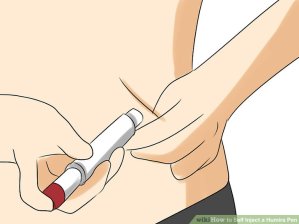
You may well start out like I did with infusions, but you may equally be prescribed a sub-cutaneous injection as your first biologic, the most common one being Adalimumab. I was so used to infusions when I started Humira in 2018 and, although I was more than used to needles at this point, I had never injected myself before. I was told that I would get some kind of “training”, but when I arrived at the hospital for my first dose, I discovered that this “training” was basically just the nurse doing one injection with me watching, and then me doing the other three. Initially I was sceptical as to whether I would know what I was doing after watching one injection, but it really was much simpler than I anticipated. For any self-injection newbies, here is the basic step by step method for using a Hymiroz pre-filled pen:

  • Take your injection out of the fridge about 20 minutes before you plan to use it (this makes it slightly less painful!)
  • Wash your hands and make sure you have everything you need: your injection, an alcohol wipe, a yellow toxic waste bin and a small hypoallergenic plaster.
  • Sit on the edge of a chair or bed and pull you trousers/ top out of the way- you’ll either be injecting your abdomen or your thigh, I prefer my thigh.
  • Choose a site where there is enough flesh and no obvious veins and clean it with the alcohol wipe.
  • While the site is drying, you need to check that your injection is suitable to use. 1) Check that the drug is actually Hymiroz/ Humira (or whatever biologic you were expecting)! 2) Check that the dose is correct and that it is within its use-by date. 3) Finally, gently turn the injection upside down and check that the fluid inside in clear with an air bubble floating about.
  • Once you’ve done these basic checks, you want to pinch around the site you’ve chosen with your weaker hand (not the hand you write with/ want to hold the pen with!) I usually pinch my skin between my thumb and my other fingers so that there is a “pillow” of flesh (if you will!) about 4-5cm wide.
  • Gently remove the cap from the injection and place it firmly against the injection site. When you’re ready, push down firmly and you should hear a click and see the drug being dispensed. Once the drug has been completely administered you should hear a second click. Now just carefully pull the pen away from the site.
  • Place the cap loosely back onto the pen and dispose in your yellow bin.
  • I now just give the site a clean with the alcohol wipe in case there’s any blood and stick a small plaster on it, that way if there’s any on-site reaction (a bruise/ rash etc.), I can monitor it over the next day- but usually there isn’t anything to look out for.

Note: If you’re using a Humira pen as opposed to a Hymiroz pen, the process is very similar, but the mechanism of the pen works slightly differently. Instead of firmly pressing the pen against your skin to start the injection, you just have to push the button at the end of the pen and then release after about 10 seconds. If you’re using a syringe and not a pen, the process will be slightly different again, but consult your nurse for more information about using this method of administering the drug.

In terms of pain, it’s really not that bad. I mean, it hurts as much as any injection, but you get used to it! Once I’d done my first two in the hospital I felt pretty confident in doing it myself at home (usually there are 4 pens as a loading dose, then 2 a couple of weeks later, then one every other week as a maintenance dose). That said, I did meet a man in hospital who was in his late 30’s and despite what he’d been through, he still professed to be scared of needles and couldn’t handle injecting himself. So, he went to the hospital every 2 weeks to get his injections done by a licensed nurse. And honestly that’s totally fine! Whatever you feel comfortable doing is what’s best. But personally, I felt fine about self-injecting- plus I didn’t really want to be travelling all the way to London every 2 weeks just for a 30 second injection! Doing it yourself really does save a lot of time and hassle on your part, so I would advise you to at least give it a try once to see if you can do it.

As for receiving the drug, if you’re having infusions you obviously won’t need to think about his, but for self-injecting at home, your hospital should set you up with a company like Healthcare at Home (HaH) who will then deliver your drugs discreetly to your doorstep. You don’t even need to place an order; they will keep track of how many injections you’ve used and when you’ll need more, and they should be in touch with your hospital in case your dose changes. They’ll also exchange your yellow bin every few visits and you should receive alcohol wipes, a DVD tutorial refreshing your memory about self-injecting and even some cute calendar stickers to remind you when to do your injections along with the biologics. They’ll give you a ring to book a delivery date when necessary and then a couple of days beforehand they’ll text you to inform you of your 3-hour time slot. Once they’ve been delivered, they need to be put straight into the fridge between 2-8 degrees until you use them- for this reason you have to be at home yourself to receive the delivery or pre-arrange to nominate someone else to receive the drugs for you. It really is as simple as that! Starting a biologic may seem a bit scary at first, but it quickly becomes routine and familiar, so try not to worry too much if you’re a newbie!

A Simple Guide to Biosimilars.

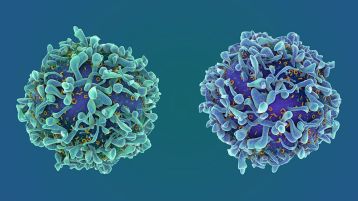
cell

If you have IBD and you’ve previously been on a biologic, you’ve probably heard the term “biosimilar” before. But what does it actually mean? Is it the same thing as a biologic? Researching these concepts online can seem complicated with all the medical jargon that websites tend to use, so here is everything you need to know about biosimilars.

First of all, let’s get back to basics and talk a little bit about what a biologic is. Put simply, a biologic is a type of treatment for certain long-term health conditions like Crohn’s disease and rheumatoid arthritis. Biologics are usually given as infusions or sub-cutaneous (under the skin) injections.

In terms of the actual medicines themselves, according to the NHS, a biologic is “made from proteins and other substances produced by the body.”

The inflammation associated with IBD is caused by an overactive immune system response. Broadly speaking, biologics work by interrupting immune system signals in order to reduce inflammation.

Some examples of already approved biologics for the treatment of IBD include: Adalimumab, Infliximab, Ustekinumab and Vedolizumab. These are the names of the “generic drugs”, but biologics are produced under brand-names like Humira (Adalimumab), Remicade (Infliximab), Sterala (Ustekinumab) and Entyvio (Vedolizumab).

These drugs work in different ways but with the same goal of reducing IBD inflammation. Adalimumab and Infliximab are what’s known as anti-TNF drugs. They bind to a protein called TNF-alpha which is thought to be overproduced in IBD patients, therefore reducing inflammation. Ustekinumab works in a similar way, but it is known as an anti-interleukin drug. It targets the proteins interleukin-12 and interleukin-23 which contribute to ongoing inflammation in the gut, rendering them inactive and preventing inflammation. Vedolizumab on the other hand is an anti-integrin drug. It works by stopping the white blood cells from entering the lining of the gut and provoking inflammation.

So, now we know what biologics are, we can move on to biosimilars. A biosimilar is essentially a “newer version” of the original biological drugs listed above. Some biosimilars which probably sound familiar include: Hymiroz (biosimilar of Humira) and Remsima (biosimilar of Remicade).

These biosimilars are not exact copies of the generic drugs. According to the Biosimilars Resource Center, “a generic drug is chemically identical to its brand-name counterpart- an exact copy… A biosimilar may have a different structure than the reference product, but the active substances are essentially the same in molecular and biological terms. This means that there are no clinically meaningful differences between the biosimilar and reference product in terms of safety or effectiveness.”

So, all that basically means that biosimilars, whilst potentially being formed of slightly altered structures, perform equally well and are just as safe as their generic counterparts. In the context of an example, this means that Humira is an exact copy of Adalimumab. Hymiroz on the other hand might differ slightly but is a perfectly safe and effective biosimilar alternative to Humira.

All biosimilars have to undertake the same tests and clinical studies in order to be approved for use with patients so, if you have recently been swapped to a biosimilar, you shouldn’t be worried that the drug won’t be work as well as the original, or that it might be dangerous- you are safe!

So, if these drugs are of comparable safety and effectiveness, you might be asking: What’s the point in swapping to a biosimilar? And the answer is relatively simple: they are MUCH cheaper than generic drugs. The NHS claims that: “through making biosimilar medicines more quickly available the NHS will by 2021 be able to take advantage of up to £300m of savings each year.” Wow, that is a lot! Apparently, because before biosimilars there was only one generic drug that could be prescribed for all patients in need of that biologic treatment, six of the top 10 medicines in terms of cost were biological drugs.

Let’s take a look at Adalimumab in particular. It was named the most expensive drug in UK hospitals, costing around £400 million a year. Sheesh! By swapping 80% of the 46,000 patients prescribed the drug to a biosimilar in 2018, the NHS aimed to save £150 million a year by 2021. I suppose we shall see next year if they will reach this target!

By saving such a significant amount of money, more patients will gain access to life-saving medications provided by the NHS, so biosimilars are a very attractive option.

If you want to know whether you are on a generic drug or a biosimilar, there are several ways to find out. If you take sub-cutaneous injections, the name of the drug/ biosimilar will be written on the syringe. If you are given infusions, you may notice the name of the drug/ biosimilar on the drip bag. Otherwise, feel free to check with your consultants or the specialist nurse in charge of your care. Your IBD team shouldn’t swap from a generic drug like Humira to a biosimilar like Hymiroz without consulting and informing you about the swap first. Personally, I was given a few information leaflets regarding my swap and everything was clear and simple.

And that’s all there is to it really! I hope you found this guide useful, but if you would like some more information, you can have a read of the following websites:

https://www.crohnsandcolitis.org.uk/about-crohns-and-colitis/publications/biologic-medicines

https://www.england.nhs.uk/medicines-2/biosimilar-medicines/

https://www.biosimilarsresourcecenter.org/faq/what-are-biosimilars/

https://www.biosimilarsresourcecenter.org/faq/may-a-biosimilar-be-used-in-place-of-a-reference-product/

https://www.england.nhs.uk/2018/10/nhs-set-to-save-150-million-by-switching-to-new-versions-of-most-costly-drug/

Soft Convex One-Piece Stoma Bag Review: Dansac VS Hollister.

It has been just over 6 months since my ileostomy surgery, and I have tried a LOT of stoma bags from almost all of the UK brands and these two soft convex bags are the ones that I always end up going back to. I have not had a dip around my stoma since surgery, nor do I have a retracted stoma, but my stoma isn’t particularly large, and it doesn’t protrude very far. For these reasons, although I have occasionally used flat baseplates without any convexity, I have found that I generally feel more secure and less worried about leaks when I use a soft convex bag. Today I’ll be reviewing my two favourites in this style from Dansac (pictured to the left) and Hollister (pictured to the right). Don’t worry if you don’t use a convex bag, you may still find this post useful as a lot of the pros and cons apply to other bags and collections from each brand as they all tend to be made in a similar way. So, let’s get on with the review!

First up is the Dansac Novalife 1 open soft convex midi with viewing option.

This is one of the very first bags my stoma nurses gave me in hospital and it has a lot going for it. Here are some of the positive aspects of this bag:

+ The bag has a lovely streamline shape which has no unwanted sharp edges that will dig into your skin. It feels lightweight and features a relatively thin adhesive baseplate, but still feels pretty secure.

+ Likewise, this bag has probably the nicest fabric of all the bags I’ve tried. It is super soft and non-irritating unlike some other brands who use almost canvas-like fabrics or extreme water-repellent materials that are quite hard.

+ Despite the use of fabric however, I’ve found this bag to be relatively easy to dry after showering/ swimming. All it takes is a few squeezes in a towel and a few minutes of air drying and I can get fully dressed without any wet patches seeping into my clothes.

+ The baseplate of the bag is also waterproof as opposed to fabric, meaning that it will not absorb moisture and irritate the skin underneath.

+ This bag is very easy to empty thanks to the very large opening. Some other bags I’ve tried have had pretty small openings or weirdly shaped openings with inconvenient tabs that made emptying the bag difficult or messy, but this Velcro seal is quick and simple.

+ Speaking of tabs, this bag also has a handy little orange tab at the top so that you have a place to start when removing it.

+ The viewing window option is also a great plus for this bag- I personally like to know what’s going on in there, so I can’t stand an entirely opaque bag!

+ I haven’t experienced any odour from this bag, it seems well controlled by the filter.

+ Like almost all convex bags, this one has belt straps for extra security if needed.

+ Finally, this bag, like many others, has a cut-to-fit measurement system and you can safely pre-cut them (i.e. for an on the go emergency kit) without worrying that the adhesive around where you’ve cut will loose its grip- sometimes on thicker baseplates, if you cut the bag to size and leave it unused for too long, the adhesive where you’ve cut will start to peel away from the plastic and lose its stickiness, and nobody wants that!

As for the negatives, there aren’t a whole bunch. But the ones that I have to point out may well unfortunately be bad enough for this bag not to work for some people. After all, it’s about trial and error!

–  The major drawback of this bag, and the reason why I started looking around for others to try, is that the adhesive erodes quite easily around the stoma. Have you ever noticed that the ring of adhesive around your stoma goes white after a while or even starts disintegrating a little? That’s what happens to me pretty much every time I use this bag. It’s nothing serious, its just your output reacting with the thin adhesive and corroding it, the obvious downfall of this being that the bag has a real potential to leak if this process of erosion gets out of control (particularly if you have loose output) or you leave the bag on for too long. For me, once the inner ring started eroding, even when using stoma paste my output started going underneath the rim as opposed to inside the stoma bag. The good news is that I’ve found that using an effective barrier ring can prevent this issue altogether so that I can still reap the benefits of this bag. I also found that by simply adjusting the time of day that I changed my bag (from morning to evening) it was much less likely to leak overnight.

– Another disadvantage of this bag is that the baseplate, being relatively thin and malleable, occasionally creates little ridges/ gaps which can let water in during a shower/ swim. Usually this isn’t a major issue in terms of the bag remaining stuck though, especially when I’m using barrier ring for extra security. To be honest I think it almost wouldn’t matter if most of the outer adhesive came off completely whilst I was using a Clinimed barrier ring, the output probably still wouldn’t get past the ring! They really are THAT good!

– The baseplate on this bag also leaves sticky bits of residue on the skin after removal. Though this can be removed in a few minutes by spraying adhesive remover onto a cotton wipe and wiping the skin in circular motions, it is a little annoying as other bags don’t have this problem.

– Finally, this bag does suffer from what pretty much every bag I’ve tried does: ballooning. No matter what I eat or when I eat, my bag almost always balloons overnight– but this a general critique of most stoma bags, not just this one! I have a clear eating routine now though and by not eating after 9:15pm, I can usually go from 10:30pm to 9am without having to get up and empty/ let the air out of my stoma bag, so it is manageable.

So, there you have my review of this Dansac soft convex drainable pouch. Overall, this bag has a great deal of positives. It also does have one big negative however- being the risk of leakage due to adhesive erosion, but I have managed to solve this problem with the use of a barrier ring. It is still, and probably will remain for some time, one of my go-to bags, especially for shower days!

Now for a worthy opponent, my other favourite soft convex bag: the Hollister Moderma Flex One-Piece Drainable Soft Convex Ostomy Pouch. This bag is the one that I decided to switch to after dealing with leaks from the above Dansac pouch before I discovered Clinimed’s barrier rings and until recently I was using it pretty much every day. I will explain why I’ve had to re-think this again in the negatives section.

+ The biggest advantage of this bag is that it has NEVER leaked! Not once! The adhesive is so strong that I reckon my dog couldn’t rip it off me in a tug of war! Some other bags I’ve tried have leaked and a couple (particularly Salts bags) have come halfway off in the night because of the weight of the output! I definitely feel the most secure and at ease when using this bag; even when my skin is slightly sore, I can rely on this bag to stay firmly put.

+ One of the reasons why the bag never leaks is that the adhesive erosion problem I have with the Dansac bag doesn’t affect this bag at all. There is only the tiniest sign of contact with output once the bag is removed, but the rim around my stoma stays completely intact throughout the wearing period.

+ Despite the fabric baseplate of this bag, it remains equally secure when soaking wet.

+ Because of how secure the bag is, I don’t need to use a barrier ring or any additional products for security, so my routine with this pouch is very quick and simple.

+ Having said in my Dansac bag review that pretty much all bags balloon during the night in my experience, I actually have found this Hollister bag to be slightly more effective at controlling ballooning. It still balloons sometimes, but on occasional mornings (without adapting my diet) I have woken up to a non-ballooned bag, much to my surprise.

+ I also haven’t noticed an issue with odour with this bag, so perhaps the filter is indeed more efficient.

+ Like the Dansac bag, this bag has belt clips for security, but I haven’t needed to use one at all!

+ This bag also features a useful measurement system for easy sizing.

+ It has a viewing window option like the Dansac bag so that you can occasionally check your stoma output throughout the day.

+ It may quite well be my imagination, but I feel like this bag has a slightly larger capacity than the Dansac equivalent…?

+ It also has a much wider baseplate than the Dansac bag which makes it feel even more secure and leak-proof!

+ And there is no sticky residue after bag removal.

As for the negatives, again there aren’t a great deal, but there is one very important one!

– And that is the fabric baseplate. At first it feels comfortable and soft, but the downfall here is that it doesn’t dry well after showering/ swimming. Unlike the Dansac bag and its waterproof baseplate, the Hollister equivalent, though it may not feel damp to the touch or seep massively into clothing, can actually hold a fair bit of moisture. Recently I have been having some issues with my peristomal skin being sore and weepy as a result of this, and I’ve now had to start using powder and barrier spray daily before applying my bag and changing my bag after showering as opposed to before going to bed.

– Of lesser importance but still a negative is that the bag opening is made of quite hard plastic compared to the Dansac bag which means that if you angle the bag straight down, as opposed to at a slightly inward angle, it can scratch your inner thigh– ouch! To avoid this issue, I angle my bag inwards and roll the end up an extra time so that the opening is securely tucked into the fabric and not rubbing against my skin.

– As mentioned above, sometimes when you try and pre-cut a bag and don’t use it soon enough, the adhesive around where you’ve cut begins to lose its stick. This is one of those bags. But it isn’t really a major issue, just make sure that if you’re cutting your own bags, you either leave enough time in the morning/ evening to cut them on the day, or you bring a pair of stoma scissors with you in your emergency kit rather than cutting the bag in advance.

– Finally, you may find that this bag sometimes rustles a little bit more under clothing, but I mainly wear tight jeans or skirts, so they keep it from moving about too much!

And that’s it! If I absolutely had to pick one bag to use solely, I think it would have to be the Hollister bag because security and preventing leaks is the most important thing for me. I am hoping that my current regimen with the stoma powder will heal my skin so that I can either stick completely with the Hollister bag but change it after showering to avoid moisture retention (as this is really the only thing that’s majorly bothering me), or alternate between the Hollister and the Dansac bags depending on whether I need the Dansac waterproof baseplate for showering or not. But overall, I don’t think there is such a thing as a “perfect” stoma bag. Everyone is different and their stoma, peristomal skin and varying output may require changes in equipment or routine at any time; it’s all about adapting to what your body needs. But if you’re having doubts about your current routine or appliance, or if you just want to try something new, I would definitely recommend giving these bags a try!

SGAP Surgery: Recovery and Finally Sitting Again.

woman-with-laptop-sitting-isolated-on-white-background-concept-illustration-for-working-freelancing-studying-education-work-from-home-vector-illustration-in-flat-cartoon-style

After being discharged from hospital in mid-December, I was now beginning the several month-long process of recovery from my skin flap surgery. The most important aspect of this was the strict avoidance of putting any pressure on the area from which the flap was taken and the area to which it was relocated. For me, this meant that I wouldn’t be able to sit down at all and I wouldn’t be allowed to lie on my back or right side. Yes, for several months I would only be permitted to stand up or lie on my left side in bed. This was probably the most challenging aspect of recovery as it meant that my poor left leg was taking on my entire body weight for several months. Now I’m not that heavy at all, but when you have the joint pains associated with Crohn’s Disease, it’s a real struggle to make one limb do all the work. If I’d been lying in bed for more than about 20 minutes my leg would start to either painfully seize up or go completely numb and I would have to stand up for a few minutes to “re-set” it. This also applied to nights for the first couple of months, so sleeping was generally short-lived and interrupted. I even had to build a pillow wall behind my back so that I wouldn’t accidentally roll over in the night. And it’s not just lying or sitting on it either, you aren’t even allowed to lean against anything- all pressure counts! The wedge that I bought for my bed was a real lifesaver during my recovery; it allowed me to watch TV and eat meals relatively upright in bed without breaking the rules. I also wore loose-fitting bottoms or stretchy clothing like leggings for a while to make sure that I was as comfortable as I could be.

As for the pain from the actual surgery, whilst I could feel it, it wasn’t half as bad as what I’m used to, so I was managing pain relief free. The social aspect of not being able to sit down was more difficult to deal with. After all, although I was just glad to be home, I did have to spend Christmas day watching my family enjoy their Christmas dinner at the fancy dining table through a doorway whilst eating my lunch lying on a bunch of piled up duvets in the middle of our living room floor! Present opening wasn’t that easy either, but I managed. Then when I was called into hospital on the 30th December to get my stitches removed, I was posed with the question of how on earth I was going to travel for 2 hours without sitting down or injuring myself in the process… Luckily we were able to book an ambulance to transport me on a stretcher for the many hospital trips I ended up having between December and March – but this came with its own series of issues. And the main one was ignorance.

I always got glared at for ordering an ambulance with a stretcher to transport me whilst looking otherwise “well”. The guy at the transport desk always looked me up and down and asked me three times if I was sure that I really “needed” a stretcher because there weren’t many of them to go around. I even got publicly scolded by a clearly uneducated and hostile woman in the transport waiting room. It started because, having had two major surgeries in the couple of months prior and feeling exhausted and in pain, I’d just had to wait over 2 hours standing up for my clinic appointment only to then be told by the transport team that my ambulance would take several hours more. I was therefore lucky that when we got to the transport waiting area, I found a wide cushioned stool type seat which I was just about able to lie down on (the other hospital seating is either individual chairs which I obviously couldn’t sit on, or linked chairs with arm rests which got in the way of me putting my legs up).

So, I was lying awkwardly on this barely big enough stool when this woman is brought into the waiting room in a wheelchair. Then another patient waiting for transport with a leg cast got told off for putting her leg up on the set next to her and the woman in the wheelchair took it upon herself to assume she knew my situation and start telling the woman with the cast very loudly across the room that she should come over and take the stool away from me because I clearly didn’t need it and was just being selfish and lazy by sprawling across it for no reason. I don’t even think she realised that I was a patient, I think she thought that I was there for my mum and that I was just acting like a spoilt princess and lying down whilst everyone else was sitting to get attention.

In actual fact, I was embarrassed enough not being able to sit down in numerous situations i.e. telling the phlebotomist that I couldn’t sit to have my blood’s done, responding “no thanks” when my doctor said “please take a seat” when I entered the consultation room and awkwardly standing up during my appointment, and trying to explain to the nosy transport operator that I’d just had surgery on my butt and REQUIRED (not fancied) a stretcher to get me home. Now, I understand that I may have looked okay to the naked eye and I may have been able to walk; its confusing. But you would think that someone in a wheelchair of all people would be less judgemental and presumptive. Apparently not. So, rant aside, I would like to tell everyone reading this, able-bodied or otherwise, NOT to assume anything about anyone who you don’t know, because chances are you don’t know everything, and your judgements are unfair. Needless to say, though I would’ve loved to have a row with her about it in front of the whole waiting room, I decided to take the high road and ignore her, so I stayed on my stool until my ambulance arrived. HA!

Anyway, I did get my stitches removed (mostly) on the 30th, but it was NOT easy. Initially, the nurse wanted me to lie on my front so she had a clear view, but my stoma was in the way. Then she suggested that I kind of half-sit, but I explained that I couldn’t put any pressure on the wound at all. So, without trying to be graphic, I ended up in a kind of sideways birthing position and I had to manually hold my leg to keep it still, while she picked out the stitches one by one. It definitely wasn’t the nicest area to get stitches removed from, but there we go! At this point it had been about 3 weeks since the surgery and the wound had not healed yet. I mean, most of it was together of course, otherwise they wouldn’t have removed the stitches! But there were a few gaps and it still leaked a little. Then after a long, painful and annoying day at the hospital and a cathartic rant about it with the paramedics on the way home, I discovered that the nurse had a left a rogue stitch in the most awkward area possible… So, I then had to call the district nurses to come and remove it that night. This proved more difficult than imagined as I had to lie in the sideways birthing position again but the light in my room was pretty shocking and for some reason this stitch was clear plastic and wasn’t even attached to the incision lines!? But eventually the nurse could feel it and managed to remove it, so I was now stitch free- yay!

I hit another down point that evening however as I was starting to feel a pain in my ear. I told the district nurse that I thought I had an ear infection brewing, but she said to just wait it out and make sure that’s what it was. And the next day I was sure, having barely slept through the agonising pain in my ear on New Year’s Eve. That little hiccup culminated in me having to get to my local hospital on New Year’s Day without an ambulance escort in order to get the prescription for the antibiotics I needed. It was too far to walk (and it was freezing!), so I did the only thing I could think of; I knelt backwards in my mum’s car foot-well. It was very bumpy, and I felt incredibly dizzy upon arrival, but I made it! I can’t say that I’ll be using that mode of transport again unless absolutely necessary- but needs must. And sure enough, I had an ear infection and a perforated ear drum. But I got some antibiotics and in the next couple of weeks I started to feel better.

My wound on the other hand was a bit up and down. Some days I’d wake up and have a look at it in the mirror and think it looked better, other days I thought it was getting worse. It took until about February for it to finally all come together and for the small openings at the base and the top of the flap to close, but there was still some over-granulation- which is essentially where red granulation tissue rises above the line of the wound. It can be quite sore and unpleasant but more importantly, it hinders the healing process. After having this checked by my district nurses a few times and dressed with a simple dressing, I went back to my hospital for a plastic’s clinic at the beginning of March to see if there was anything they could do to help it. By this point it had been 12 weeks since my surgery and, whilst that now gave me permission to start sitting down for short periods of time, I didn’t feel confident that the wound had healed enough to warrant me taking the next step in my recovery. Luckily my plastic surgeons didn’t let me down; they prescribed me a fusidic acid treatment (a mild protopic) and within a week and a half, the wound had finally healed all round without any excess tissue, and I could start sitting again!

It probably seems silly to most people that I was so excited just to be able to sit down, but I’d had problems with sitting since February 2019 when I noticed my first abscess collection. It had been over a year since I’d been able to just sit down (donut-cushion free!) without worrying or pain. And the transition wasn’t as bad or lengthy as I thought it would be. I probably started by just sitting for 2 minutes on my bed each day for 2-3 days. Then I sat down for 5 minutes for a couple of days, then 10 and so on… It took about 3 weeks for me to be able to sit down relatively comfortably for 30 minutes- an hour. I did unfortunately have to cancel an optimistically scheduled internship for the beginning of March because I wasn’t yet able to sit for long enough periods of time, but I thought it was more important to take my time (plus then coronavirus happened, so it probably would have been cancelled regardless).

Now, just over 4 months since the surgery took place, I can sit down within reason for as long as and wherever I like. Hard surfaces are still not too comfortable for me, mainly because my butt cheeks are no longer even, so one of them is a bit bony! I still get some occasional mild shooting pains if I’ve sat down for too long, but I think that by 6 months this will probably have improved. After all, it took 6 months for all the bruising on my abdomen to subside after my pan proctocolectomy. Other than that, it’s just going to be a question of getting used to the sensation of sitting again, but I’ve definitely come a long way. Look at me go; I can eat, sit down, shower and walk!!!! I couldn’t do any of those things normally for most of last year, so I am very grateful for my progress. Honestly, there were times last year when things were so bad that I couldn’t see the light at the end of the tunnel, and I thought that my health would never improve. But I’m sitting (yes, SITTING) here now and I am so glad that I took the bull by the horns and had stoma surgery- despite all its complications. It was far from easy and it brings new struggles practically every week, but I can’t remember the last time I felt this good. So, to close I would like to thank my surgeons who took such great care of me last year and who made the positive ending to these surgery posts possible. I may have had some issues with my care in the past (as you may well have read about!), but I am still grateful for the NHS and in the current crisis, I am clapping for them. 😊


SGAP: Reconstructive Plastic Surgery.

leftie

After waiting on the plastic surgery ward for almost 11 hours, I was finally called down to surgery at about 5 pm. I was so relieved that something was finally going to be done about the ridiculously large open wound I’d been living with for a few weeks now. But unfortunately, things didn’t quite go to plan, yet again. As I was waking up from the anaesthetic, I knew immediately something was wrong. Usually you come to in the recovery bay, but I was still in theatre and looking up at one of my surgeons. I’m not going to lie, initially I panicked a little that I was experiencing one of those “anaesthesia awareness” episodes mid-surgery like Hayden Christianson in Awake. Luckily, this wasn’t the case at all, they just woke me up earlier as they could not perform the surgery as planned. It turned out that the infection that I’d had since February (it was now December 6th) was STILL wreaking havoc in that general area and killing all my healthy tissue. That was probably the reason why the initial stitches after my pan proctocolectomy had just disintegrated. All they could do was essentially make the wound even bigger by removing all the damaged tissue and cleaning it up before re-attempting the planned surgery in a few more days.

Given all this drama, my ward bed was lost, so I had to stay in recovery until about 3 am the next morning. This was all very unusual as patients are typically only there for an hour or two and are immobile after their procedures. I, on the other hand, had already woken up in theatre and needed to get about to use the toilet and brush my teeth; this proved challenging as there actually isn’t a toilet in the recovery bay given that people don’t generally need to use one, so I had to trek to the staff area instead. The recovery bay also doesn’t have a food round, so all they could order for me that day was some stale toast. Ew. I was eventually moved however to a singular side room (yay!) on the gastro ward and was given antibiotic injections to stem the infection before they tried the surgery again. This “between surgery limbo” wasn’t overly pleasant given the now even more gaping hole in me, and the fact that I wasn’t prescribed any pain relief other than paracetamol! But what can I say, I am used to pain- plus I’d had some terrible experiences after stoma surgery with opioids!

Four days after the initial try, I went back down to theatre for attempt number two. Luckily, this time was successful, and I had what is broadly known as SGAP surgery- or more precisely, VJ advancement- right sided superior gluteal artery perforator flap. If you haven’t read my last post explaining the general procedure technique, it involves moving living tissue from a donor site to a recipient site while maintaining blood supply. A similar flap technique is sometimes used after a mastectomy to reconstruct the breasts. In my surgery, the tissue was lifted from my left butt cheek and rotated to fill my perineal wound. I had the usual set-up upon waking up: a urine catheter, two surgical drains (one near my right hip and one near my lower back), several cannulas etc, and I was lying in the position that I would become very accustomed to: on my left leg.

In the first few days after surgery I was told that I could request tramadol if I wanted it. I was obviously very sceptical about this given my previous withdrawal symptoms, but I thought I’d try just once because I was in a lot of pain now. And not just general I’ve-got-a-huge-open-wound pain, but also my-left-leg-is-being-perpetually-crushed-by-my-entire-body-weight-and-I-can’t-move-at-all-to-appease-it pain. This immobility and unequally distributed pressure coupled with my arthritis was one of the biggest struggles of this hospital stay. But even after just one small dose of tramadol, I turned shivery, sweaty, boiling hot and weak, so I quickly aborted. Meanwhile, the plastics team, who were incredibly diligent I might add, were visiting me every 4-6 hours to check for any discoloration on the flap which may suggest that it had been rejected by the new site. The surgeons had also left a small unstitched gap at the very top of the flap to allow it to change in size and adjust to fit the new location, so they also had to check that this wasn’t getting infected.

For the next couple of days these checks continued and I went on (like I champ if I do say so myself) without any pain relief whatsoever trying to distract myself from the obvious, as well as my dying left leg, by playing (or should I say winning) scrabble against my parents at an incredibly awkward angle on my bedside table. Every time a nurse was assigned to take care of me they’d ask why my drug chart was blank and I’d explain all the issues I’d had with morphine, tramadol, fentanyl, codeine and oxycodone (i.e. they don’t work, they make me feel like I’m dying and/or they break me out in weird rashes/ make me lose my mind). They’d promptly leave me be and say that there wasn’t anything else I could try and that if I didn’t want those drugs, I would have to do without any. That was until Friday 13th December when one particular nurse was beyond shocked and annoyed on my behalf about my lack of pain relief; I believe her exact words were: “If I’d just had half my body carved up and put back together again and someone offered me PARACETAMOL, I would tell them to **** off!” After I explained my complicated relationship to opioids, we decided that the best thing to do was to re-try oral oxycodone every 4-6 hours alongside some anti-sickness (I only took oxycodone once after stoma surgery and seemingly it did absolutely nothing, so I figured it wouldn’t do as much harm as the other drugs).

The following day one of plastic surgeons came as promised to stitch up the one/ two-inch gap at the top of the flap. Originally I had been told that this was usually done in theatre, but given my inability to move, they could do it in my room under local anaesthetic. But when my surgeon arrived, he then revealed that because of the flap’s awkward location, the anaesthetic injection may not be effective, and it might even hurt more than the stitches. He said if I really thought I could, that he would prefer to do it without any anaesthetic at all. Easy for him to say! But in the end I just went for it because I knew it needed to be done. And boy did it hurt! They weren’t just normal surface stitches either, they were deep tissue stitches to hold that section of the flap in place. I think there were about 10 loops in total and I was definitely flinching and clutching the bed the entire time. The nurse who was supervising said how impressed she was that I managed to get through that without any anaesthetic and when I told the nurse several weeks later who took the stitches out in a plastic’s clinic, she looked like she’d seen a ghost and asked: “WHAT?! Why on earth would you do that!?” But I did and it was done, pain aside. My surgeon also removed one of my drains as it had been several days since the surgery and it had stopped leaking- that was another unpleasant experience akin to the drain removals after my pan proctocolectomy i.e. a lot of strong air pressure building up and then suddenly being sucked out at full force from inside your flesh. Lovely.

Despite my general post-surgery pain and my dying leg, I was coping far better than after my stoma surgery. Unfortunately however, residing in my private room didn’t last long. I was moved on the 15th to a bay. NOOOOOO. As you’re probably already aware if you’ve read my previous posts, I HATE being on a bay- as everyone in their right mind should. As it was, the side rooms weren’t exactly “quiet”; a couple of nights before I’d heard a loud mid-night riot caused by a patient’s family member who was furious that the patient in question was being moved to another ward. Security had to be called as he started verbally abusing the ward nurses and threatening a fist fight. Ah, there’s never a dull moment on a ward is there? But now all the usual culprits were keeping me awake: the nebulisers, the phones, the printer, the laughing/ shouting/ singing nurses, the confused old people screaming etc.

It was unfortunate timing as well; I really could have done with the sleep as I was supposed to be mobilising on the 16th after almost an entire week of being in bed. Now, mobilising after stoma surgery seemed more difficult in theory given that I’d been in bed for 2 weeks. But in fact, I was able to move my legs slightly and I was lying on my back which meant that the pressure was evenly distributed- plus my epidural numbed my legs completely, so I couldn’t feel them even if they hurt! This time, though it had only been a week, I had been lying on one leg without moving at all for the entire stay and I could definitely feel it! But because of my stubbornness, I rejected the offer for a physio to assist me given that last time she was there more for encouragement than actual physical aid. I also told the nurse who offered me an OAP walker that I wouldn’t be needing it. How hard could walking after only a week of lying in bed be? Apparently, very. After having one of my cannulas and my urine catheter removed, my mum and I prepared to make it to the toilet- as now I would have to brave a sitting action as well. Getting up was actually far more difficult than I’d imagined. I mean, naturally you shift onto your bottom and then just stand up, right? Except I wasn’t allowed to put any pressure on my bottom at all! So, I had to do an awkward side-wards slide with the bed as close to the ground as it could go and sort of roll off the edge and stand up whilst also holding onto my remaining drain bottle/ tubing.

After I managed this, I did admittedly get a little cocky and after walking on the spot for a few minutes, I thought I was ready to walk towards the loo with my mum’s shoulders for support. In reality, I only made it about 2 steps before being overcome with so much dizziness and weakness in my left leg that I thought I was going to collapse. Naturally, we very abruptly turned tail and quickly (but carefully) placed me back into bed to recover. I had a bit of a reality check at that moment: perhaps walking was going to be more of a challenge this time. After another 10 minutes, I tried again. And very slowly, and with a lot of assistance, I managed to make it to the toilet. Although it was hard work and I was a bit unsteady still, I cannot express the relief I felt to finally take my body weight off my left leg and hip! And I did successfully manage to bend enough to reach the loo without stretching the flap too much. I experimented a bit more that day and was glad to finally be able to independently go the loo- I just needed some help getting back into bed.

The next day, December 17th, was my last day in hospital. I had my final drain removed and my surgeons essentially forced me to have a shower, despite my worries about the flap getting wet. I think they knew how badly I wanted to have one as I hadn’t been able to since the wound split about a month before; I’d had to clean myself in the sink standing up and my mum had had to wash my hair with a precarious set up at the base of our shower using my bed wedge and some Inco sheets! It was certainly resourceful! In the end I did manage to have a wash in the ward shower, and it was amazing! (Not the actual shower- it is in a hospital after all, but the experience of having one after so long was lovely!) By this point I’d also stopped taking oxycodone, which I’d been having on and off for the last few days. So that morning I was given the all clear to go home. Annoyingly, the transport that they had called for at 10:30 am took until past midnight to arrive! I believe this was because I needed a proper ambulance with a stretcher to lie down on. But it was more comfortable than being sprawled out on the back seat of a car nonetheless, despite the terrible suspension!

I was just so glad to be going home before Christmas. It was certainly an interesting experience spending Christmas day on a bunch of duvets on our living room floor as opposed to at the dining table with everyone else, but I still dressed up and made myself a nice Bolognese for lunch (I cannot stomach a Christmas dinner!) My dog kept me company (though I have a sneaky suspicion that he was just after my garlic bread…) and I was just happy to be there and not still stuck on the ward for the holidays! I was also grateful that, in spite of the initially failed procedure, the plastic’s team had taken such good care of me and had done everything they’d promised to do in record time. Now it was down to me to be careful with the flap for the next few months and not put any pressure on it (I either had to lie on my left leg or stand up- no sitting or lying on my back/ rolling over at night) to ensure that their hard work would pay off.

Design a site like this with WordPress.com
Get started