Covid-19: The Perspective of a Chronic Illness Sufferer.

coronavirusUK1504a

Covid-19 is still sending riptides through societies all over the world and the death toll just keeps rising. Most people are feeling a sense of confusion, anxiety, and panic in such a time as this and many also feel lost after having their usual quotidian routine interrupted. I don’t necessarily feel this way. And that’s because, if you aren’t familiar with my blog as of yet, I have lived with Crohn’s disease since I was 11 years old. The last 10 years have been rocky to say the least and I’ve never really managed to get control of my illness through conventional medications and treatments. Things really came to blows in the last two years; I had to drop out of university and ended up having a couple of major surgeries in October and December. Now, about 6 months on, I am finally feeling -dare I say it- good. Perhaps not “normal people” good, but my version of good. I was so excited to finally be able to do the things that I’ve been pining to do for so long that were robbed from me by my extreme and prolonged flare-ups and extended hospital stays.

So, imagine my disappointment when I’m finally well enough to take on the world and it shuts down. In one sense this paradox is strange: I was unwell, and the world carried on without me, and now I’m well and the world stops in its tracks. But in another sense, being deprived, lonely and shut away from society is nothing new to me. The lockdown may seem like some cruel dystopian experiment to some but in fact, it’s been the reality of the better part of my teenage and young adult life- sad though it sounds. And I am not alone in this. Thousands of people burdened with life-long illnesses and conditions have suffered all the same. Just the other day I was reading an article about Selma Blair who was diagnosed with multiple sclerosis in 2018. She explained on Miley Cyrus’ Instagram live show Bright Minded how she’d “pretty much been in isolation for two years” already because of her condition and that now “everyone’s on this same kind of daily trajectory [she’s] on”. I can definitely relate to this. In fact, if I’m honest, isolation now is a breeze with all the practise I’ve had and, like a lot of people who have endured illness for such long periods of time, the main thing that really matters to me is feeling okay and achieving that coveted idea of remission. I’ve barely reached this goal since my diagnosis in 2011, so now that I finally have, nothing else seems to matter. It’s amazing how the sole aspect of physical health becomes the pinnacle of happiness for chronic illness sufferers. If anything, despite the lockdown, I feel blessed just to be doing okay. It’s all about perspective.

It’s interesting to me how many times I’ve read online or in group chats that people are “missing out” on anything from concerts and festivals, to graduations and birthday parties. But from the perspective of someone who is chronically ill, there are two very different kinds of missing out. The first is when events are cancelled, and no one can enjoy them- such is the case with the pandemic. The second kind, the kind that anyone with a chronic illness is so painfully used to, is when events are still going on and we are the only ones missing out on them. In other words, rather than this now collective halt to activity and celebrations, the world keeps turning while we stand still. Now, I’m not implying that the lockdown and all its subsequent cancellations have not been painful, particularly for once in a life-time events like graduations or weddings. But I do want people who aren’t used to this way of life to realise that they are all in the same boat and that this lockdown doesn’t have to produce the same level of loneliness and exclusion as chronic illness sufferers frequently face when they’re stuck knowing that life happily continues in their absence. Now no one is behind or ahead. Now no one person can have more experiences than another. In a way it ironically almost draws a line in the sand, and, in terms of socialisation, it puts us spoonies on par with the rest of society- even if it’s just for a short time.

I do hope that one thing that comes out of this lockdown is a sense of compassion and understanding in healthy individuals for the daily reality of many chronic illness sufferers. Remember, one day your lockdown will lift, ours will remain for the rest of our lives. Your cancelled events will likely be rescheduled, we don’t have that luxury. Perhaps it would be prudent to consider this a temporary window into our world- that is, without the overarching burden of excruciating pain and the plethora of other physical and psychological symptoms that impact our quality of lives on a daily basis. I also feel that a lot of those who are struggling most are people who haven’t faced serious adversity or upheaval in their lives, and many are owning up to this. Writer Megan Murray wrote in Stylist magazine the following statement on April 16th: “This pandemic has made me realise I was naïve to think my life would go exactly to plan”. I admire her for coming to this realisation, and it is likely true for quite a few people. As for us spoonies, through circumstance we are accustomed to facing serious problems pretty regularly, to having our plans and hopes constantly obliterated, to being grateful for even the minutest of triumphs and to appreciating the small things in life. Eating a yummy meal, hearing birds outside my window and being able to have a lie-in without needing the loo are genuinely enough to put a smile on my face. I hope everyone now is forced to slow down from their hectic lives and really see and value everything that’s around them, because it’s the best way to stay sane. I also hope that people will feel less complacent and go with the flow a little more when their lives get back on track.

I’m aware I have not yet mentioned the illness aspect of this pandemic and the risk to everyone’s physical health. Although everyone is now “at risk”, people with long term illnesses or those on immuno-suppressants (including myself) are particularly vulnerable and have been instructed by the government to adhere to strict social distancing measures. Again, keeping a good amount of personal space is nothing new to people who are immuno-compromised. Whenever I hear someone has a cough or cold, I steer well clear as what may be a simple and temporary cold for them could knock me out for weeks or lead to something far more sinister. While most people appear to be respecting the social distancing guidelines, there will always be those few who put everyone at risk through their selfishness and ignorance. I even read an anonymous post on my university Facebook confessions page suggesting that our society is too overpopulated, and that this virus is the best way to essentially “kill off” the vulnerable. It’s so nice to see that our elderly and vulnerable citizens are respected. Unfortunately, ignorance is omnipresent surrounding chronic and invisible illnesses especially, and this person’s position of self-interest is what puts all of us at risk. We may be “vulnerable” physically, but mentally we are as strong as they come, and we can still be productive and useful members of society regardless of our age or health conditions. Just look at Captain Tom Moore who has raised more than £26 million for the NHS at the age of 99 by walking around his garden. I wonder what whoever posted that comment has done?

Having said all that, it may sound somewhat strange for me to say that I’m not particularly “anxious” about Covid-19. Of course, I am fully aware of how serious it would likely be for me if I contracted it, and I am always careful above and beyond what is recommended by the government. However, after everything I’ve been through, I’ve learnt not to resent what is out of my control. I will try my best to stay safe, as I hope everyone else will also, but at the same time, if I do indeed contract Covid-19 despite my efforts, then “it is what it is” as everyone says, and I will cross that bridge when I come to, as I have all the other bridges in my past! I live everyday not knowing how I’m going to feel or what awful problem I might wake up with, and Covid-19 is just one more to add to the list. I’m not downplaying its importance; I am just explaining how I am not feeling this sudden health anxiety like a tonne of bricks because I’ve lived with a form of it for a decade already.

One last thing I would like to mention is how I hope the “system” will adapt once the lockdown relaxes. As I stated above, I had to drop out of university because of my illness and throughout my high school-college experience I also had very low attendance. And what was I told? That it was all or nothing; that it was completely impossible for me to do any work from home and that I would have to give up my education because of my inability to be there physically. And then coronavirus happened. And then suddenly it became possible for students and employees to work remotely. I do understand that they were hardly going to change the entire system just for one person. But that’s just it. I’m not the only person who’s found myself in that situation due to illness, but provisions are rarely made for us. Now that pretty much everyone except key workers cannot go to work, school or university, change has to take place and institutions have to be more flexible. And perhaps once remote education/ work has been done once, then it can be done again for everyone like me in the future who is forced to give up their job or degree due to ill-health and who is set aside by society with their progress paused. Sometimes we are far too ill to work- as was my situation for most of last year- but at other times, we can power through our illness and be productive, just not in the conventional setting. I for one self-taught my GCSEs and a large portion of my A levels after being told by one teacher that she could “only be responsible for students that were IN her classroom.” Well I happily overturned the offensively low predicted grades they had for me and self-taught my way to one of the best sets of marks in our school. And the best part was that they couldn’t take any credit. Hopefully now it won’t be too much to ask to occasionally work from home when people are really suffering, and society will better accommodate people with long-term health issues and value what they can achieve even if it’s not conventional.

To close, I wish everyone well through this pandemic and offer my condolences to all the grieving families out there who have lost loved ones to Covid-19. And I implore everyone, the government and citizens alike, to try their best to embrace this period of lockdown. Keep busy if you feel like it or relax if you don’t, appreciate the little things around you and stay connected. Once this has settled down a bit (I don’t think its responsible or realistic to say “once this is over”, given that it may become a persistent virus like the flu), people will realise how lucky they were before to live freely and they will cherish the opportunities and the people that are in their lives all the more. And hopefully, they will also have a new understanding and respect for those of us who didn’t have the luxury of complete freedom in the first place.

Stay safe x

P.S. If you’re suffering from Crohn’s or Colitis, CCUK have partnered with the British Society of Gastroenterology (BSG) to create a web tool which will tell you your level of risk of serious complications from contracting Covid-19 based on your current state of health, medications, treatments, surgeries etc. The tool can be found here: https://ibdregistry.org.uk/covid-19/ .

Ileostomy Surgery, Part 6: The Disaster of Going Home and Needing MORE Surgery.

growth-close-up-environmental-lush-natural_1172-349

After everything that I’d endured throughout my time in hospital for my stoma surgery, I was thrilled to be finally going home. My last day was mainly tying a series of loose ends, doing all the before-you-leave checks and sorting out prescriptions. But I also had to have my stomach staples removed. I wasn’t exactly looking forward to having about 30-40 staples ripped out of my very sore abdomen, but at the same time there was something almost exciting about being free from what was essentially holding me together and going it alone, as it were! It definitely hurt, but it only took about 10 minutes (as they literally have to yank them out one by one) and so it was over pretty soon. I did one final lap of the ward and ate some tea- by which time the pharmacy had finally finished preparing my pain relief to take home, so all seemed clear for my discharge.

But, as anyone with a chronic illness knows, things just simply don’t happen that smoothly. My parents started putting their coats on and packing up of all my stuff, so I decided to go to the loo one last time before the 2-hour drive. And that’s when disaster number one struck. (GRAPHIC IMAGERY AHEAD) I went to the loo relatively normally, but when I looked down I was shocked to find the entire toilet bowl literally filled with blood (and not in a “my time of the month” kind of a way!). I started to panic and question whether or not this was actually happening and then I realised that my rear wound had split. Like COMPLETELY. As the blood was gushing out of me I really started to freak out. Was this meant to happen? Should I still be going home? Would it heal on its? Or, of more immediate import, how on earth was I going to leave the toilet and get to a nurse with the bleeding that bad?! In the vicinity of the toilet I didn’t have any dressings or gauze, so all I could do was use about 1000 sheets of hand towel (sorry planet). I then very briskly walked back to my bed and told my parents, who quickly called some nurses over. I had to wait a while, but eventually the ward sister came to help. By then the bleeding had subsided and, as utterly ludicrous as this sounds in hindsight, she said that the registrar hadn’t been overly concerned about this happening and that I could still go home. And for better or (evidently) worse, I did.

After an incredibly uncomfortable semi-upright car journey, I made it home at last. I was relieved but also in pain and completely exhausted. But things only got worse. By the time we made it home it was about 10:30 pm; all I wanted was to get into my own bed and go to sleep, but my stomach had been bugging me all afternoon. I hadn’t eaten anything new, but (possibly a coincidence) ever since I had my staples removed, I’d had a really bad tummy ache and a bit of a pain in my side. By the time we got home it was really bothering me and I remember saying to my mum: “Why can’t I just be sick and get rid of it!” Little did I know. About 30 minutes after this stupid exclamation, the incident that I now refer to as “The Great Purge of ‘19” began. I don’t think I’ve ever vomited or seen anyone else vomit that much in my entire life. And it wasn’t like normal vomiting (sorry again for the graphics…), it was like Niagara Falls and this lasted for HOURS. I literally still can’t fathom where all that liquid came from or how it was stored inside me, but while I was vomiting so much that my mum had to keep running to empty the ice-cream container that I was using because the volume was so great, my stoma was also shooting out so much liquid that my bag needed emptying almost constantly.

It sounds like the scene from a horror movie right? And obviously the more it went on, the weaker and more dehydrated I got, and my already weak body just started shutting down. In the end it was about 6 ½ hours of me lying on the floor being held up by my radiator and my mum (who was also exhausted!) in cold sweats and agony. I honestly wasn’t sure it was ever going to end. Eventually it did, but it was about 5 am by that point and I definitely wasn’t amused. I still have no idea what actually caused this. My IBD nurse said she had heard of cases similar to this after ileostomy surgery, so if anyone else has some insight, I’d love to hear it!

The following day was basically blockage training 101 (even though that is not what caused it, the premise of how to handle it was the same). I very slowly drank a can of coke and ate some salty crisps to re-hydrate and that morning my dad bought Morrison’s out of all the Powerade they had in stock. I stayed in bed for most of the day and luckily later on the bed wedge I had ordered (to mimic a hospital bed) arrived from Amazon, so I was a tad more comfortable. The next few days were a little better, but I’d be lying if I said that my (now open) wound wasn’t bothering me. I hadn’t really sat much before that point anyway, but I was struggling. I managed to go for short walks around my local area and get my food intake back to a good level though; I was coping. On the 12th November I actually had an ESAC appointment in London anyway re- my wound, so I struggled through the journey again in the hope of getting some help.

Unfortunately, I didn’t exactly get the answers I’d been hoping for. The doctor said that people with Crohn’s in particular tend to have healing issues after surgery. He said that it could take 3-6 months to heal but that if it hadn’t healed by then, then it probably wouldn’t full stop. WHAT!!?!?! He tried to then make me feel better by saying that there were “things” that they could potentially do to help me with living with an open wound, but that hardly sufficed to reassure me! What, so as well as having Crohn’s and all its complications and a stoma for the rest of my life, I now also might have to live with an open wound the size of the grand canyon and never be able to properly sit down again?! NO THANK YOU! I was completely blind sighted by this, but as always, I just had to take it and carry on.

And for a few days I did. But then the time had come: my pain relief prescription had finished. On the day that I’d left the hospital I was merely told that I should take tramadol, pregabalin and ondansetron to tide me over when I got home and, being used to living in a constant state of pain and discomfort and having little means of appeasing it, I just accepted that this is what I should do and for the length of time that the ward doctor had instructed. Plus, with all the drama of my discharge day, no one really thought to ask about what would happen when I finished the course- this was weeks away and you really only think about the “now” when you’re recovering from such major surgery. Anyway, apparently time had now caught up with me and the lack of advice and support from my hospital (which is an unfortunately common theme of my posts), meant that I had gone from taking a full dose of pain relief one day, to nothing at all the next.

Okay, so it wasn’t as if I’d been taking these medicines in excess for a prolonged period of time, but apparently it only takes a few weeks followed by an abrupt termination of these drugs to induce severe withdrawal symptoms. This was certainly something I had never experienced before, and I have to say, I have a whole new level of appreciation and respect for anyone who’s ever gone cold turkey. On top of everything else I was trying to cope with, I now had constant fever-like symptoms and I spent almost a week and a half shaking, dizzy, anxious and nauseous (and in pain!). My parents had no idea what to do either, so we resorted to futilely calling 111. Naturally, it took them hours to respond, they asked ridiculous questions (like “Do you have any anal soreness?”- even after I’d already told them that I’d just had it removed!?) and they toyed around with us endlessly saying that a doctor would come to our house to examine me and then revoking it about 9 hours later in the middle of the night. Eventually, the next day an actual doctor phoned but his “solution” to the problem was to find me MORE tramadol to ease my withdrawal symptoms… I’m sorry but why on earth would I go back on a drug that I’m having trouble stopping only to relive this withdrawal experience ten-fold in a few more weeks?? We tried to get in touch with the doctor who’d prescribed this medicine plan in the first place and he just said this “doesn’t usually happen” but had no solution or advice. Once again, I thought I’d be better off dealing with things myself and waiting for the storm to pass on its own.

Luckily however, this was not the opinion of my local stoma nurse. She came to visit me at home and quite literally salvaged me from the wreckage of the whole situation. She was sorry that apparently everything that could have gone wrong had done, and that no one seemed to be supporting us, not even the district nurses, who’d deemed me “ineligible” for home visits to do my extensive open wound dressings. As a result, I’d had to request a prescription for biatain dressings from my IBD nurse myself and purchase the supplies I needed to dress the wound on my own with a mirror. She was ashamed of the fact that the hospital had let me go home with my wound open and just left me living with it and without a clear plan. She decided to take matters into her own hands and phoned a colleague she knew at the Royal London from my living room and demanded to speak to my surgeon. After some waiting, she finally managed to pin down the elusive man himself! He told me to come back to ESAC the following day to sort something out.

So off I went again, hoping this time for more clarity on the whole Grand Canyon situation. I saw my registrar and she examined the wound. She told me that she would need to call the plastic surgeons and that it was likely that I’d need more surgery. My heart actually sank. But what got me even more was the fact that she’d said that this had happened before with Crohn’s patients. Even though I’d appreciated everything my surgeons had done for me thus far, I couldn’t help but ask myself why nobody had even mentioned to me that there was a possibility that this could happen and that by agreeing to have the pan proctocolectomy, I might also be resigning myself to having further surgery within weeks of the first one- like that hadn’t been enough. After several more hours of waiting, the plastic surgeons arrived and vaguely explained what would probably be done: a deep skin flap procedure that I’d probably be in hospital for another couple of weeks for. NOOOOOOOOO. Could this get any worse!?

They said that they would talk things out with the leading plastic surgeon and get back to me. A few days later I was called back to London to see the plastic’s team specifically and they had a look at everything and explained the procedure. Luckily they were incredibly clear, supportive and informative, so I felt like I was in good hands after being passed from IBD to colorectal surgery to plastics. There were so many teams involved in my care now that I just hoped that they’d all correspond with each other! I found out that the surgery would take a few hours and that I’d be on some pretty hefty pain relief again (great…) but that after the first surgery, this one should seem a lot more manageable in terms of pain and discomfort. They planned to take a leaf-shaped section of flesh from my right butt cheek and rotate it to fill in the “gap”. This would create a “flap” and would eventually appear as a leaf-shaped scar and a long horizontal one on the right-hand side once the flap had settled into place.

The big question I had was about my physical position. They said that I would wake up lying on my left side and that I would have to stay that way without moving for a couple of weeks. Then I would be able to use a toilet carefully, but I would NOT be able to sit down, lay on my back or put any slight pressure on my bum or my right leg/ side. So essentially, for 3 ENTIRE MONTHS MINIMUM I would have to spend my days and nights lying on my left leg alone or standing up. This was definitely one of the most difficult parts of this surgery and recovery for me, particularly with my arthritis- but I’ll get to that in another post. I also wanted some reassurance from the plastics team about the likelihood of this surgery actually working. They told me that the chances were very good and that if all went to plan I wouldn’t have to live with an open wound forever. I held onto that hope. I went home that day expecting it would be a couple of weeks at least before my surgery was scheduled, but we were coming up to December and the Christmas period now, so I was apprehensive about the wait given how bad and large the wound had come to be. Little did I know, I would get a phone call the next day telling me that if I came into hospital the following day, they would try and operate that week. That was easily the quickest I’ve ever got just about anything health-wise! I grabbed it with both hands in the hope that, whatever state I was in, I’d be home for Christmas. So, on Friday 6th December my mum drove me yet again to London and I waited (somewhat unusually- but this was an usual circumstance) on the plastics ward in anticipation of someone coming to get me…

Help me raise money for CCUK!

walk_it_hidden_hero_2

Hi readers,

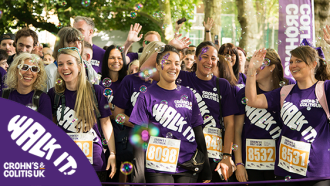
If your new year’s resolution was to give more, I would love you to consider sponsoring my sister and I to do the London 5K WALK IT this June in aid of Crohn’s and Colitis UK. Anyone whose read my blog before knows how close this cause is to my heart, and now that I’m recovered from last year’s surgeries, my goal is raise at least £200 to go towards researching treatments, and maybe even cures, for IBD. So get involved! Choose your amount (every little helps!) and donate on our Just Giving page below:

My Just Giving Page- Donate to Alice

Thank you all, you have no idea how many people you may be helping by donating. In June I will post a follow up article about the experience and some photos to thank everyone who sponsored me.

Happy donating! x

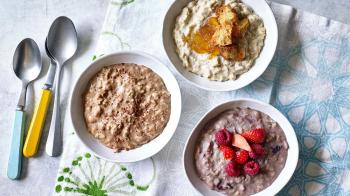
What I Ate After Stoma Surgery.

vegan_porridge_37172_16x9

Anyone with a stoma knows that diet is everything. Whether or not you have health issues like IBD which impacted the way you ate prior to surgery, what you eat does change once you have your stoma. In the early days after surgery, you’ll probably just be on water, which I found to be just as well since I didn’t feel like eating anything at all. I would simply advise you not to rush into eating straight after surgery, any surgery takes it out of you and getting a stoma is a big adjustment. You need to listen to your body and take your time. After a few days you should be able to consume liquids such as clear broth or milk and then in a few more, you can move onto soft milky foods like ice cream or jelly. Soon you’ll be starting to build on this with bland foods that are easy to digest like mashed potato and bread and so on and so forth.

Although some hospitals work slightly differently, most will probably advise you to avoid ALL fibre for 6-8 weeks after surgery; this is the period during which your bowel will be the most swollen and so, blockages are more likely to occur. Blockages most often happen near the point where the bowel joins the abdomen as the way ileostomies are constructed means that there is a bend here where food can get stuck. I have written previous posts outlining what I used to eat with Crohn’s Disease and how I used to be weary of certain foods, but now that I have my ileostomy, I am most weary of fibrous foods because of the risk of obstruction. I know some people brave it and eat things like nuts, seeds, mushrooms and leafy greens regardless (all of which I could happily eat before my surgery), but I choose to avoid these foods now as I’d rather be safe than sorry! I’ve already had one fruit-induced blockage (see below) and I’d rather not have another any time soon… You can slowly start to add fibre back into your diet about 2 months after surgery but believe me, this first couple of months of just low-fibre foods are not as difficult as they seem, and they go much quicker than you expect.

Below is a list of what I ate in the first month after surgery to give you an idea of what counts as low fibre/ low residue, as well as some basic meal ideas if anyone needs some inspiration!

  • Soy/ almond milk, eggs (scrambled/ fried), dairy free cheese + yoghurt, ice cream, jelly
  • White bread, pasta, rice, mashed potato, cornflakes, rice krispies, plain cupcakes, croissants, crackers, salt + vinegar crisps
  • Baked/ steamed chicken breast, minced meat (beef, lamb, pork), skinless sausages, thin ham, baked/ steamed skinless + boneless fish (salmon and seabass), tinned fish (salmon and tuna)
  • Well-cooked + peeled carrots, sweet potato mash, tomato sauce (passata, blended soup), finely diced onions, bananas
  • Garlic (crushed), dried herbs, cinnamon, ginger, salt + pepper, olive/ sesame oil
  • Ketchup, gravy, soy sauce, honey, almond butter, peanut butter, salted butter

I know it isn’t that extensive, but I spent the first two weeks in hospital anyway and my parents had to bring food in every day, so it couldn’t be too elaborate! This isn’t an exhaustive list either, just what I happened to try within the initial few weeks that were okay for my digestive system. The only thing on this list which proved slightly problematic for me was the cornflakes/ milk combo. I have established that having cereals definitely makes my output looser, so now (over 3 months post-surgery) I eat porridge instead 😊. In terms of main meals, initially it was often a question of meat/ fish + carbs for a while as fruit and veg were so limited, but I went into surgery underweight, so I needed to do some gaining! Protein was also essential during this time period as it helps the body to heal, so I made sure I ate enough meat, fish, dairy and eggs! I also tried to get creative with meals like chicken fried rice, ham and cheese quiche, homemade sausage rolls, salmon fishcakes and burgers. Who said low fibre had to be bland and boring!?

Then, once I was home, I started introducing some slightly more adventurous foods. Here is what I added between weeks 4-8 after surgery (note: after 6 weeks I started slowly adding the veggies and fruits on this list).

  • Pitta bread, porridge, lentil crisps
  • Smoked salmon, pancetta, prawns (only a few and chewed up well!)
  • Stewed apples, roasted + peeled red peppers, petits pois, spring onion (chopped within an inch of its life!), hummus
  • Maple syrup, milk chocolate, dark chocolate, cocoa powder, homemade sweet and sour sauce
  • Chives, fresh thyme

Again, most of these foods went down fine- it really is just a question of chewing everything to the max. I know that some people avoid peas because of fears they may get stuck, but I’ve never had a problem with them. As a general rule, I’ve found that if I can’t chew something right down to a point where I am happy to swallow, it will probably get stuck later on. So now I try to avoid a blockage at the first stage by recognising when certain foods aren’t breaking down to my satisfaction by chewing. In terms of how my output was affected by these new foods, it definitely became thicker into the second and third month after surgery- so don’t worry if you are in the early days and your output seems really loose, chances are it will get better! I will say that a couple of things on this list REALLY didn’t agree with me though… 1) Chocolate (☹- thanks to the cocoa solids it was like Niagara Falls…) and 2) Sweet and sour sauce (more like a fountain than a full on waterfall, but I’d still rather not be emptying the bag so much in such a short period of time!) I now avoid both of these (and cocoa powder) so that I am more in control of my output. And the solution: white chocolate. I know, I know. It’s not the same as its blissfully rich darker counterparts, but one has to make do…

As for weeks 8-12, that was when the real test took place: GREENS. During this time, I attempted the following foods:

  • Cucumber (peeled and deseeded), green beans, broccoli (not stems), asparagus
  • Tinned peach, tinned pear, tinned apricot, honeydew melon, cantaloupe, blueberries (blended in a smoothie)
  • Gnocchi, spinach pasta, oat granola (no nuts or seeds!), homemade chips
  • Minced turkey, prosciutto

I must say, I was pleasantly surprised by the top row. Although I wasn’t thrilled by the prospect of having to actually deseed a cucumber, they all went down okay. I just make sure that they are well cooked, I don’t eat any tough stems or skins and I chew well. Some people say that these vegetables cause their bags to fill up with air because of the gas they create, but to be honest, my bag balloons every night whether I eat them or not, so I’m sticking with them! As for the fruit, things weren’t quite so successful. Yes, I had my first blockage. Luckily not a complete obstruction, but still enough of one to freak me out! I’d eaten honeydew melon and some tinned peach together for dessert, both of which I’d successfully eaten before on several occasions, and I woke up in the early hours with a bag full of liquid and a HUGELY swollen tummy! I then spent about 2 hours trying not to pass out from dehydration while manually “massaging” the practically rock-solid melon sinew out of my stoma. Ew…. It was quite painful and definitely not how I planned to spend that night, but I now know that melon isn’t the way to go for me as I couldn’t chew it up as much as I’d liked. Luckily this is the only blockage I’ve had, and although that night and the next day were very touch and go, I managed to avoid a trip to A and E and I was eating normally again in a day or two. (If you have no output at all for 10-12 hours, your abdomen is swollen and you are being sick however, head straight for a hospital!)

Since the 12 weeks mark, I’ve only added a couple of new foods like butternut squash, tahini and avocado- all of which were fine, but I’m taking my time to experiment! I definitely learnt that for vegetables the trick is to cook them well and for fruit it’s either to do the same or use the tinned version (it’s much softer and already peeled!) It’s very strange that some dietary limitations that Crohn’s imposed on me before surgery, like very little dairy and no spice for example, still apply to me post-surgery. But others no longer apply, like the fact that before surgery the only fruits I could eat were grapes, blueberries and bananas, and I could also eat leafy greens and mushrooms. Now, I cannot digest mushrooms or greens like lettuce, or the skins or seeds in grapes and blueberries, but I can (without my damaged colon!) tolerate tinned peach, pear and apple. So, don’t assume that your diet will stay the same after a surgery like this. It’s all about experimenting and seeing what your new body can handle, and what it can’t. I have been far more confident in trying new foods (especially since I now know what to expect if I get another blockage!) and I’ve found some replacements for things that I can no longer eat.

My general advice for the post-surgery period of experimentation is as follows:

  • CHEW everything to a pulp
  • Only add one new food at a time
  • Record the effects of what you’re eating
  • If something doesn’t seem to agree with you, try it again in a few weeks to make sure (hummus didn’t seem to do me any favours the first time I tried it, but now it doesn’t affect my output at all)
  • By all means read about other people’s stoma diets, but don’t take it as the gospel, everyone is different
  • Consult your stoma nurse if you have any problems, they’re happy to help!

Ileostomy Surgery, Part 5: Ups and Downs.

Cartoon Rollercoaster

After the previous day’s achievement of walking the 30m green route around the hospital, I was feeling up to taking the 80m red route today. After getting my rear dressing changed as it’d been leaking everywhere overnight (ew…), I took to the corridors. I felt far stronger and less light-headed having been eating and drinking more- I’d even tried some cornflakes with soya milk that morning, fancy!

I was really starting to get into a routine with things now in terms of getting out of bed, changing my stoma bag and eating regularly. And eating more, I soon realised something really incredible: the constant agonising pain that I’d suffered from for years in my left side had finally gone. If I’m being completely honest, I did get a little emotional when I noticed. It had been there for so long that I never imagined I’d go a single day without it bothering me, let alone that I’d wake up after surgery and it would instantly be gone. What’s more, after several frankly baffling years of my IBD team telling me that they didn’t know what it was, I finally had some closure: it was clearly one of the strictures in my colon all along.

Feeling even more encouraged, I walked the red circuit again after lunch- a smoked salmon sandwich with hula hoops a.k.a. heaven. I was more or less adding one “safe” food every day or two now- “safe” foods being low-fibre and unlikely to cause a blockage. I knew I needed to eat salty food at the time because ostomates lose a lot of salt and minerals through their stoma, particularly just after surgery when the output is still loose. Luckily I seem to have a real taste for salt! I also knew that I needed to eat as much as I could feasibly manage as I had some weight to gain. I wasn’t in the appalling malnourished state that I had been in for many months earlier in the year thanks to the 4 ½ months liquid diet I’d done, but it certainly hadn’t worked as well as it should have, so I was at least 5 kilos under my “normal” weight. Hence, I may or not have then eaten 3 homemade cupcakes…

Anyway, after gorging myself on salt and sugar, I then had my bloods taken and my rear dressing changed yet again. I had attempted at the physio’s request to try and sit in the chair on a pillow for a few minutes to help my circulation, but it was way too uncomfortable and only made my wound seep even more. This continued for the next couple of days, but I continued to make progress in terms of eating and moving about. The next day I even got my dad to wheel my IV and I managed to walk the red circuit completely unaided several times. My pain had also improved to the point where I was barely pushing my PCA.

By the 4th November I was taking the red route at least 4 times a day, including once before breakfast. Don’t get me wrong, I was aching all over, but ironically moving about was relief for my otherwise stiff legs. I think it was more getting in and out of bed that was causing my hips to be sore, its actually quite difficult and unnatural trying to do it without putting any pressure on your bum… That evening I was told however that the pain team were now happy with how I was managing my overall pain level and they suggested that I be disconnected from my PCA and swapped onto oral tramadol and oxycodone instead. The tramadol would be given throughout the day and the oxycodone was to be asked for if I needed it as an extra. I’m always nervous when it comes to pain relief. Would it work? Would they get the dose right? Would I lose the ability to think straight? Would there be a range of other unpleasant side effects? Time would tell.

It wouldn’t take long either! I started tramadol that night and the next morning I wasn’t feeling too bad. I then got the amazing news that my CRP (the inflammation marker that indicates active Crohn’s Disease) was 11! 11! I don’t think it’s ever been that low! The day was off to a good start, but it would soon take a downward turn. My nurse for that day “misread” my drug chart and accidently gave me double the dose of tramadol that I was supposed to have. Within about half an hour I felt incredibly nauseous (despite the full dose of anti-sickness I’d already had that morning), dizzy and generally out of it. What déjà vu! Speaking of which, it wasn’t long before the good old hallucinations crept back in too. Way to ruin my winning streak!

Needless to say, I have absolutely no recollection of who visited me that morning. Luckily after a long nap and some chicken and gravy, I started to feel better. So much so, that later I decided to change into my own clothes and brave my biggest adventure yet: the stairs. It was surprisingly easy! I only did one flight initially (baby steps people), but that was the final hurdle I needed to cross as far as mobility was concerned before going home- woop!

Later that night I even managed to watch the fireworks out of the ward window- people would pay a lot of money for a view of London like that! My pain relief was now at the correct dose and I could feel when I needed more. The pain wasn’t quite as dramatic as I’d previously experienced, but when the drug wore off I could definitely locate the worst of the pain just to the right of my stoma. Luckily I was on the ball again now and asked for more before things got too painful!

After conquering the stairs, my goal for the next day was to sort out my rear dressing once and for all. So far we hadn’t found a way to dress it so that it didn’t leak, and I was getting pretty fed up with getting stuck to my bed protector. My surgical registrar decided to have another look at the wound and said that some of the outer stitches had pulled apart which was why it was leaking so much. This didn’t sound good at all to me, but she seemed at ease. She explained that it was bound to seep quite a bit because of the severity of the infection that I’d had removed during the surgery. She then suggested that we start using some longer, more absorbent dressings to hold everything in.

Unfortunately, as is often case with hospitals, they didn’t have the dressings she wanted to use. Yawn. So, she then left me with a makeshift paper towel nappy of sorts under the impression that the nurse would come and re-dress the wound shortly. After an hour of waiting I concluded that I might as well just re-dress the wound myself with the dressings I’d brought from home. I hate to be a know-it-all, but I’d much rather have done it myself anyway as that’s what I was used to. But apparently the nurse disagreed. So, she then proceeded to rip off the new dressing I’d just put on it and replaced it with a completely useless one. Sigh.

Anyway, I was then visited by one of the stoma nurses who told me that my bag was being overworked with acid from the early days of my output. This also wasn’t helped by the fact that the stitches holding the stoma in place had pulled away from my skin leaving a very red moat (for want of a better word) around my stoma. In other words, the stitches weren’t really doing anything other than stopping my skin from healing. She said that this was relatively common and decided to remove these stitches and try out a barrier ring. As any existing ostomates are probably aware, this is like a sticky mouldable ring that attaches to the skin around the stoma, preventing output from reaching the skin and allowing it to heal. They’re also used to prevent bag leaks. Removing the stitches certainly didn’t feel good when my skin was so red raw, but luckily there weren’t many of them.

That afternoon I learnt a very important lesson about recovering from stoma surgery: it isn’t always just a series of linear improvements; things can be up and down from time to time. For some reason my pain was coming back, and it was really starting to bother me. I decided to try some oxycodone for the first time. I realise everyone has a different reaction to pain relief, but for me, oxycodone didn’t really have a noticeable effect on my pain. But it also didn’t make me hallucinate or feel sick. You win some, you lose some. I didn’t want to try anything else so soon though, so I had to grin and bear the pain for the rest of that day. I thought my pain had been improving, but I know now that recovery is unpredictable.

Ileostomy Surgery, Part 4: Getting Moving Again.

patient_walking_with_iv_bag_1600_clr_13874-1030x1030-1.png

On the morning of the 31st of October, my urine catheter was finally removed in the hope that I could try and stand up for the first time later in the day. It definitely stung a little when the tube was removed, but I imagine it would feel much worse to get one put in! I was just glad to feel a bit freer and the prospect of getting out of bed seemed very appealing after almost a whole week of being stuck lying on my back. I thought I should try and get some strength back before attempting to walk though, so I had my first solid food that morning: a cheese sandwich. I only managed two squares as I was still pretty unsure about how my body would react, but after months of no real food at all, any amount of cheese sandwich was utterly delightful.

Then, the big moment arrived. At 11am one of the physios came to help me stand up. By “help me” I mean encourage me, she didn’t actually assist me physically, she was more for moral support. I started off by shuffling to the edge of the bed and sitting for a few minutes psyching myself up to walk again. It’s definitely quite daunting when you feel so weak and haven’t moved for so long, you start to doubt whether your legs will hold you up! Usually, the mobilisation process is done in stages- the first one being to sit in a chair for several hours a day, to overcome the initial dizziness before walking any real distance. But unfortunately, given the nature of my surgery and my rectal wound, I was only allowed to sit for a couple of minutes max. I soon concluded that it was probably going to hurt however I tried to get up, so in the end I just went for it. My legs were extremely shaky for the first 5 minutes and I felt very dizzy: not a great combination for trying to walk, but not unexpected either. The most important thing in this situation is to take your time and know your limits. Personally, I could feel that I wasn’t strong enough to just go bounding around the ward immediately, so I began by gently walking on the spot to get the blood flowing back into my legs.

Soon I felt a bit more stable and, after we’d clipped the stomach drain to my gown, I managed to plod my way out of the bay and about 5 meters out through the ward with the help of my IV to steady me. The main pain I had was my abdominal wound, so I had to walk slowly and hunched over to avoid straightening it too much. Such a short distance may not seem like much, but it was a big step for me at the time. My pain was understandably worse for the rest of that day, but the progress was worth it. I was absolutely knackered afterwards though- and definitely ready for the other half of my cheese sandwich! The physio told me she was happy with my first attempt at walking and that I should aim to start walking a short distance a few times a day to build up some strength and get things working again, that would be key for my recovery. Luckily, the surgical ward was marked with two walking routes for mobilising patients: a shorter green route, and a longer red one. Tomorrow I had to try the green one.

A bit later, after my sandwich had gone down, I got even more adventurous and decided to try some strawberry blancmange that my grandma had made me. It was very nice, but possibly a bit sweet at the time! But my surgeon wanted me to eat sugar, and I didn’t want to disappoint. Then I had a good nap for an hour or so- what can I say, that brief shuffle along the corridor really did take it out of me. When I woke up however, I realised I urgently needed the loo. I’d almost forgotten that at some point I’d actually need to go to the toilet. I’ve found that after having a catheter removed, you tend to need the loo quite immediately for the first day or two as you aren’t conscious of going while the catheter is in place and so, you aren’t used to “needing” the loo at all. Going the first time after having a catheter removed can also be a bit awkward, but soon things go back to normal again. For my first time I had to use a commode as I wasn’t strong enough to make it to the toilet just yet. It was a little tricky and uncomfortable like I say, but I managed. And while I was out of bed, my nurse was FINALLY able to change my sheets and give me a new gown which gave me a real boost.

A bit later, I was visited by one of my IBD doctors. He was thrilled with how much of a turnaround I’d made after everything that had happened so far. He said he honestly didn’t think I’d be up and about yet, and he was very proud of how far I’d come. After all the things I’d been through so far, that felt really good to hear. The rest of the day wasn’t that eventful, I just ate some more and rested mainly. But I was starting to notice that my stoma output was becoming a bit more frequent in response to what I’d eaten. It’s always loose for a long while after surgery, but it was reassuring to see that everything was working okay. However, I then needed to start thinking about how I was going to empty the bag as so far I hadn’t needed to, what with the stoma nurse changing my bag each day and me barely eating anything. I couldn’t bend down to reach the toilet, but emptying the bag proved relatively simple with the help of some kidney bowls. That was the first day when I felt like I’d really made a step forwards in my recovery and as a reward, I treated myself to an episode of The Great British Bake Off via the hospital wifi.

During the night I managed to use the commode a few more times unassisted, but I did need help getting back into bed. In the morning the consulting colorectal surgeon (the main man) came to see me with his registrar and the doctors. He was very pleased with my stoma output and my mobility, but he gave me an important piece of advice: Don’t get overexcited and do too much, you still need to take it easy. He also checked all my wounds and gave the go-ahead to remove my last drain- yay! I celebrated with a small plain croissant (yes please!) and soon my nurse came to do the honours. She told me it was going to be very uncomfortable when she took out the tubing, so it was deep breaths all the way! As usually goes with a drain, she first had to unpick the stitching holding it in place. Then she had to ease out the drain itself. I wasn’t exactly looking while she did this, but I was wondering why it was taking so long. I knew she had to do it bit by bit, but wasn’t it only a short plastic tube? Apparently not! It turned out to be around 25cm long… Yikes! Getting that pulled through my stomach was yet another new and incredibly weird sensation which I hope not to relive in the future.

I then had to get my rear and abdominal wounds redressed. This was the first time that I’d seen my abdominal wound without a dressing on it. Let’s just say you certainly couldn’t miss it! It was about 25cm long and there was an enormous number of staples holding it together. The second thing I noticed (after the staples, was the fact that I’d lost my belly button! I mean, it’s not like it was particularly useful or anything, but I thought once my wounds had healed into scars that I’d look even more mutilated without one. Oh well, I tried to tell myself that there were more important things in life than navels… (Though, as it turns out, three months after surgery I have realised that I do still have one, it just got lost in the staples and swelling in the early days!)

I thought it would make me cringe leaving it exposed without a dressing, which is why I hadn’t done it sooner. But I quickly forgot about it and thankfully, it didn’t catch on my gown. Now it was time to change my stoma bag and a week into my stoma journey, I thought it was about time I did it completely by myself. I remembered the steps the stoma nurse had told me: spray the old bag, peel it off, clean and dry the skin, measure the stoma, cut the new bag, peel off the adhesive and secure. It wasn’t as bad as I’d previously thought, it was mainly just the angle at which I was lying making things awkward. But from that point, it felt like I could genuinely see myself being able to manage living with a stoma. By now I had also finished the strongest of the antibiotics, which meant that my appetite was slowly growing again. That afternoon I managed to eat a jacket potato, some cooked chicken and a small amount of cheese- what a gourmet delight! Though, I did start to notice an unwelcome consequence of going so many months without solid food: my teeth were killing me. I’d forgotten how much effort it took to chew!

But nonetheless, I was feeling energised from my mini meal and ready to brave the green ward circuit. The total circuit was about 30m long and after a pit stop at the loo, I shuffled my way along yet again, determined to complete it. Part way round, I was joined by a support therapist who encouraged me to try and walk with my IV to one side rather than in front of me like I had before. Granted, this was easier and I wasn’t constantly stumbling over the IV, but it was harder on my stomach. Like many things, I guess I would get used to it. And sure enough, eventually I made it back to my bed; a bit sore, but very satisfied. Once I was lying down again, the therapist got me to do some limb exercises which involved pushing my feet against her hands, flexing my ankles and consecutively lifting and bending my legs in order to help with circulation and strengthening my muscles. After all this I was exhausted again, so I took another well-earned nap. I then had just enough energy left to attempt to wash my hair in bed again, much to my parents’ delight! And then I rewarded myself for another productive day with some homemade cheese quiche and some mashed potato, followed by some ice cream and a good old fashion magazine. Things were certainly looking up.


Ileostomy Surgery, Part 3: The End of The Epidural.

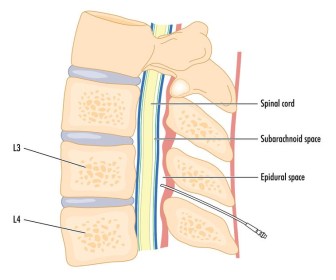
epiduralanesthesia_catheter46938395_M
Epidural Anatomy.

If you’ve been reading my previous posts about my stoma surgery then you will remember me talking about how I seem to develop a bunch of random issues whilst in hospital. So far there had been my partial blindness and my mysterious shoulder pain, and on the afternoon of the 29th of October, four days after my surgery, I had another enigma to add to the list. This time I had developed an odd, blotchy looking rash on my face and neck. A dermatologist was called for me, but it seemed to be a waste of time. He had no idea what the rash was and just prescribed some random steroid ointment, which did not work I might add- even now I still have some unfortunate scars from said rash.

Aside from that, I was still waiting for my epidural to be removed, but there was another hiccup. Because usually hospitals give all their inpatients daily blood thinning injections to prevent blood clots while they aren’t overly mobile, they established that they couldn’t remove my epidural yet as there was too much risk of bleeding. Then, a doctor came to visit me and told me that later on he was going to do a proper mobility check (not just the spray test) and if I couldn’t lift both of my legs high up off the bed without any help, I would need to be sent down for an MRI to check if I had a blood clot at my epidural site. This would be mean a hell of a lot of movement and movement = pain. He warned me that it wouldn’t be pretty if this was the case.

Momentarily left alone again, there was one thing I really wanted to do: wash my hair. By this point it had been almost 6 whole days since I’d washed it and I was passed desperate. Now, I know what you’re probably thinking: with everything else going on, why on earth was I being vain enough to think about my hair, of all things? Its actually not a vanity thing at all, the feeling of greasy hair just makes my skin crawl. So, my parents began the ever-challenging task of washing my long hair without moving me. Needless to say, it was not easy. But we did eventually get the hang of it… sort of! It involved a large plastic bowl, some inco sheets, a few arguments and a whole load of towels! But it did feel better afterwards, so I thought it was worth it. Even though every time I asked my parents to wash my hair after that they rolled their eyes with dread because it was so much of an ordeal, its important to try and keep up with simple things like that if you can, it really does give you a mental boost.

Freshly washed, I saw the doctor and pain team again and they were ready to do the mobility check. I was very worried about just how painful and difficult this was going to be, but I actually surprised myself quite a bit. With some albeit harsh encouragement, I managed to will both of my legs to a 45-degree angle off the bed and hold them in this position for around 5 seconds. Then things got rather awkward when the doctor asked me to try and kick him in the face… I thought he was joking, but apparently not. I definitely would’ve kicked him harder if he had been the nurse who switched off my epidural, but I was feeling positive about my progress for the first time, so he got off lightly- especially since I used to do karate! But most importantly, I passed, so no MRI for me- yay!

I pressed my PCA a few times after this little assessment to regain control of my pain, but I was starting to feel more comfortable with the fentanyl as it seemed to be doing a better job than anything else I’d tried so far. I was still getting bouts of nausea and hot flushes, and I could feel some level of pain almost constantly, but I could speak properly, and overall things were not too bad now. Perhaps there was some light at the end of the tunnel. I was then told that I would soon be moved to the surgical ward that I was supposed to be on from the beginning- I’d been on a vascular ward until now, which would explain -but not excuse- the less than acceptable care I’d received so far… However, once I arrived at my new ward, my porters were stunned when the ward sister said that I wasn’t getting my own room after all, I was going to the dreaded bay. Now, I understand that it is a privilege to get your own room in hospitals which struggle for space, but seriously, what does a girl need to do to get and keep a side room!? Great, no sleep for me then.

After a predictably loud and disruptive night, the next day was remarkably uneventful compared to usual. Just the same old confusion; this time about the level my pain relief machine should be on and whether or not my stomach drain should be removed yet or not. Not, according to my surgeon seeing as it had already drained almost 500ml of stomach fluid (gross, I know) and was still going. But at least my nurse for that day was on the ball. After hearing about what had happened with my epidural, when my fentanyl ran out, he went sprinting to the storeroom to get a new bag and hooked me back up in record speed. Much appreciated. But I did not appreciate the doctor who visited me that day putting the side of the bed down without warning: it was the side that the bottle connected to my stomach drain was hanging on. The one time I wasn’t paranoid enough to hold the bottle myself to make sure no one’s negligence ripped the drain out of my stomach. He just managed to catch it, but I’m pretty sure he even cringed himself when he realised. After this I went back to holding onto the bottle for dear life, much to the amusement of several other doctors who subsequently came to check on me. But better to be safe (and ridiculed) than sorry.

Anyway, he said that the other drain (the one connected to my butt cheek) could be removed. I’m not exactly squeamish, but this definitely freaked me out more than I could have anticipated. I had to pull myself to the right-hand side so that the nurse could get to it, which was more than I’d moved in a week. Then she had to remove several stitches before pulling the drain out. Considering I could not see what was going on down there and the pain from the surgery itself exceeded any pain caused by the drain, I expected a drain not dissimilar to the one in my stomach- a clear plastic tube around the diameter of a pencil. Instead, the nurse yanked out a 25cm folded rubber strip- YUCK. It was akin to a giant piece of celery! I couldn’t believe that had been inside my bum for the last week… no wonder I felt so weird and uncomfortable! As for how the removal felt, getting the stitches out hurt the most. When the nurse pulled the drain out it did feel incredibly odd, like a lot of pressure suddenly being released. After about an hour though, my bum definitely felt a little more comfortable.

My registrar and my IBD nurse then paid me a visit and were glad to see me feeling more settled. I don’t want to scare anyone even more than I probably already have, but they agreed that the first few days after stoma surgery are not usually days you want to remember. But soon, things start to look up. As for food, they both said that I should start trying to have something more than just soya milk. Sugar was now on the menu as it was what I desperately needed. So that afternoon I braved some fromage frais for the first time- and boy did it taste good! I only managed half a tiny pot initially as I felt a little sick, but it was progress. Speaking of progress, my eye was looking much better. After a couple of days of using the ointment prescribed in recovery, I could see again- though my vision was a bit blurry at first. By now the swelling had also gone down significantly, so I looked less like I’d lost a fight.

The next item on the agenda was to finally remove my epidural. I’d been given a vitamin K infusion to help thicken my blood and the results from the blood test I’d had that morning had been given the all clear, so it was now safe to remove it. Removing the gigantic adhesive dressing attached to my back probably hurt more than the removal of the actual tube- that only created a mild stinging sensation. Afterwards however, I had to undergo the tiresome task of lying very still and flat on my back for 2 hours in order to prevent the notoriously painful spinal headache. This was the first time I had laid flat on my back and it wasn’t exactly comfortable. But with a few pushes of the PCA, the pain was manageable, and I hoped to be able to get some rest that night. Unfortunately, as is standard for hospital bays, this wasn’t the case. As it was, the same old ward noises were doing their best to keep to me awake: the patient call buttons buzzing, the reception phone ringing, the reception printer running, the nurses shouting and laughing, the geriatric patients yelling out in confusion, the nebuliser machines etc. Not to mention the way too enthusiastic nurse who got assigned to our bay in the middle of the night and felt the need to turn on all the lights and announce her presence at 1am by shouting: “Hello everyone, my name’s Margaret and I’ll be taking all your obs now!” And just to make sure we heard her from behind the dividing curtains, she came and repeated it to every one of us individually. This did not amuse me, nor the 3 other women in their 80s who were already fast asleep… Can’t say I was exactly ready for the next day after that, or should I say ready for Halloween!

Ileostomy Surgery, Part 2: My Struggle with Pain Relief.

when-not-to-measure-pain.jpg

October 27th was without a doubt one of the hardest days for me, not just of my hospital stay and my surgical journey, but of my whole life. It was only the third day since my surgery, and it didn’t get off to a good start. That’s because when the lunch service started, my new nurse turned up in my room and tried to make me eat a leafy salad that I’d supposedly ordered… even though I was still only on tiny sips of water and no food. I tried to explain to her that the salad clearly wasn’t mine, but she retorted by telling me that I must have ordered it, it was on the lunch chart. When I told her that I had just had stoma surgery she stared at me blankly, so I then explained that people with stomas are generally told to avoid leafy greens as it may give them a blockage. She still looked confused. To put it bluntly, I told her that I couldn’t eat that salad 2 months from now, let alone 2 days after stoma surgery. She finally left my room and I thought this conversation was over, until she came back 10 minutes later saying: “You really should eat something dear”. There’s just no getting through to some people.

After that incident had eventually subsided, the same nurse decided that she wanted to re-do my cannula and move it to the other arm, and with it my epidural machine which was plugged into the mains. But because I was only on small sips of water, it wasn’t going to be easy to cannulate me. What happened next still gives me the shivers. It was without question the most painful and one of the most traumatic experience I’ve ever had. I didn’t realise at first, but the nurse had turned off my epidural ready to swap it to the other side of the bed BEFORE starting to try and cannulate me. She then couldn’t find a vein, forgot that she’d switched off the machine and left to look for someone else to help fit my new cannula. 20 minutes in and I started to feel a growing pressure both around my abdomen and my rear end. I thought maybe it was just a temporary blip. Soon my parents arrived and immediately my (thankfully) nosey Dad noticed that the machine didn’t have any lights on it. I immediately started to panic.

I frantically pressed the call button, but no one was coming. By this point for every 2 minutes that went by my pain got 5 times worse. By 52 minutes I was in absolute agony. And I don’t use the word agony lightly. I don’t think it would be an exaggeration to say that I felt as though I was being burned alive… whilst giving birth… to quintuplets… without any pain relief. In other words, I may as well have been having my extensive open surgery without any anaesthetic. I am not usually an emotional person, one who likes to make a fuss, or one who wants to be the centre of attention, but I ended up screaming for help, balling my eyes out and clinging onto the bed for dear life. I had absolutely no control over my body at this stage, the pain was unbearable.

My parents felt so helpless. My dad was frantically trying to cool me down by fanning me as I was burning up and dripping with sweat. My mum was running in and out of the room trying to find someone to help. But most unfortunately of all, apparently nurses are not supposed to turn epidural machines on or off, so I would have to wait for the anaesthetist, who was still in theatre performing surgery, to finish her surgery and come and turn it back on. So I waited in purgatory for almost 2 HOURS in this horrific state and, even though I was in so much pain I could barely speak at all, I just remember begging for someone to help me and that I just wanted it to all be over. My mum found watching me suffer like this all too much in the end and she had to step outside so that I didn’t see her crying- not that I really noticed what anyone else was doing anyway! And all my nurse had to say for herself upon seeing me absolutely broken was “Oh, sorry”. She then completely disappeared until the anaesthetist FINALLY arrived after what seemed like forever! I never want to experience pain like that ever again. Meanwhile the ward sister was trying to make my parents leave as “visiting hours were over” despite everything that was happening. Naturally, my mum wanted to punch her in the face for even suggesting that she leave while her daughter was in such a state. And believe me, my mum is a very caring and thoughtful woman, but she’s also incredibly scary when necessary.

Luckily the anaesthetist who came was the same one I had been seeing already and, after being horrified by the frankly nightmarish scene in my room, she leapt into action, set my machine back up on full whack and gave me the biggest bolus she could. She then abruptly called my nurse back into my room and demanded that she fill out a report immediately stating exactly what she’d done to me so that it would go on her record. The nurse looked a little sheepish now, but she then sneakily turned her name badge over so we couldn’t make a note of her details. My mum was however given the details of a couple who offered to act as witnesses to what happened if we wanted to take things further, seeing as they’d heard the commotion all the way down the hall. Obviously after all of the above, I didn’t want this nurse anywhere near me from now on, but I was told by the anaesthetist that because the NHS are so short-staffed, if I were to say that I didn’t trust her with my care I would likely be left without a nurse and the staff might even get “funny” about me complaining and refuse to help me at all. Great. So, after the anaesthetist had finally managed to cannulate me in the foot (that was a new one even for me, but all my arm/ hand veins had been used already), I just had to grin and bear it.

Weirdly, after the pain was more under control and I’d settled down again, I probably slept better that night than I had so far- likely because I was so physically and emotionally drained. The next morning I felt a little better. The stoma nurse came and changed my stoma bag and then I saw my surgeon’s registrar. Now I must say, I haven’t been overly flattering about the care I have received in hospital in the past, and this visit isn’t exactly an exception, but I will say that my surgical team were amazing. They came to visit me and check how I was getting on every day without fail, I was very impressed- and I don’t give out compliments easily. I guess not everyone who works for the NHS give you a reason to moan about them! Up until this point I’d still only been on water, but my registrar told me that I could now brave some milk or yoghurt. In case anyone isn’t aware, after stoma surgery you usually start on milky soft foods like yoghurt, ice cream, or in my case blancmange, at the beginning as they are easiest to digest after surgery. Then, you can move on to bland, soft foods like bread and mashed potatoes and then plain meats etc. But one step at a time…

Although not a touch on yesterday, my pain had never quite fully subsided since the incident with the epidural, so I asked to see a pain nurse. She was still concerned about the fact that after 3 days I still couldn’t even move my toes. Mobility can be slightly limited after an epidural, but not this badly, or for this length of time. Epidurals are actually only meant to last a few days anyway. She was worried about the risk of DVT (deep vein thrombosis) and the fact that they’d already found an infection in my body during surgery. After all, the epidural was an easy target for the infection to spread to. My bloods were being taken almost every day to monitor this, but we didn’t want to take any chances. She advised that we try to remove the epidural and swap to a PCA machine (patient-controlled analgesia) i.e. an intravenous morphine pump that would have a base rate of pain relief as well as a bolus button that I could push every 5 minutes if I needed something extra. That way I would be in control of my own pain relief (and avoid another murder attempt) and soon I could hopefully mobilise.

At around 4pm that afternoon, my epidural was switched off and my PCA was set up. I was incredibly sceptical about this change considering the IMMENSE pain I’d suffered yesterday when it had been switched off, but I knew I also couldn’t stay on the epidural forever, and it wasn’t even solving the pain issue entirely. They didn’t want to actually remove the epidural until it was okayed by the anaesthetist, but it was now redundant, so I familiarised myself with the PCA. Essentially, there is a little button (I’ll put a photograph below) that patients can push when they are in pain to be given a boost of pain relief, but it is engineered to stop people overdosing but locking the button for 5 minutes after it has been pushed. Clever, I know.

Meanwhile, I decided to brave half a plastic cup of soya milk. The strangest thing was that before having this surgery I’d been on an exclusive liquid diet for over 4 months and I couldn’t wait to eat some real food. When I was researching stoma surgery I even tutted at the thought that I might have to wait several days after surgery even to be allowed something as simple as clear broth. I didn’t however, given my firm love of all things food, consider the possibility that I actually might not feel like eating anything for a while. It had been 4 days and even though my surgeons were cheering me on to start consuming something other than water, I was hardly as enthusiastic as I’d anticipated. And my stoma didn’t take overly kindly to the first few sips either! After lying dormant for a while, it suddenly had something real to digest, which made some… interesting… noises! But I guess I would get used to them in time!

One thing I did not appear to be getting used to was the morphine. Later that night things took another turn for the worst. By around 5:30pm my pain levels were rising rapidly and in another couple of hours it was at a critical point again. Not only this, I was also totally out of it again i.e. I was baking hot, I could barely speak or articulate how I felt, I kept forgetting my parents were even with me and my normal breathing became quick low breaths, as if I was struggling for air. My parents went back to yesterday’s frantic fanning and trying to find help. I was really hoping today would go a bit smoother, but evidently there was more in store for me yet! Eventually the anaesthetist came back at around 11pm and decided that the quickest way to get things under control was to restart the epidural with the anaesthetic running at a higher rate and keep the morphine running as well. She also gave me some anti-sickness and some IV paracetamol and said she would be back to check on me just after midnight.

I didn’t rest easy that night. Although the pain settled a little, I was very confused and hallucinating again because of the morphine, so I was trying so hard not to press the PCA through fear of loosing my mind even more. The anaesthetist came back again early in the morning and told me to focus more on the pain and less on the hallucinations and push the button when I really needed to. She turned the epidural up a to 10ml/hr so that I would be a bit more comfortable until we figured out what to do next. Meanwhile I was trying my utmost not to get irritated with the nurses who kept taking my blood pressure, seeing it was low, ignoring me when I said I have a naturally low blood pressure and having a go at me for not drinking enough- even though no one ever refreshed my water jug and it took several hours to get any when I asked. :/

Anyway, water-related rants aside, the pain team returned later that day and decided that it would be best to change the pain relief set up AGAIN and to swap the morphine to another drug called fentanyl and remove the epidural once and for all- particularly because the epidural had been in use for so long now that they were worried that a possible infection could spread to my brain. They also wanted to start me on a strong oral pain killer called pregabalin for neuropathic pain relief. Luckily, the pain team were pretty on the ball and made sure that the new fentanyl PCA had been running through a new cannula for at least an hour before switching anything else off. Then later today the epidural would be removed for good.

IMG_20191031_082542[1]
My PCA machine.
IMG_20191031_082602[1]
My patient-controlled bolus button.

Cheese Twists.

IMG_20191224_144354[1].jpg

I love a cheese twist. Buttery, flaky pastry. Sharp, salty cheese. What’s not to love? This super simple recipe uses shop-bought puff pastry that’s ready to roll, meaning you don’t have to spend hours creating this delicious party pleaser. I made these for my family over the Christmas holidays, and they certainly didn’t disappoint!

Time:

Preparation- 25 minutes

Cooking- 15 minutes

Total= 40 minutes

Makes: About 10 large twists

Ingredients:

1 x Jus-Roll puff pastry sheet, chilled

Lactose free strong cheddar cheese

Plain flour (for rolling)

1 x egg (for glazing)

Black pepper to taste


Instructions:

  1. Remove the pastry from the fridge 15-20 minutes before rolling. Meanwhile, pre-heat the oven to 180 degrees.
  2. Line a large baking tray with grease proof paper or grease with butter and start setting up a workstation. I always use our kitchen table when working with pastry as the smooth wooden surface makes it easy to roll. Dust your desired surface with a little flour.
  3. Finely grate about two large handfuls of cheddar into a bowl. The quantity doesn’t need to be overly precise and if you have grated cheese left over, you can sprinkle it on top of the twists once they’re rolled.
  4. Using a lightly dusted rolling pin, gently roll out the pastry sheet. The pre-rolled sheets are pretty much good to go so don’t roll them too much, they’re already only a few millimetres thick. You just want to make the pastry a little more supple. Once you have a suitable rectangular-shaped sheet of dough, sprinkle enough cheese to fully cover ½ of the sheet- imagine the dough is like an open book which is facing you and cover half of the length of the dough.
  5. Lightly compact the cheese down so that the dough is easier to work with. Next, sprinkle a little black pepper over the cheese.
  6. Fold the plain half of the dough sideways over the cheese-covered half- imagine you’re closing a book. Using a rolling pin, roll the folded dough just enough to compact the layers together and secure the cheese.
  7. Rotate the dough 90 degrees so that the longer sides are now parallel to you again. Now using a knife, slice the dough width ways (downwards) into roughly 2cm wide strips. You can use a ruler or straight-edged template the help you with the lines if you want!
  8. Once all the dough is sliced and the edges are trimmed, beat an egg in a bowl for glazing. One by one take a strip of cheese-filled dough and twist it once, or twice if the dough will allow it without breaking. Place the twists onto the prepared baking tray. If the twists start to self-destruct a little, just use a rolling pin to compact the cheese a little more so that they are easier to work with.
  9. Once all the twists are on the baking tray, use an egg brush to lightly glaze them. Sprinkle remaining cheese on top and place in the oven for around 15 minutes- though they may need an extra couple of minutes if you’ve made them larger.
  10. Once beautifully puffy and golden, remove the twists from the oven. I would recommend removing them from the baking tray whilst they are still warm to avoid sticking and breakage. Place them on a cooling rack and then, enjoy!


Recipe adaption: It is definitely possible to make these cheese twists gluten-free, just buy the gluten-free version of the Jus-Roll or an equivalent. Or, if you’re feeling adventurous, try making the pastry form scratch!

Ileostomy Surgery, Part 1: The First Few Days.

ileostomy-2.png

Happy New Year everyone! The eagle-eyed amongst you may have noticed that it’s been a while since I last posted, but it really has been a hectic and difficult few months. After being cancelled the first time around, I finally went in for my pan proctocolectomy (that’s a fancy word for ileostomy surgery) on October 25th 2019 and ACTUALLY got it done. Thankfully, this time I only had to wait a few hours before being called to theatre and that time was taken up by a few medical students on their placement year who wanted to interview me for their research. I’m not going to lie, its definitely a strange feeling when three other people who are exactly the same age as you look at you in awe and disbelief as you describe the entirety of your (very extensive) medical history. Although we were all twenty years old, I felt worlds apart from them. But our reminiscent chat was nonetheless cathartic for me seeing as my whole journey with Crohn’s seemed to have built up to this operation.

I eventually went down to theatre at around 10am. Here I began the pre-surgical preparations, which for me included getting an epidural fitted. For those of you who don’t know, having an epidural basically means getting a small tube inserted near the base of your spinal cord which is used to administer anaesthetic and numb the sensation of the lower half of the body, hence its use in childbirth and some major surgeries. I was a little anxious about this as I’d never had a reason to get one fitted before. The insertion of the tube, though relatively painless thanks to some cold spray, was a strange experience to say the least. The anaesthetist told me that I would need to sit doubled over with my chin pressed to my chest on the very edge of the operating table for around 20 minutes after the tube had been inserted without moving at all- a nurse was literally holding me in a head lock to steady me, otherwise the tube may not get to its correct destination. Luckily this didn’t happen and after having a couple of cannulas fitted, I was asked to lay down and was sent off to sleep.

The operation went to plan (thank goodness!) and took about 6 hours. It would probably have taken far longer if I’d had keyhole surgery, but my surgeon thought that the operation was so extensive that open surgery would be best. My surgeon’s registrar informed me that my colon and rectum had unsalvageable damage, both containing severe active inflammation and years of scar tissue as well as numerous strictures, some of them impassable. The end of my small intestine needed to be removed as well as it had a very tight 20cm stricture also. Fortunately, my stomach and the rest of my small intestine were apparently not as damaged as we initially feared. The registrar also told me that I would be starting IV antibiotics as they discovered a pretty severe infection around my rectum, which they thought likely stemmed from the abscesses and fistula which I’d been suffering from since February! They hoped that by removing the main area of infected tissue once and for all before stitching me up, it would finally be dealt with. Time would tell.

At first I was pleasantly surprised by how I felt after I woke up from surgery, the epidural initially seemed to be doing its job as I couldn’t feel much at all. Once I was a bit more “with it”, I assessed myself to get a clear picture of everything that was going on. I had cannulas in both arms- one of which had a larger arterial line, through which I was given some blood during surgery. I had a urine catheter- as I obviously wouldn’t be popping off to the toilet any time soon! I also had two drains: one was a clear plastic tube going into my abdominal cavity to draw out fluid into a bottle, the other was a lot larger and came out of my left butt cheek and into a drainage bag. The entire length of my abdominal wound was stapled and covered in a massive bandage and my ileostomy was draining into a clear stoma bag to the lower right of my abdomen. Then of course there was the blood pressure cuff, the pulse sensor, the electrodes etc. Needless to say, even if I was mobile, I wouldn’t have dreamed of moving an inch connected to all that stuff through fear of yanking something out! I would be stuck on my back in the same position with the head of the bed slightly raised and my legs slightly bent for at least a week.

Thankfully, the stoma nurses were taking complete care of my stoma and changing the stoma bag daily. I was very grateful also that my surgeons did such a fantastic job with forming the ileostomy. I had seen some photos of new stomas before and they always looked very large and a bit angry! Mine was never bigger than a two-pound coin and always looked pretty neat for a bit of intestine- if I do say so myself. If you are new to the concept of a stoma or you are uncertain about heading into surgery yourself, don’t be alarmed if your new stoma initially does look a little bigger or redder than you expected, it will settle down. Now, 10 weeks on, my stoma has shrunk to about the diameter of a once pence piece and I use a convex bag, so it doesn’t protrude too much either.

Actually, it wasn’t the stoma causing the majority of problems while I was in hospital at all. I don’t know if anyone else can relate, but whenever I’m admitted, I tend to suddenly find myself dealing with a rather random plethora of issues which seem completely irrelevant to what I’m actually there for but are actually entirely relevant after all. And I certainly had my fair share this time! It started in recovery when my right eye started to feel sore. My face was all swollen anyway, probably from the anaesthetic, so I thought nothing of it initially. But within a few hours I had gone from having a slightly red and puffy eye, to one which was so painful and watery that I couldn’t open it at all. Naturally, the recovery bay was completely understaffed so I had to wait with my eyes shut for several hours before a doctor could come and examine me. After pointlessly spraying me in the face with saline several times to no avail, one doctor finally suggested that they put some local anaesthetic on my eye, overturn my eyelid and have a closer look. As it happens, he did find a couple of rogue eyelashes in his travels around my eye socket, but after dropping some orange dye into my eye, he thought that there could also be an abrasion from the surgery. He prescribed me some eyedrops, but they couldn’t be used until the coloured dye had worn off, so until then he told me I would have to look like David Bowie.

The next random issue that emerged was one that I was completely unaware of before having surgery. Seemingly out of the blue, my left shoulder started to feel VERY painful. Luckily this was, albeit temporarily, gotten under control with a morphine injection, but I was completely naïve to the concept of “referred pain”. Apparently referred pain is not uncommon after abdominal surgeries. The culprit is the carbon dioxide used to inflate the abdomen pre-op, it irritates the diaphragm and in turn the phrenic nerve, causing a painful sensation in the shoulder. How bizarre.

Anyway, at around 3am on the 26th of October, I was finally moved out of recovery onto an actual ward, though not the one I was intended for, and the ever amusing “spray checks” began. This is basically when a nurse sprays cold fluid all up your legs and stomach asking: “can you feel that?” for about 10 minutes every couple of hours. The purpose? To see the cut-off point of patients with an epidural i.e. where on the body the numbing effect ceases. So, the nurse asks if you feel cold, wet or pressure from the spray to keep track of this. In my case, the epidural was not quite reaching high enough to numb the area of my abdomen where most of the surgery had taken place, but was working a little too well for my legs: I couldn’t feel anything and I couldn’t move them at all, they basically didn’t feel like my legs. This proved to be an issue throughout my entire hospital stay, the doctors and the pain team trying (and unfortunately failing) to find a balance between pain relief and sensation. My primary pain drug was Fentanyl and they tried lowering this, but the pain was too intense, so we resolved to keep it at 8ml/hr despite my legs. An anaesthetist also gave me the option of a bolus (a temporary burst of a higher dose of pain relief) when I needed it. This seemed to help somewhat with the pain, but apparently not with my brain. (Pardon the rhyme!) I barely remember, but according to my parents, I was barely competent, struggling to speak and very confused. Not ideal.

I spent the next day in a similarly confused manner as well as feeling generally sick and in pain. And that night I had a rather intense conversation with a couple of nurses as I pressed my call button in the early hours to ask for pain relief for my excruciating shoulder. The first nurse had absolutely no idea what I was talking about. First she confusedly asked: “You’ve had surgery on your shoulder?” To which I tried my very best to articulately describe the referred pain I was experiencing and to tell her that I’d been given morphine in recovery and was told to ask for it again if the pain came back. Then she started fiddling with my epidural- even though I tried to tell her that my epidural was completely unrelated to my shoulder and didn’t affect it at all. Then I asked her to kindly read my notes and look at what I’d been given before. After waiting in agony for at least 20 minutes, she returned claiming that I hadn’t been given anything and that I was obviously just delusional because of the drugs. I’m sorry, I may have been a little messed up in the head, but I certainly did not imagine being given morphine and having the situation explained to me by the anaesthetist. Eventually, this particular nurse called in another male nurse, but he similarly ignored me and said that I was just confused about what I’d been given.

By now it was so late and I was in so much pain that I was basically in tears pleading with someone to listen to me. (Don’t judge me, I was tired, in agonising pain and emotional after having the biggest surgery of my life. Plus, who wouldn’t be frustrated when they know full well what has happened despite being dosed up on pain relief, and yet someone else is trying to convince them that they are delusional!) I was then told that they needed to move me- that is, despite my surgeon’s specific instructions to keep me still, and they then proceeded to yank me up the bed, almost completely dislodging my urine catheter and making my pain 10 times worse. After this incident, I concluded that they clearly weren’t going to help me, so I just told them to forget the whole thing because now the stress of trying to explain myself to them was keeping me awake. So, with that, they left me in pain (and in tears) in the dark of my room. Right about now I was wondering what on earth I’d got myself into.

Generally speaking, strong pain killers can make you feel pretty grim and I have learnt over the last few months that they definitely don’t work that well for me- you will read all about this in good time. Whether they cause unbearable side effects or just don’t work at all, they are definitely not my favourites. And later that night I began to experience a whole new side effect which I really did NOT appreciate. My slight confusion, or should I say my “dazed” state, turned into some quite severe hallucinations. I remember lying in bed in the darkness genuinely not knowing what was real and what wasn’t. I kept having conversations with a nurse aloud in my room, but I knew deep down that something wasn’t quite right. One minute I was completely engrossed in the scenario, the next minute I would instinctively close my eyes and open them again to find that I was imagining the whole thing. It was as though I was weirdly conscious of the fact that I was hallucinating, but still I felt completely out of control. Soon, with the help of the anaesthetist, this subsided enough to make me competent again, but my state of mind became a real struggle over the next few days because of the constant changing of such potent medications. But, since we’re on the subject, when the anaesthetist visited me again that day she did in fact confirm that I had been given morphine for my shoulder and it was written on my chart after all. I still had some functioning brain cells then. Just saying…

IMG_20191030_110007[1]
My new ileostomy 2 days after surgery. 🙂
Design a site like this with WordPress.com
Get started