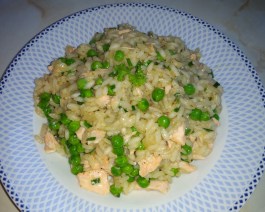
Salmon, Pea and Chive Risotto.

img_20190623_195035.jpg

I adore the simplicity and elegance of a good risotto and this recipe is the perfect evening meal for the summer- it’s rich and creamy, but still vibrant and fresh.

Time:

Preparation: 7 minutes

Cooking: 38 minutes

Total= 45 minutes

Serves: 2

Ingredients:

1 x boneless and skinless salmon fillet

1/2 x cup carnaroli risotto rice

1 x chicken/ fish stock cube

500ml x water

1/2 x large yellow onion (or 2 shallots)

1 x large garlic clove

1-2 x handfuls of frozen peas

1/2 x teaspoon of marjoram

1 x heaped teaspoon of chopped chives

1 x small handful of dairy-free parmesan cheese

Salt and pepper for seasoning

2 x teaspoons of extra virgin olive oil

1 x teaspoon vegan butter


Instructions:

  1. Pre-heat the oven to 190 degrees. Place some tin foil on a baking tray, scrunch the edges and lay the salmon fillet in the middle. Drizzle with olive oil and season with salt and pepper. Set aside.
  2. Finely chop the onion and crush the garlic. Heat the butter and 1 teaspoon of oil in a large non-stick frying pan until melted. Lightly sauté the onion for 2-3 minutes until translucent. Add the crushed garlic and sauté for another minute. Add the marjoram and season well with salt and pepper.
  3. Add the risotto rice into the pan and coat in the pan juices for 2-3 minutes.
  4. Meanwhile, boil about 500ml of water in a large saucepan and dissolve the stock cube. Keep this simmering on a low heat throughout the cooking process.
  5. Add a ladle or two of stock to the rice pan and cook on a high heat for a couple of minutes to deglaze the pan.
  6. Once the rice has absorbed the stock, turn the heat down to low and add a couple more ladles of stock, stirring occasionally until this stock has been absorbed also. Repeat this process for approximately 25-27 minutes until the rice is cooked through and most of the stock has been added and absorbed. You can add more water to the stock to increase the volume if you are running out.
  7. With 20 minutes to go, place the salmon in the oven to bake for about 15 minutes. Meanwhile, finely chop the chives and grate the cheese.
  8. With 6 minutes to go, add the frozen peas and the chives to the rice pan. Stir well to ensure that they are well integrated into the mixture.
  9. Remove the salmon from the oven after 15 minutes and flake it with a fork. The flesh should be light pink all the way through. Add the salmon to the rice mixture and combine well.
  10. After the rice has been cooking for 25-27 minutes, it should be cooked i.e. fluffy on the outside but al dente in the centre. At this point, stir the cheese through the risotto to achieve a creamy texture- you can also add some extra butter if desired. Serve and enjoy!


Recipe adaption: You can use white wine to deglaze the pan like the traditional Italian method if preferred. You could also use asparagus instead of peas or, add a squeeze of fresh lemon juice for some acidity.

How to Survive on an Exclusive Liquid Diet.

sugar-craving-5616x2808

Arguably the hardest part about doing a liquid diet for IBD and sticking to it is your mindset. Most people are used to eating between 3 and 5 meals a day at regular times and these meals become important social cues which divide up their day. But when you’re on EEN (exclusive enteral nutrition), things are very different. Your day no longer has these clear divisions and you no longer experience the typical fluctuations of hunger and satiation that you would before and after eating a meal. Instead, its about keeping your energy at a reasonable level by “topping up” every couple of hours.

The temptation of food

The biggest struggle you are likely to face whilst doing a liquid diet is of course the temptation to eat food. People often don’t realise how large a role food plays in daily life (and how often they think about it) until they can’t have it. From family meals, to tv advertising, to food being sold in shops, you just can’t escape it! Suddenly everything around you seems to mock your inability to eat. It’s also hard when you live with other people as you are likely to smell whatever they’re cooking for dinner from a mile away- I swear your senses become extra acute to food when you crave it so much! But, as someone who has done many liquid diets over the years lasting from a few weeks to many months, I can say that the first couple of weeks are the worst because they’re such an adjustment. Soon not eating will become normal and you will be less interested in food. But if you find your mind drifting, it’s just important to keep reminding yourself why you are doing the liquid diet in the first place; it can really benefit your health. And if you’ve already been doing it for longer than a week or so, you hardly want to waste all the effort you’ve already put in by giving in to your donut craving. Stay strong and it will pay off! Also, your friends/ family will likely be more self-aware about eating or talking about food in front of you if you let them know you are unable to eat. Plus, they can then cheer you on and encourage you to stick with it.

The taste

Another issue a lot of people have is the taste of the liquid supplement drinks. Though the quality has improved greatly over the years and various flavours are available now, they certainly aren’t designed to be anything to look forward to. They serve a medical purpose and in the context of IBD, this is to calm down patients’ digestive symptoms and enable them to gain weight by being nutritionally balanced. Personally, I find the pre-made brands like Fresubin and Ensure, which come in flavours like vanilla, banana, strawberry and chocolate, much easier to stomach compared to the powered forms like Modulen that require you to make up the drinks yourself with water. I would recommend ordering a few different brands and flavours and seeing which you prefer, sometimes you can also try them in hospital. To make them more bearable though, I have two pieces of advice. Firstly, always drink through a straw- at least then you can skip over most of your taste buds if you don’t like it that much. Most of the pre-made drinks come with straws attached, so that’s useful! And secondly, three words: refrigerate, refrigerate, refrigerate. I cannot stress enough how much easier it is to tolerate them when they’re extra cold.

You may also begin to miss the sensation of chewing solid food, but there is a small loophole which may help you with this: you are allowed sugar-free gum and lolly pops/ hard-boiled sweets. These basically dissolve before entering your stomach anyway, so they are acceptable in moderation during a liquid diet and a good way to taste a different flavour too!

Practicalities

Then, there’s the practical side of being on a liquid diet. If you’re ill and at home, it’s pretty easy- just re-stock your fridge with enough bottles for the next day (or enough cold water if you’re using powder) and grab/ prepare a dose whenever you want one. If you’re planning to go out though, it’s a bit more complicated, but far from impossible. If you are working, it’s likely that you will have a fridge in your office, so make full use of this. Otherwise, what I do for a day out is freeze a couple of ice blocks the night before and pack the drinks in a zip-lock cool bag. With the ice packs, they stay cold enough for 8-10 hours, sometimes longer. Thermal flasks are effective too- just make sure you buy a good brand as sometimes the drinks start to taste a bit funny if you leave them in cheap flasks for too long… Obviously, all of this is quite heavy to carry around all day though, so either ask to split the weight with whoever you’re with or use a backpack with support straps to distribute the weight better.

The ordering process

The other practical thing to consider about liquid diets is ordering the supplements in the first place, which is usually done via prescription. People tend not to realise how many drinks they actually need. Just bear in mind that you are living on them and nothing else! My prescription this time around is about 8 drinks a day and lasts a month each time. That’s roughly 240 drinks per order… Yikes! When I was living at home, this was pretty easy. My mum just did a few trips to our local pharmacy and stuffed the boot of her car full of them! But when I went to university and was told to go back on EEN all of a sudden, I was faced with the task of singlehandedly transporting several tonnes of Fresubin from the pharmacy to my dorm room and looking incredibly weird doing it. To combat this, I recruited an in-the-know friend and a spare suitcase to help me move it all. So, if going on EEN is something you tend to fall back on and you are starting university soon, I would definitely recommend leaving an empty suitcase in your room just in case- mine was a lifesaver!

Now, you may be asking the question of where I was going to store it all and how I was going to refrigerate it without my 8 clueless flatmates getting suspicious about why I wasn’t eating all of sudden and why my fridge shelf had gone from fresh food to only weird milkshake-looking drinks. Luckily, I was on Humira at the time and was authorised to have a private medical fridge in my room which meant that I could store around 15 bottles in there at a time and didn’t need to implicate myself by using the communal fridge. But, if you don’t have your own fridge at university and this is a concern for you, just ask the disability team for one and they should provide it for free if you give them a letter from your hospital explaining the situation.

As for a couple more tips about ordering your supplements, first of all, it may sound obvious but make sure that the request is specific. Don’t just ask for “Fresubin” for example. You need to say which type, the dose, if there should be any additives i.e. fibre, how many you need per day (use the top end estimate) and which flavours you want. I find the 2kcal ones too concentrated which makes me nauseous and I can’t tolerate the ones with added fibre. So, my current request is “Fresubin Energy, 1.5kcal, no added fibre, 7-8 daily, vanilla and banana”. Also, be organised and make sure you order more BEFORE you run out! If you forget then you literally won’t have anything to sustain yourself for several days and may have to resort to breaking the liquid diet- fail!

Side-effects

Another practical aspect of being on EEN which not many people consider is how it might affect your sleep. I tend to take a long time to fall asleep and I’ve found in the past that because having a 300kcal drink is nowhere near the same as having a full-sized meal in the evening, unless I have one right before bed, I end up having to get out of bed before I’ve fallen asleep to have another one, which just wakes up my digestive system again. So, now what I tend to do is leave 2-hour gaps between most of the drinks during the day and then leave only a 1-hour gap between my final 2 drinks, the last one being pretty much right before I go to bed. That way I don’t have to get out of bed due to hunger- it’s all about the timing. So, if you are like me and can’t fall asleep quickly, this may work for you as well.

As for more physical side effects of EEN, you may experience diarrhoea in the first 1-2 weeks as your system “clears out” and gets used to running on fluids and no solids. A lot of people assume that this is a bad sign and give up immediately thinking that EEN doesn’t work for them, but this is not always the case. I would give it at least 2 weeks before throwing the towel in to see if these symptoms settle down- mine usually do. Bloating is also very common with liquid diets and this may be eased by drinking slower, doing some exercise or massaging your stomach to move excess air. I’ve also experienced acid reflux in the first couple of weeks on past occasions, but this has been rectified by acid-neutralising medicines like Omeprazole or Nexium. You may also get what’s known as “coated tongue”. This is where the bacteria in your mouth changes without normal food and your tongue becomes whiter than normal. If you experience this, just make sure you are keeping your mouth as clean as you can by brushing well- including your tongue!

Socialising

Now for a point I touched upon earlier: looking “weird” for not eating anything and socialising whilst on EEN. Honestly, this is nowhere near as bad as it seems. I mean, I obviously avoid food-specific events like meals out and barbeques as it would be pretty pointless to go! But as for going out in general, I either drink one or two before I go and tell whoever I am with that I ate beforehand, or I just bring my Fresubin in a flask and tell people it’s a milkshake. It really is as easy as that! If you end up having to tell people you’re on a liquid diet, then so be it- they don’t necessarily need to know why you’re doing it and you really don’t look as weird as you probably feel. Plus, it’s really important not to let being on a liquid diet stop you from spending time with other people. I actually found that a surprising effect of EEN was that I started over-working without even realising until I added up how much time I would usually spend cooking, eating/ socialising with my flatmates, and washing up several times a day. I concluded that without any of that, I had resorted to spending almost my entire day working and on my own. So, if you are doing or about to start EEN, make sure you still take breaks as you usually would whilst eating a normal diet and that you don’t isolate yourself, that way your routine is less disrupted and adapting becomes easier.

The only thing that may pose a slight issue socially- but not one that can’t be solved- is going to large-scale events where food and drink are banned. I recently went to a concert at the O2 arena and on all the customer information it said that you couldn’t bring any food or drink and that you had to use transparent bags only i.e. no cool bags allowed. So, I got in touch with the customer care team about a week beforehand, explained my situation and sent over a letter from the hospital. I received an email back to show security on arrival which exempted me from this rule. I was allowed under 500ml of Fresubin in its original packaging- just enough to last me through the show, and I was told to go through the disabled entrance for a bag check. Annoyingly, despite my preparation I was still stopped at the gate and told I wasn’t allowed in with it, but soon the issue was cleared up and it all worked out in the end. So, if you’re attending a big event like this, make sure you are well-prepared, have read the customer information and, even if they don’t ask for it, always bring a letter of evidence with you just in case.

Travel

One final point I would like to address is going on holiday whilst on a liquid diet. It’s far from ideal, but as someone who has been to Rome and Vienna whilst on two different kinds of EEN, I know that sometimes it’s the only way you can go abroad if your symptoms aren’t under control. I would definitely say that taking the powdered form is easier if you can stomach it, unless you’re only going away for a couple of days. The bottled forms take up much more space in your luggage and may incur extra weight charges as they are heavy little buggers! Either way, to avoid suspicion (especially if you’re attempting to transport giant tins of white power into another country…), I would always bring relevant prescriptions and letters from your hospital explaining what you have with you and why- that way you hopefully won’t get stuck at airport security! Make sure you bring more than you need and if you can, put some in your hand luggage as well as your hold luggage in case your bags get lost. Also, always look into contact details for local hospitals before your trip as a plan B if anything goes wrong. Other than that, usual rules apply: use a cold bag or, if you’re staying in a hotel without access to a freezer, try and book a room with a mini bar so you can use it as a fridge. Alternatively, make sure you buy plenty of bottled water if you’re making up compound shakes and refrigerate it in the mini bar likewise- it’s much safer than using tap water on an already dodgy tummy! And don’t forget the milkshake powder to flavour it!

So, all in all, it’s true that being on EEN probably isn’t the most fun you’ll ever have. But at the end of the day, it serves a real purpose and shouldn’t realistically prevent you from living your life. With patience, planning and a few canny adaptions, you will be a pro in no time!

Dairy-Free Maple and Cinnamon French Toast with Caramelised Banana.

img_20190623_104345-1.jpg

A rich and indulgent breakfast treat, this French toast recipe has a sweet and nutty flavour and works perfectly with the golden, candied banana. It’s also totally dairy-free, but you wouldn’t know it!

Time:

Preparation: 5 minutes

Cook: 7 minutes

Total= 12 minutes

Serves: 1

Ingredients:

2 x slices thick white bread

30ml x almond milk

10ml x dairy-free single cream

1 x medium egg

1/2 x teaspoon cinnamon

1 x medium banana

1-2 x teaspoons dairy-free butter

Maple syrup to serve


Instructions:

  1. In a wide-bottomed bowl, lightly beat the egg with the milk, cream and cinnamon.
  2. Soak the slices of bread in the mixture until well-saturated.
  3. Heat a large non-stick frying pan on a medium heat and melt the butter.
  4. Slice the banana down the centre length ways.
  5. Fry the bread and the banana cut side down (these should fit in the same pan) for about 3 minutes. Then flip the bread and banana over and fry for another 3 minutes or so until golden brown.
  6. Serve on a large warm plate with a drizzle of maple syrup and a glass of milk on the side is desired.


Recipe adaption: If you don’t have any single cream, you can just use 40ml of milk instead. You can also use any dairy-free milk other than almond milk if you prefer.

4 Pieces of Advice I’m Glad I Ignored, 4 I Wish I’d Taken and 4 I’m Glad I Took.

shutterstock_196749377

Ah, people just love giving advice don’t they- even if they have no idea what they’re talking about. Here are some of the best and worst pieces of advice I’ve been given over the years about my Crohn’s.

4 pieces of advice I’m glad I ignored:

1. “Eat what you want when you’re well”

Although I agree that you should make the most of the foods you love whilst you can actually eat them, this is clearly going too far. It’s true that specific foods don’t cause inflammation, but they do trigger symptoms and can even catalyse a flare up. I know for a fact that if I ate whatever I wanted when I was well, I wouldn’t be well for long. Going mad and just eating anything is never a good idea in my book, you need to know what suits your system and what doesn’t so that you can adapt your diet accordingly. That way, you can still enjoy food when you’re in remission, but you can be confident that you aren’t jeopardising anything.

2. “Forget about school and your exams”

This is what I was told by one of my doctors when I was in hospital from a bad flare up in the months leading up to my GCSEs. He tried to convince me that the severity of my flare up was a good enough excuse to basically drop out of school and worry about my future later, but I had other ideas. Despite being so ill, I had been studying for several months already (I started early!) and everyone, including myself, was expecting me to do really well. I wasn’t about to let my illness stop me from achieving the grades I knew I deserved. So, much to my doctor’s disgust, I remained very ill throughout the entire exam period and simply sneaked into school before each exam, sat it in writhing pain in a separate room to everyone else, and then returned home/ to the hospital afterwards. Don’t get me wrong, it was NOT easy, but looking back all I see is a pretty impressive exam certificate, one which I would have been ecstatic to receive whether I had Crohn’s or not, and that was my goal.

3. “Forget about the good universities, you need to go to one that’s close to home and your hospital”

Boy am I glad that this went in one ear and out the other! A school “counsellor” (I use that word incredibly loosely) said this to me in a meeting during my final year at college. She didn’t know me from Adam but thought she knew what was best for me and what I was capable of just because she had speed read my file 2 minutes before my appointment. Apparently, I would not survive unless I had my parents and my doctors on my doorstep, and I would be stupid to even consider applying to where I actually wanted to go to university- I had to put my illness above everything else. Well, let’s just say that this appointment didn’t last that long. I told her that I was equally if not more capable than anyone else of going to university and being successfully independent, illness or no illness, and that I was going to fulfil my dream of going to my first-choice university even if it was several hours away. And sure enough, I got the grades and an offer from my first choice uni and I loved living alone after being stuck unwell and at home for so long during my childhood.

4. “Make sure you tell everyone at university about your health so that they’re all aware”

Now this one is a little more individual I think. Some people like telling those around them about their health issues so that they are aware of their situation and know how they can help if necessary. But personally, I have always taken issue with the idea that everyone has to know what goes on in my private life, especially when I’ve only just met them! I mean, “Hi, I have a chronic illness” isn’t exactly a good ice-breaker… Plus, an issue that’s common among people with chronic illnesses is that we don’t want to be defined by our illness, so surely highlighting it to everyone so soon is about the same as wearing a t-shirt for the rest of the year that says “I’m the sick one”? In my first year of university, I waited an entire term to tell a single one of my flatmates and even then, I didn’t disclose what was actually wrong with me because I didn’t think it was necessary. All I thought they actually needed to know to be a better friend to me was how my illness affects me. I made sure I waited until I knew who my friends really were and until I knew that I could trust them rather than just telling anyone who would listen.


4 pieces of advice I wish I’d taken:

1. “Tell someone”

This may seem like a bit of a contradiction given my last point, but bear with me. Although I am glad I didn’t immediately disclose everything about my condition to everyone in sight, I do admit that perhaps my first year of university would’ve been a tad easier if I had told one or two people earlier than I did. As it turns out, I did start to become unwell and it was difficult trying to fend for myself without any assistance sometimes. I suppose it’s about finding balance; it’s probably a good idea to tell someone, just make sure that you’ve known them for long enough that they consider you a friend before you lay all your cards on the table and that they are the kind of person that you could potentially rely on should you need to. It’s also nice being able to confide in someone other than your family about your situation, especially at an overwhelming time like starting university.

2. “Don’t take on too much”

I was always a classic workaholic and a consistent overachiever. I wanted to be the best and do as much as I possibly could with my time, despite warnings that I would burn myself out or make myself ill. I always stubbornly ignored the idea that stress aggravated Crohn’s symptoms and stupidly, I took on even more to try and prove this seemingly ridiculous notion wrong. But, as it happens, it was right. I was wrong. What I have now learnt is that having a chronic illness really does take it out of you. You have to pace yourself and sometimes that may mean compromising a little, but that’s okay. In the long run, it’s better to do a few things well and really focus your capabilities on them rather than trying to do far too much and adding to the existing stress and fatigue caused by your illness.

3. “Sometimes your body needs rest”

Similar to the piece of advice above, I always found this statement a bit patronising to be honest. Plus, I didn’t want to be accused of being lazy as that’s the complete opposite of who I am. But, over the years I have realised that there is nothing wrong with having a break and getting some rest when your body needs it. Rather than just mindlessly trying to “power through” when I felt exhausted, I really should have listened to my body more from the get-go and stopped to take a breather every once in a while without feeling guilty for not being super productive.

4. “Keep a personal record of EVERYTHING”

This is arguably one of the most important pieces of advice that I really should have taken on board. I guess because I was so young when I was diagnosed, I didn’t really understand what was happening to me and I put my complete trust in my parents and my doctors. Though I kept a journal which detailed some of my symptoms/ experiences etc. (which I am eternally thankful for), I wish I’d been more consistent with keeping track of everything. I wish I’d kept a food diary when re-introducing food after my first liquid diet and I wish I’d tracked my daily symptoms sooner. I only started doing this earlier this year after it became a habit when I was enrolling into a clinical trial. It’s a great reference for seeing how my symptoms change over time and keeping an eye out for any red flags which may be a sign of an impending relapse. I also wish I’d taken notes during/ after appointments as I frequently receive appointment summary letters in the mail which are nothing short of complete fiction. Plus, I consistently receive conflicting information from different doctors only for them to deny it later. With all that being said, record everything and anything for your own good – you’ll be glad of it at some point I can assure you!


4 pieces of advice I’m glad I took:

1. “Advocate for yourself and be educated”

Being well-informed about your condition is essential. It means that you can be self-aware and that you know what to expect from your illness. What’s more, medical professionals will likely take you more seriously which ensures that you can successfully advocate for yourself. After all, no one else is going to fend for you. If you think you need a scan, request one. If you have questions, ask them. If you think you aren’t getting the support you need, let your team know what else they can do for you. Your care should not consist of you being a passive patient, you should work with your doctors and make sure that you have the level of care that you need and deserve.

2. “Always disclose your condition to employers/ staff”

Whether in the context of education or work, I have always chosen to disclose my health problems. It can be a risk if you are applying for a role as despite all these new “inclusivity” guidelines, a lot of people with chronic illnesses can’t help but listen to that tiny voice in their head that says they may not get the job because of their health problems. But in my experience, disclosure has always been the best thing to do. At school this enabled me to get special exam arrangements and gave me access to a green card, which meant that I could use the bathroom whenever I needed to. Then at university, I was given a DSA allowance to help fund my laptop and various pieces of software for when I was unwell as well as a bursary which paid for my en suite bathroom. Though I have not yet had a full-time job, I could rest easy when I had to take a sick day during my work experience because my boss knew exactly why I was ill and didn’t need to question me about it further. The saying “If you don’t ask, you don’t get” definitely rings true when it comes to getting support for your illness, so it’s always worth saying something early on.

3. “Don’t compare your situation to others’”

Anyone with IBD will tell you that everyone’s experiences are so different, from their disease behaviour and its distribution to their daily symptoms, their diets and their triggers. The worst thing you can do is blindly go by what other people suggest just because it works for them. Sure, it may be useful to get some ideas and take inspiration from other people, but when it comes to complex illnesses, no one’s word is the gospel. I know it can be frustrating having so few guidelines on how to adapt your life after a tough diagnosis, but it’s all about trial and error and finding what’s best for you. At the end of the day, what may work for one person may not work for someone else.

4. “Live in the moment”

If you only take one thing away from reading this article, I hope this is it. Unfortunately, human beings tend not to recognise or truly appreciate what they have until it’s gone, and this is definitely true for those of us who have lost our health. The best thing anyone with a chronic illness can do is make the most of the times when they are well and not take them for granted, as you never really know when you’ll get another chance to just have fun and feel okay when things can change so quickly. Don’t put off doing the things you’ve always wanted to do, put yourself out of your comfort zone more and try as many new experiences as possible to avoid having regrets later on in life. And even though I fully appreciate the very real fear people with chronic illnesses have of things going wrong or becoming unwell all of a sudden, the best advice I can give is try not to let this stop you doing what you want to do. Cliché as it sounds, you do only live once.


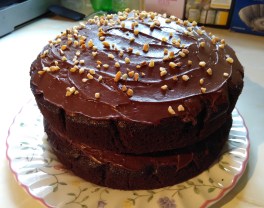
The Ultimate Dairy-Free Chocolate Fudge Cake.

img_20190330_154037.jpg

This recipe is very similar to Ashley Adams’ on The Spruce Eats, but I’ve made a few little adaptions. This cake truly is a chocoholic’s delight, you almost won’t believe it’s dairy-free! Despite its richness, it’s easy on my Crohn’s and has become my go-to for birthdays and special occasions. And trust me, it never disappoints.

Time:

Preparation: 25 minutes

Cooking: 40 minutes

Total = 1 hour 5 minutes (+ cooling)

Serves: 8-10

Ingredients:

2 3/4 x cups plain flour

2 1/2 x cups caster sugar

1 1/2 x cups stork baking block

3/4 x cups soya milk

3/4 x cup hazelnut milk

1 x cup cocoa powder

1 x teaspoon baking powder

1/2 x teaspoon salt

1/4 x cup maple syrup

4 x medium eggs

2 x tablespoons vanilla extract

About 200g x Betty Crocker Chocolate Fudge Icing

Lard or butter to grease cake tins

Chopped hazelnuts to serve


Instructions:

  1. Pre-heat the oven to 180 degrees. Line 2 x 8-inch cake tins with baking paper, using lard/ butter to stick the paper down and trimming the edges with scissors.
  2. In a large mixing bowl, sift the flour and cocoa powder. Add the salt and baking powder and combine well.
  3. In a separate mixing bowl, use an electric mixer to cream the stork and sugar until a fluffy consistency is reached. This should take 3-4 minutes on a high-speed setting.
  4. Then add the eggs one by one and gradually beat into the mixture on a medium speed.
  5. Add the soya milk, hazelnut milk, maple syrup and vanilla and beat well until combined.
  6. Then, using a wooden spoon, gradually add the dry mixture into the wet mixture and stir until its well-combined.
  7. Pour the mixture into the lined cake tins and bake for about 40 minutes, or until a toothpick comes out of the cake clean. This may take a little longer depending on the type of oven you’re using.
  8. Once cooked, leave the cakes to cool in their tins. Then, remove the cakes from the tins and peel off the baking paper.
  9. Place one cake bottom-side down on a serving plate and use a plastic spatula to spread the icing on top. Then place the second cake on top of the first and repeat the process to ice the top of the cake. Sprinkle with chopped hazelnuts and enjoy!


Salmon Wellington with Sautéed Green Beans and Roasted Vine Tomatoes.

IMG_20190530_194338.jpg

This fancy meal for one takes a bit of extra effort, but it’s a real treat on a cosy night in. Perfectly pink salmon wrapped in golden, buttery puff pastry served with delectably sweet roasted tomatoes and garlicky green beans- what could be better?

Time:

Preparation: 20 minutes

Cooking: 25 minutes

Total= 45 minutes

Serves: 1

Ingredients:

1 x boneless salmon fillet

1 x shallot

1 x large handful fresh spinach

1 x small handful fresh basil

8-10 small vine tomatoes

1 x small handful of green beans

1 x sheet ready-to-roll puff pastry

1 x egg

1 x garlic clove

1 x teaspoon lactose-free butter

Extra virgin olive oil

Salt and pepper for seasoning


Instructions:

  1. Remove the skin from the salmon fillet using your hands to gently prize it away from the flesh.
  2. Pre-heat the oven to 190 degrees and finely chop the shallot. Roughly chop the spinach and basil.
  3. Heat a teaspoon of olive oil in a medium frying pan. Sauté the shallot on a low-medium heat for about a minute or so until it is translucent.
  4. Add the spinach and basil, season well and sauté for a few more minutes until the greens are soft and well-wilted. Remove from the heat and set aside.
  5. Place the vine tomatoes in some tin foil on a baking tray, scrunching the edges of the foil to make a nest of sorts. Drizzle with olive oil, season well and set aside.
  6. Pat the salmon dry with some kitchen towel to remove excess moisture. Lay out the puff pastry sheet and place the salmon in the middle. Using a teaspoon, gently lay the spinach mixture on top of the salmon fillet, compacting it down a bit so it’s secure.
  7. Wrap the salmon in the puff pastry. Start length ways by folding one side over the top of the salmon. Then trim the other side with a knife so that there is about a 1cm overlap when both of the long sides are joined. Gently pinch the two edges together or use a fork to crimp them closed.
  8. Now trim the width ends so there is only about 2cm of pastry left at each end. Gently tuck the ends underneath the salmon parcel.
  9. Use a knife to score the top of the pastry in a criss-cross pattern. Then beat the egg in a bowl and egg wash the top and all sides of the wellington.
  10. Bake the wellington in the oven for 20-25 minutes, or until the pastry is golden and crisp. At 12 minutes to go, add the tomatoes to the oven.
  11. Meanwhile, trim the ends off the green beans and boil some water in a saucepan. Blanch the beans for 5 minutes and then drain.
  12. Heat a teaspoon of olive oil and a teaspoon of butter in a small frying pan. Crush the garlic clove into the pan and add the green beans. Season well and sauté for a final 5 minutes until the beans are tender and have taken on the flavour of the garlic.
  13. Remove the wellington from the oven and serve with the tomatoes and beans.


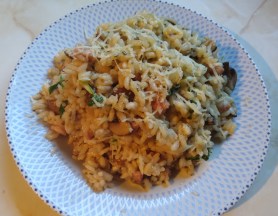
Mushroom and Pancetta Risotto.

img_20190707_185654.jpg

Risotto always sounds like a challenging dish to make, but it doesn’t have to be. This simple method makes a super tasty dish which is both filling and decadent. The mushrooms have a beautifully earthy tone which works perfectly with the saltiness of the pancetta and the overall texture is creamy, but the rice still has some bite.

Time:

Preparation: 5 minutes

Cooking: 40- 45 minutes

Total= 45- 50 minutes

Serves: 1

Ingredients:

70 grams x baby chestnut mushrooms

65 grams x Italian unsmoked pancetta, diced

1 x shallot

1 x garlic clove

1/2 cup x carnaroli risotto rice

1 x chicken stock pot/ cube

500ml x water

1 x small handful parsley

3/4 x teaspoon dried rosemary

1 x teaspoon extra virgin olive oil

2 x teaspoons butter/ lactose-free alternative

2 x teaspoons lactose-free parmesan, finely grated

Salt and pepper for seasoning


Instructions:

  1. Cut the baby chestnut mushrooms into quarters and finely dice the shallot and the fresh parsley.
  2. Heat the oil and one teaspoon of butter in a medium non-stick pan until melted. Add the shallot and sweat on a low heat for a couple of minutes until just translucent.
  3. Crush the garlic clove into the pan and add the mushrooms along with the other teaspoon of butter. Sauté on a low-medium heat for 1 minute.
  4. Then, add the pancetta and sauté for a further 3 minutes. The mushrooms and pancetta should be nice and golden.
  5. Add the risotto rice into the pan and coat in the pan juices for a minute or two.
  6. Meanwhile, dissolve the stock cube in 500ml of water and heat over a low flame in a saucepan.
  7. Add a small splash of stock to the rice pan and cook on a medium- high heat for 2-3 minutes to deglaze the pan. Add the rosemary at this point and season well with salt and pepper.
  8. Then add several ladles of stock to the pan until the rice is just lightly covered and cook for 10 minutes on a low heat, stirring frequently.
  9. Once the stock has been absorbed, add another couple of ladles and continue to stir frequently. Repeat this process for another 17 minutes until the rice is al dente and most of the stock has been added and absorbed. The rice should be cooked through but still have some bite.
  10. At this point, stir in the fresh parsley and the parmesan to give the risotto a lovely creamy texture. You can also add a touch more butter if desired to make it extra rich, but I prefer it a bit lighter. Serve with some extra cheese grated on top.


Recipe adaption: You can of course, like the traditional Italian method, use alcohol such as white wine to deglaze the pan just after adding the rice, but I prefer to keep my recipes alcohol-free. You can also use arborio rice instead of carnaroli if this is easier to find.


Asian-Style Poached Chicken and Noodle Broth.

IMG_20190409_142931~2.jpg

This hearty, aromatic and warming broth is great on a cold winter’s day. Its also a go-to when I’m having a flare up as it’s easy on the digestive system and it has anti-inflammatory ingredients. What’s more, it’s packed with flavour and I personally think this is the best way to achieve a perfectly moist and juicy chicken breast.

Time:

Preparation: 10 minutes

Cooking: 20-25 minutes

Total= 30-35 minutes

Serves: 1-2

Ingredients:

1 x small skinless and boneless chicken breast

1 x chicken stock pot/ cube

500ml x water

1 x sheet rice vermicelli noodles (about 45 grams)

3 x broccolini tips

3 x button mushrooms

3 x garlic cloves

2 x spring onions

2 x inch pieces of ginger

1 x cinnamon stick

1 x splash light soy sauce (or gluten-free alternative)

1 x teaspoon of sesame oil

Salt and pepper for seasoning


Instructions:

  1. Peel and gently crush the garlic cloves with the back of a knife and roughly chop into large pieces. Peel and roughly chop the ginger into large pieces also.
  2. Chop the spring onions into one-inch pieces and finely chop one of the green tips to set aside for garnish.
  3. Heat the sesame oil in a small frying pan and sauté the garlic, ginger and spring onion until soft and aromatic.
  4. Meanwhile, dissolve the chicken stock in 500ml of boiling water and keep at a gentle simmer in a deep saucepan.
  5. Add the sautéed aromatics and the cinnamon stick into the stock. Then, gently place the chicken breast into the stock. If the stock does not entirely cover the chicken, add a touch more boiling water until it does.
  6. Add a splash of soy sauce and season with salt and pepper before bringing the stock to a high simmer. Cover and cook for about 3 minutes.
  7. Then, turn the heat down to a gentle simmer and leave to cook with the lid on for 10-12 minutes until the chicken is cooked and its juice runs clear.
  8. Meanwhile, prepare the broccolini by removing the stems and halving the florets and quarter the mushrooms.
  9. In the last four minutes, boil the rice noodles in a separate small saucepan along with the broccolini and mushrooms.
  10. In the meantime, sauté the spare spring onion in the frying pan from earlier with a little extra sesame oil for garnish if desired.
  11. Then, drain the noodles and veggies and place in the bottom of a deep soup bowl. Using tongs, remove the chicken breast from the broth and slice into 1-2 cm slices. It should be tender, vibrant white and cooked all the way through.
  12. Place the chicken on top of the noodles and veggies. Strain the broth to remove the aromatics and pour over the chicken. Top with extra sautéed spring onion tops and serve.


Recipe adaption: If you are left with excess broth, you can either chill it and enjoy it the next day or freeze it for several weeks. This recipe was based on a single serving with left-over broth, but you can always double the veggie/ noodle quantity and use a larger chicken breast to make 2 servings. And, if you want to mix up the vegetables, water chestnuts work great with this broth too!

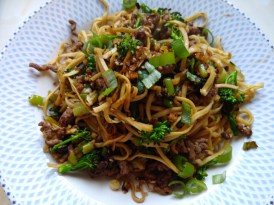
Sesame Beef Egg Noodles.

IMG_20190408_140259.jpg

These noodles are gingery, nutty and earthy and make a delicious lunch or mid-week meal. They are quick and easy to make and leave your taste buds very satisfied!

Time:

Preparation: 5 minutes

Cooking: 10 minutes

Total= 15 minutes

Serves: 1

Ingredients:

1 x sheet Sharwood’s medium egg noodles

60g x lean minced beef

3 x spring onions

4-5 x pieces of tender stem broccoli (broccolini)

1 x inch piece of fresh ginger

1 x medium garlic clove

1 x small handful of white sesame seeds + extra for garnish

1 x splash light soy sauce (or gluten-free alternative)

1 x dessert spoon of sesame oil + extra for tossing noodles


Instructions:

  1. Cook the egg noodles in boiling water for 4 minutes, shaking with tongs to separate. Once cooked, drain, toss with a little sesame oil (this stops them sticking together and gives an extra nuttiness) and set aside.
  2. Meanwhile, peel and chop the ginger into thin batons. Finely chop the spring onions, leaving some green bits for garnish.
  3. Prepare the broccolini by removing the end of the stems and cutting the tips into smaller florets if necessary.
  4. Heat the sesame oil in a medium non-stick frying pan or wok. Crush the garlic and add to the pan along with the spring onions, ginger and sesame seeds. Sauté on a medium heat for a minute or so until you start to smell the aromatics and they start to colour slightly.
  5. Move the aromatics to the side of the pan and add the beef mince. Break it up and move it around with a spatula until the meat is no longer pink- this should take about 3 minutes.
  6. Once the beef is cooked through, add the broccolini to the pan and toss well for a minute or two. Then, add the pre-cooked noodles along with a good splash of soy sauce.
  7. Toss all the ingredients until well-combined and then serve, topping with spare spring onion pieces and extra sesame seeds.

My Top 3 Crohn’s Friendly Snacks.

Snacks are pretty important for people with IBD as many patients report that they feel better eating smaller, more frequent meals instead of fewer larger ones. Snacking is also a great way to give your body an energy boost during the day, particularly necessary when you suffer from chronic fatigue. So, with that in mind, here are three of my personal favourite Crohn’s friendly snacks:

1. Houmous:

Beans, lentils and pulses are notoriously difficult to digest for IBD sufferers, but being blended, houmous has always been a go-to snack for me. It’s high in protein, it keeps you feeling fuller for longer, it’s one of your five a day and its rich in iron, all of which make it the perfect on-the-go snack for busy schedules. I usually enjoy about a tablespoon of reduced-fat houmous either with toasted pitta bread, sliced cucumber, low-fat lentil/ vegetable crisps or sundried tomatoes. And don’t forget, you can always mix it up and try different flavours of houmous- there’s a rather tasty roasted red pepper one, a beetroot version and a Moroccan style if you can handle the spice. Or, get creative and make your own!

2. Yoghurt, berries and granola:

For me this is the perfect snack, or even dessert, for the summer. It’s vibrant, fresh and satisfying. I like the Free-From Fromage Frais in strawberry/ raspberry from Tesco as the little pots are the perfect size for one portion, but Alpro have just released a Dairy Free Greek-Style Yoghurt which is equally delicious and slightly lower in fat and sugar. I serve the yoghurt with a generous handful of blueberries and red seedless grapes along with a small handful of Quaker’s Super Goodness Hazelnut and Pecan Granola. I adore this granola and it’s one of the few on the market which doesn’t contain seeds, which aggravate many Crohn’s patients’ systems. If you can’t have nuts either, not to worry! Try their Golden Crunch Granola instead. I also usually top this snack with a good sprinkle of organic cocoa nibs. These little nibs are tasty as and they are a superfood, being rich in iron, fibre, potassium and magnesium.

3. Rice cakes, banana and peanut butter:

Finally, you may sigh upon the words “rice cakes” but trust me, they can be delicious! They are easy to digest and low calorie which makes them the perfect base for this snack. I spread some organic smooth peanut butter on top of two plain wholegrain rice cakes, followed by some sliced banana and a sprinkle of cinnamon- known for its anti-inflammatory properties. If I am feeling particularly indulgent, I have been known to add a touch of chocolate sauce or some dark chocolate chips for some extra richness. You could also swap the peanut butter for a dairy free chocolate and hazelnut spread if you fancy. This snack fills me up just enough (thanks to the rich and protein-filled peanut butter) without feeling too heavy, and it definitely fulfils my cravings for something sweet!

Design a site like this with WordPress.com
Get started