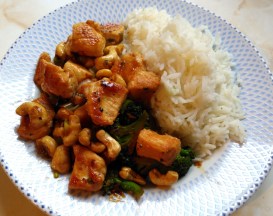
Chicken, Cashew and Broccoli Stir Fry.

IMG_20190718_134617

A fast, healthy and yummy mid-week meal that everyone can enjoy, this stir fry requires few ingredients and even less effort!

Time:

Preparation: 10 minutes

Cooking: 12 minutes

Total= 22 minutes

Serves: 1

Ingredients:

1 x small chicken breast

1 x small handful broccoli florets

1 x small handful raw cashews

2 x spring onions

1-inch piece x fresh ginger

1 x dessert spoon of sesame oil + extra for stir-frying

1 x dessert spoon of light soy sauce (or gluten-free alternative)

1 x teaspoon of Shaoxing rice wine

1-2 x teaspoons of maple syrup

Salt and pepper for seasoning

To serve:

1 x handful basmati rice


Instructions:

  1. Dice the chicken breast into chunks (about 2-3cm large). Chop the broccoli florets into smaller pieces and finely chop the spring onions.
  2. Peel and finely cut the ginger into small pieces.
  3. In a small bowl, mix the sesame oil, soy sauce, rice wine and maple syrup. Adjust to taste depending on how tart or sweet you like your dressing. Season with salt and pepper and set aside.
  4. Rinse rice in a sieve under cold water for a couple of minutes to remove the excess starch. Place in a saucepan of boiling water and cook on a simmer for about 10-11 minutes.
  5. Meanwhile, boil a smaller pan of water to par-boil the broccoli. (You can just stir-fry this from its raw state, but sometimes Crohn’s patients have trouble digesting fibre. I prefer to pre-cook it a little so it’s a bit softer but still has some bite.)
  6. Boil the broccoli pieces for about 3 minutes, drain and then set aside.
  7. Heat about a dessert spoon of extra sesame oil in a medium non-stick frying pan or wok. With 7 minutes to go on the rice, add the chicken pieces to the pan. Stir fry the chicken on a medium heat for about 3-4 minutes or until they start to go golden.
  8. With about 3 minutes to go on the rice, turn the heat down slightly on the frying pan/ wok and add the broccoli, spring onions and ginger. Sauté everything for a minute or so until it starts to get a good colour and then add the cashews.
  9. In the last minute, add as much of the pre-made sauce as desired into the pan (I like my chicken and veg to be just coated) and mix everything well.
  10. Drain the rice and serve on the side of your cashew chicken stir fry.


Recipe adaption: If you have problems with strictures and cannot eat nuts, just leave these out- it still makes a tasty chicken and broccoli stir fry!

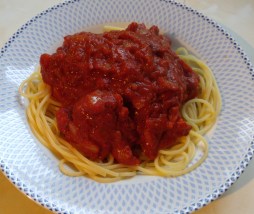
Spaghetti and Meatballs.

img_20190709_190749.jpg

My hearty homemade version of the Italian staple, featuring a rich and chunky tomato sauce and juicy, tender meatballs.

Time:

Preparation- 10 minutes

Cooking- 22 minutes

Total= 32 minutes

Serves- 1

Ingredients:

1 x serving spaghetti (about the diameter of a 10 pence)

For the meatballs:

100 grams x lean minced beef, 15% fat content

1 x egg yolk

1 x handful golden breadcrumbs

Italian herb mix

Salt and pepper for seasoning

1 x dessert spoon of extra virgin olive oil

For the sauce:

About 190 grams x Italian passata

1/4 tin x chopped tomatoes

1 x medium garlic clove

1/2 x yellow onion

1 x dessert spoon of tomato puree

Italian herb mix

Salt and pepper for seasoning


Instructions:

  1. In a small bowl mix the minced beef, egg yolk and a good sprinkle of Italian herbs. Season generously with salt and pepper.
  2. Add enough breadcrumbs to bind the mixture and form about 4 medium sized meatballs. Set aside.
  3. Peel and finely dice the onion and peel the garlic.
  4. Heat the oil in a medium frying pan (with a lid) and fry the meatballs on a low- medium heat for about 3 minutes, turning every once in a while. Then add the onions and cook gently for a further 2 minutes, being careful not to burn them.
  5. Crush the garlic into the pan and sauté for about 1 minute more.
  6. At this stage, the meatballs should be golden brown on the outside and the onions/ garlic should be nicely golden. Add the tinned tomatoes, passata, tomato puree and season with the herbs, salt and pepper. You can add a little more/ less passata depending on how much sauce you like with your pasta, just bear in mind that in will reduce and thicken up.
  7. Mix the sauce together well and coat the meatballs. Simmer on a low heat with the lid on for about 15 minutes, stirring and turning the meatballs every couple of minutes to prevent them from burning. (The sauce tends to spatter everywhere so if you don’t have a lid, use a metal splatter guard instead).
  8. In the meantime, boil some well-salted water and add the spaghetti. Cook for about 8 minutes, or until al dente.
  9. Once the total 15 minutes are up, drain the pasta and serve the meatballs with the sauce on top. The sauce should have thickened up nicely and make a rustic, rich dressing for the dish.


Recipe adaption: You could also serve these meatballs with rice, or use them in a meatball sub- yum!


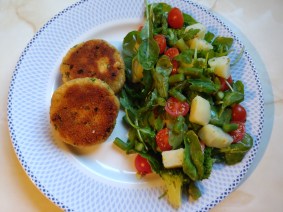
Basic Garden Salad.

IMG_20190705_184903

This simple salad is a great accompaniment to burgers, fishcakes or even pizza and it’s several portions of your five-a-day!

Time:

Preparation- 5 minutes

Cooking- 8 minutes

Total= 13 minutes

Serves- 1-2

Ingredients:

Raw:

1 x large handful of rocket/ mixed baby leaves

1 x handful of cherry tomatoes (about 7/8)

Italian herb mix

Salt and pepper for seasoning

Drizzle of extra virgin olive oil

Cooked:

1 x small potato

4/5 x asparagus tips

3 x broccoli florets (about 2-3cm wide)


Instructions:

  1. Boil some water in a small saucepan for the veggies. Meanwhile, peel the potato and roughly dice into 2cm cubes.
  2. Chop the broccoli florets in half length ways and trim and cut the asparagus into 1-2cm pieces.
  3. Add the potato to the boiling water and cook for about 6-8 minutes depending on the size of your cubes- you can test when they are done by inserting a sharp knife; if it goes in with little resistance, the potato is done.
  4. With about 4 minutes to go on the potatoes, add in the broccoli and asparagus- doing them all in the same pan just saves washing up!
  5. Meanwhile, cut the cherry tomatoes in half and rinse the rocket/ baby leaves if necessary.
  6. Place the tomatoes and rocket/ baby leaves into a bowl and once the cooked veggies are done, add them in as well. You can wait for them to cool first, but I personally like them a little warm so that they just wilt the greens ever so slightly.
  7. Add a good drizzle of olive oil, a generous sprinkle of Italian herbs and season with salt and pepper.
  8. Toss well with salad tongs and serve.


Recipe adaption: You can personalise this salad as you like; I have previously added other veggies like mushrooms or edamame for an additional flavour and texture. As it stands this is a side salad, but you could make it a full meal by adding meat or fish.


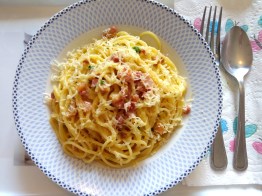
Spaghetti Carbonara.

IMG_20190411_132801.jpg

Carbonara has become one of my favourite pasta dishes. And don’t worry Crohnies, this is the traditional Italian version which uses only egg and cheese to create the sauce- so no heavy cream or dairy needed! The silky-smooth sauce, the salty kick from the pancetta and the freshness from the parsley make this a must-have dinner recipe in my book.

Time:

Preparation: 2 minutes

Cooking: 8 minutes

Total= 10 minutes

Serves: 1

Ingredients:

1 x serving of spaghetti (about 10 pence in diameter)

1 x medium egg

1 x heaped dessert spoon of lactose-free mature cheddar + extra for serving

65 grams x Italian unsmoked pancetta

Black pepper for seasoning

Small handful of fresh parsley

1 x teaspoon of extra virgin olive oil


Instructions:

  1. Boil the kettle and put the spaghetti on to cook in well-salted water for about 8 minutes until al dente (or however long it recommends on the packet).
  2. Meanwhile, beat the egg in a bowl and finely grate in the cheese. Add a good crack of black pepper and mix well.
  3. Dice the pancetta into 1cm cubes if not pre-cut and finely chop the parsley. Set aside.
  4. With about 4 minutes to go on the pasta, heat the oil in a small frying pan and fry the pancetta on medium heat until golden and slightly crisp at the edges.
  5. Once the pasta is cooked, drain and add the pancetta and chopped parsley to the saucepan. Mix well with a wooden spoon.
  6. Put the pasta saucepan over a very low heat and tip in the egg/ cheese mixture. Only leave this on the heat for literally 30 seconds or so and mix it thoroughly, otherwise you might end up with scrambled egg and nobody wants that! It is ready when the egg is lightly cooked, silky and has just coated the pasta.
  7. Remove from the heat, serve immediately and top with extra grated cheese and black pepper if desired.


Recipe adaption: You could add some sliced button mushrooms to this if you fancy it, or you could make it vegan by using vegan bacon.

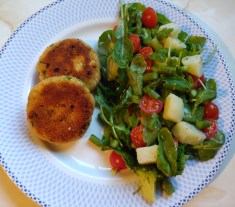
Tuna Fishcakes.

IMG_20190705_184903

As a Brit, I adore a good fishcake and these tuna ones are light, fresh and delicious! They are the perfect quick lunch or brunch bite for the summer and are a delight alongside my garden salad (for this recipe, click here).

Time:

Preparation- 5 minutes

Cooking- 6-7 minutes

Total= 12 minutes

Serves: 1 (makes 2 fishcakes)

Ingredients:

1/2 tin of tuna chunks in spring water (about 70 grams)

1 x medium egg

1 x spring onion

1-2 x tablespoons of golden breadcrumbs + extra for coating

Mixed herbs

Salt and pepper for seasoning

About 1 x tablespoon extra-virgin olive oil


Instructions:

  1. Open and drain the tin of tuna and flake with a fork. Add about half a tin to a small bowl (it doesn’t really matter on the size of the tin- the fishcakes will just be a little bigger/ smaller).
  2. Crack the egg and add into the mixing bowl with the tuna.
  3. Finely chop the spring onion and add to the bowl also. Season with a good crack of salt and black pepper and mix well to combine.
  4. Gradually add in enough golden breadcrumbs to just bind the mixture- it should be a tablespoon or two, but make sure you don’t add too much and make the mixture too dry as it still needs to be a little sticky for coating.
  5. Tip some more breadcrumbs onto a small plate. Shape the tuna mixture into two round patties and lightly coat in additional breadcrumbs.
  6. Heat the oil in a non-stick frying pan on a medium heat. Add the fishcakes and fry for about 3 minutes a side or until golden brown.
  7. Serve with a garden salad, homemade potato salad or wedges.


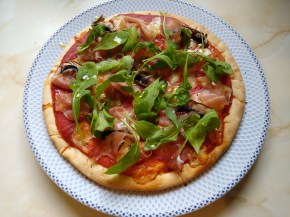
Rocket, Parma Ham, Mushroom and Mozzarella Pizza.

IMG_20190708_123948.jpg

Who doesn’t love a good pizza? This simple Italian classic is fast and easy to make and, of course, it’s delicious. It also has the added benefit of being dairy free and it can be made gluten-free as well- perfect for Crohnies!

Time:

Preparation- 5- 10 minutes

Cooking- 10 minutes

Total= 15- 20 minutes

Serves: 1-2 (A whole pizza can be eaten as a complete meal, or can be split between two people and served with an Italian-style side salad)

Ingredients:

1 x Napolina large pizza base (or a gluten-free alternative like the Bfree pizza base- adapt cooking time based on packet instructions if using a different base)

2-3 x tablespoons passata/ homemade tomato sauce

1/4- 1/2 a pack of lactose-free mozzarella

1 x small handful of grated lactose-free mature cheddar

2 x chestnut mushrooms (you can leave these off if you aren’t a mushroom fan, or if you have a stoma and can’t eat them)

2 x slices Parma ham

1 x handful of fresh rocket (arugula)

Italian herb mix

Black pepper for seasoning

Extra virgin olive oil


Instructions:

  1. Pre-heat the oven to 190 degrees, or 180 if using a fan oven.
  2. Place the pizza base on a large baking tray and brush lightly with olive oil.
  3. Use the back of a spoon to spread the passata/ tomato sauce over the base, leaving about a 1cm rim around the edge.
  4. Thinly slice the mozzarella and add to the pizza. Use enough to cover the surface with small gaps in between. This is partly down to how cheesy you like your pizza, so feel free to adapt the quantity as desired.
  5. Slice the mushrooms and distribute evenly. Then finely grate some cheddar over the whole pizza- this adds a lovely extra level of saltiness and I adore the flavour it gives in combination with the mozzarella.
  6. Season with black pepper (you don’t need extra salt as the cheese and Parma ham are salty enough). Sprinkle with Italian herbs.
  7. Bake on the middle shelf for 10 minutes until the cheese is oozy and golden.
  8. Once your pizza is cooked, remove it from the oven. Gently tear the slices of Parma ham and place on top between the mushrooms. Top with rocket and a good drizzle of olive oil. Slice up and enjoy!


Recipe adaption: This recipe can be adapted so easily as the Margarita base works brilliantly with any toppings; whether that be a meat lover’s feast, a vegetarian delight or classic combinations like ham and pineapple. It’s also a great way to use up any leftover veggies or meats. Another one of my personal favourites is my “everything but the kitchen sink” pizza which has cooked chicken, mortadella (or Porchetta), ham, mushrooms, asparagus, sharp cheddar and cherry tomatoes.


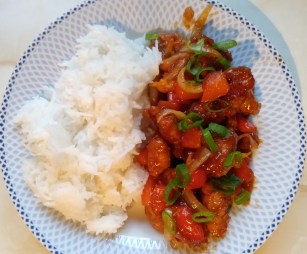
Sweet and Sour Chicken.

IMG_20190416_191319x2

I always used to love Chinese food, especially Hong Kong style sweet and sour chicken, but for years I just assumed I could no longer eat it after being diagnosed with Crohn’s. This was mainly because of the sauce which frequently contains pineapple juice or apple juice- neither of which my stomach can tolerate. So, imagine my delight when last year I discovered that I could make this beloved dish without either of these! It turns out that with a clever concoction of store cupboard staples and existing condiments, you can replicate that beautifully tangy and silky sweet sauce.


Time:

Preparation- 20-25 minutes

Cooking- 15-20 minutes

Total= 35-45 minutes

Serves: 2

Ingredients:

For the chicken-

1 x large chicken breast

1 x tablespoon light soy sauce (or a gluten-free alternative)

1 x egg white

1 x tablespoon Shaoxing rice wine

1-2 x tablespoons cooking oil

Plain flour for coating (or a gluten-free alternative)

For the sauce-

1/3 of a large red bell pepper

1/2 of a medium yellow onion

1/4 cup caster sugar

1/8 cup white wine vinegar

1 x medium garlic clove

1 x tablespoon light soy sauce (or gluten-free alternative)

1/8 cup tomato ketchup

1 x tablespoon cornflour

2 x tablespoons water

For serving-

A few spring onion tips

White rice (about 2 large handfuls)

Prawn crackers (optional)


Instructions:

  1. Dice the chicken breast into chunks (about 2-3 cm) and place into a large bowl.
  2. Add the soy sauce, the egg white and the rice wine vinegar and mix lightly until combined. Set aside.
  3. Slice the red pepper and the onion into strips for the sauce and chop the spring onion tips for garnish. Set aside.
  4. Rinse the rice in a sieve for a couple of minutes in cold water to remove the starch. Place in large saucepan and boil the kettle.
  5. In a separate bowl, mix the caster sugar, the vinegar, the soy sauce and the ketchup. Crush the garlic clove and add this also. Mix well and set aside.
  6. Gradually add plain flour into the marinating chicken bowl. There should be just enough to coat each piece of chicken. Use your hands to thoroughly cover the chicken in flour and place each piece on a large plate, shaking off any excess flour as you go.
  7. In a final small bowl, mix the cornflour and water. Set aside.
  8. Use the boiled kettle water to put the rice on. I usually use basmati which takes around 10-11 minutes to cook on a light simmer but follow packet instructions depending on the type of rice you choose.
  9. Heat the cooking oil in a very large frying pan (I usually use extra virgin olive oil or sesame oil). Fry the chicken pieces for about 5 minutes each side until golden and crispy. Depending on the size of your pan, you may need to cook the chicken in two batches, so just place the cooked pieces on a clean large plate with kitchen paper to drain off any excess oil in the meantime. Don’t worry about the chicken going cold, it will be added back into the pan in a few minutes.
  10. While the chicken is cooking, heat another frying pan on the stove with a small amount of oil. Add the peppers and onions and fry until just soft- about 2-3 minutes.
  11. Add the pre-made sauce to the vegetable pan and stir gently. Simmer for a couple of minutes.
  12. Gradually stir the cornflour/ water mix into the sauce. Do this in stages as you may not need the whole amount, just keep an eye on the thickness of the sauce- it should be silky enough to coat the veggies. You can always add some water if it gets too thick.
  13. Gradually add the cooked chicken pieces into the veggies/ sauce pan and gently mix until the chicken is well-coated and glossy. Again, do this in stages as you may find that there is a little too much chicken for the sauce quantity. If you like your sweet and sour extra saucy or you want a lush dipping sauce for spring rolls or prawn crackers, you could always double the sauce mixture.
  14. Drain the rice and serve with your beautiful sweet and sour chicken! Top with the chopped fresh spring onion tops for garnish.


Recipe adaption: To make this recipe much quicker (and probably healthier!) you could always skip the whole process of marinating and coating the chicken and stir fry the chicken pieces instead before adding them to the sauce. This would make a simple and lighter sweet and sour dish instead of the Hong Kong style version. It will certainly save you some time and washing up, and it’s equally delicious!

30 Things I’m Tired of Hearing With Crohn’s.

thOENRSWY4

As any Crohn’s or Colitis patient will tell you, our illnesses can be pretty misunderstood and to be honest, I could probably write a thesis about all the annoying or patronising comments I’ve heard over the years to do with my Crohn’s. But for now, I have compiled a list of the 30 most ignorant and irritating. If you yourself have a chronic illness, you will hopefully know exactly what I mean and if you don’t, well consider this a manual of all the things NOT to say to someone with a chronic illness. So, in no particular order, let’s begin!

1. You need to be more positive

I had a friend who thought all my problems would be solved by just “thinking positive”. Though this is a well-meant comment I’m sure, it is entirely unhelpful when we are having a rough patch with our chronic illness. It almost feels like we have no right to be down and that the person saying this is instructing us on how we ought to feel about the situation. No thank you.

2. It’s such a shame that you have that, you were so smart

This was a comment made by grandparents when I was first diagnosed, and it actually really offended me. Number one, its not a “shame” to have a chronic illness. Number two, my brain cells didn’t automatically die when I was diagnosed with Crohn’s and I’m still the same exact person as I was before. And number three, although life is tough, my illness does not necessarily mean that I can’t or won’t achieve my goals. So, kindly don’t patronise me.

3. Oh no, don’t say that

I am usually the kind of Crohnie who plays down their symptoms to make other people feel less uncomfortable or to avoid being seen as the one who always complains. But, on the odd occasion when I actually want to discuss how I feel physically and mentally, I would rather people didn’t respond by saying “oh no, don’t say that” or “you’re breaking my heart” etc. Being honest about how we feel is the only way anyone else has a hope of understanding us. I don’t want to have to filter my emotions to make you feel less awkward. Sorry, but not sorry.

4. I feel so bad for you/ You poor thing/ That sucks

The very last thing someone with a chronic illness wants is your sympathy, it just makes us feel even worse about our situation. Leave the pity at home please.

5. But you look fine

It’s called an invisible illness for a reason people. Just because you can’t see it, doesn’t mean we can’t feel it.

6. Is it contagious?

Why don’t you come closer and find out?

7. At least it’s not cancer/ It could be worse

Another well-meant but entirely unhelpful remark. Is this supposed to make us feel grateful that we have to spend the rest of lives battling with a debilitating illness day-in and day-out? One illness is not comparable with another, we have our own struggles to deal with, thank you.

8. But you were fine yesterday

Another thing people don’t seem to understand about chronic illnesses is how temperamental they are. One day we might be feeling fine, the next we can’t get out of bed. Understand that things are very changeable and that we can’t help that.

9. Just get some rest

Another regular comment from the person who tries to instruct us on how to deal with our condition. As much as I would love a good night’s sleep, I highly doubt that I will wake up in the morning and be cured.

10. I’m sure it will all work out in the end

There is no end. That’s why it’s called a CHRONIC illness.

11. When will you be better? / Will you be okay by March 1st?

Again, the word “better” is relative. We can be “better” than how awful we have been feeling, but not “better” in the sense that we’re suddenly fine. Also, there is really no point in asking us if we can do particular dates or making plans well in advance, we simply cannot know how we will be feeling and we don’t want to disappoint people by making promises we don’t know that we can keep.

12. You’re so flaky

Don’t make us feel bad for having to cancel plans, we feel guilty enough already for continuously letting people down and sad that we have to miss out on so much. If you’re friends with someone with a chronic illness, you need to respect that things can change at the last minute and that we don’t always feel like going out.

13. Have you tried…?

Yes. Next.

14. I have a friend who has that, and they’re fine…

Good for them. Just one problem, they aren’t me. Every chronic illness patient is different, so don’t bother comparing one case to another- it’s pretty futile.

15. I know how you feel

Nope, not even close. Period. If you haven’t heard the following quote before, then you should learn it. “Chronic illness: You don’t get it until you get it”.

16. I’ve come out in sympathy with you

I really hate that phrase. Just because you have a 2-day stomach bug, you’ve got food poisoning or you ate chilli con carne for dinner last night and it didn’t agree with you, it does NOT mean that you can compare yourself to me. A temporary and mild upset tummy that 99.9% of the population will get at some point is hardly “coming out in sympathy” with a Crohn’s patient who suffers from life-limiting symptoms every day for their whole life.

17. You can’t drink alcohol? How do you live?!

Okay, if you are honestly asking me that question, you probably have more problems than I do. Also, considering what I go through on a daily basis, drinking alcohol and getting smashed isn’t really on my list of priorities.

18. You’re so lucky to be so skinny/ You’ve put weight on

Just stop with the weight-related comments. Seriously. IBD patients in particular have little control over our weight. We might put weight on due to life-saving medications like steroids, or we might lose a whole a bunch of weight because of a severe flare. Just be sensitive and don’t highlight the fact, it only makes us feel more self-conscious.

19. You can eat that but not a salad, yeah right!

IBD diets are confusing. Everyone is different and the general “healthy eating” rules no longer apply. In the past I could eat a burger, but if you gave me a salad it would NOT end well. We are food enigmas, get over it and let us do our own thing, we are under no obligation to make sense!

20. Just try some, a tiny bit won’t hurt

That’s where you’re wrong, so, so wrong. I once got knocked out for over 2 weeks by a 10p sized Walker’s sensations crisp because of the flavour. A lot of IBD patients have restricted diets and the stakes of breaking that diet are very high, even putting some people in the hospital. So, if you’ve ever said this to an IBD patient before, let them be and don’t try and coerce them into making themselves even more ill.

21. You’re just choosing to eat those things, it’s not that you can’t

This is actually an argument I used to have with my dad a lot. He didn’t seem to grasp that having Crohn’s isn’t a lifestyle choice. I mean, come on. Define “can’t”. If you mean can I physically put the food into my mouth and swallow without dying, then yes, technically I can eat whatever the heck I want. But it might put me in the hospital or ruin my treatment. To me, putting myself in a significant amount of jeopardy by eating something justifies saying that I “can’t” eat it.

22. Do you want some? (Whilst evidently on a liquid diet)

Now this one is aimed at people who know the person with the chronic illness well and know that they are on a liquid diet. Honestly, the amount of times I have been on a liquid diet for months and then my dad has ignorantly asked me if I want some pasta for dinner. Um, hello!? Yes, of course I want some pasta, but in case you hadn’t realised by now, I CAN’T EAT ANYTHING. It’s called EEN for a reason: EXCLUSIVE enteral nutrition i.e. no food, nil, nada. I would have thought the 2 months of missed mealtimes and the vat of Fresubin in the fridge staring you in the face was clue enough.

23. I’m hungry/ I’m tired/ I have a cold etc.

Maybe I’m just cynical, but I always find myself biting my tongue in public when people spend endless amounts of time whinging over these trivial things. You’re hungry? I haven’t eaten anything for 4 days because the only way I can travel is to starve myself. You’re tired? I haven’t had a full night’s sleep in over 8 months because my Crohn’s is flaring which means I’m in constant pain and have to keep getting up in the night to use the bathroom, plus I suffer from chronic fatigue permanently. You have a cold? Boohoo.

24. I had a blood test this morning and it was so traumatic

I remember one girl who was a particular drama queen who came into school one morning with an obnoxiously large plaster on her arm which she waved about for a good few hours shouting about how painful and traumatic her blood test was just to get attention. That brought her total “traumatic” experience count to 1, mine to 1000000000. And that doesn’t include colonoscopies, scans, EUAs or surgeries. Enough said.

25. You’re too young to have arthritis

Newsflash! There isn’t an age limit on chronic illness. I first started to suffer with enteropathic arthritis when I was about 15/16 years old and I don’t need you to verify that.

26. Why are you always so pale? You should go out in the sun more

To answer your question, I have iron-deficiency anaemia. And no, I most definitely should not go out in the sun more unless I want to get skin cancer from my lack of immunity.

27. You can’t let this take over your life

This one really stung. A district nurse said this to me while I was lying half-dead and unable to move on my sofa after my second fistula surgery while she packed my wounds. I felt like saying: “I’m not letting anything happen. Having a chronic illness isn’t something I let happen to me. It just happened. I have no control. None. Its really hard accepting that I can’t do what other people can, so I would really appreciate it if you didn’t make it sound like it was my fault.”

28. It’s all in your head

No, actually it’s in my oesophagus, my stomach, my small bowel, my colon and my rectum.

29. You’re so brave and inspiring

People like to think they are paying you a compliment when they say things like this, but honestly it doesn’t feel that way. It’s not like people with an illness have any say in the matter; we have to fight. We have to go on no matter how bad things get because what other option is there? Plus, chronic illness is not something to be glorified, believe me it’s not a glamorous daily life, and building us up like this makes us feel inadequate when we are having a down day and it all gets too much.

30. “WE”/ “US”/ “OUR”

To conclude, I would just like to warn anyone who is supporting someone with a chronic illness about using plural pronouns. It’s not “our” appointment, it’s mine. It’s not that “we” struggle on a daily basis, it’s that I do. I get that you’re trying to be supportive and make me feel less alone, but please don’t try and lump us both into one category. I’m sick and you’re not. To me, that’s as bad as a man saying: “last week we had the baby”. Unless he went into labour and gave birth too, then there was no “we” involved.

Trauma, Recovery and The End of The Treatment Road.

fingers_crossed

After fistula surgery

That week I spent in hospital after my second fistula surgery was awful. Really awful. I had never stayed solely on a surgical ward before and it honestly felt like a bit of a looney bin. I mean, I can’t blame the other women, being cooped up in a room with no windows 24/7 and being given less than adequate support from the doctors does make you go temporarily mad. I for one was certainly losing my patience. After my surgery, the doctors came to do their rounds and naturally, I thought this would be the time that I would learn what was actually done to me whilst I was under. I thought wrong. All I learned was that doctors who get little sleep and have to do 9am rounds on a Monday morning are nothing short of cranky and are less than enthusiastic to answer any of their patients’ questions. In fact, these doctors didn’t even seem sure themselves about what was done to me and I was left completely in the dark and anxious about what on earth to expect once my bandages had been removed.

Then I was told that my wounds would need “packing” every day for several months, something that hadn’t even been mentioned as a possibility to me before surgery. I wasn’t even sure what “packing” meant! (In case you aren’t either, it’s when wounds are filled with gauze or similar materials to prevent them from healing too quickly. My wounds were about 10-12 cm deep and had to heal from the inside first so needed to be kept open.) Then, just to put the cherry on the cupcake, I was told that my GP couldn’t do the packing, and that I would have to come to London every day to have it changed. WHAT?! “I literally live 2 hours away”, I explained. Plus, I was so ill by this point I could barely move, and I certainly couldn’t leave my house! When my mum asked if they could refer me to a hospital closer to me (though it still seemed impossible for me to get there), they simply refused.

Then I asked the nurse to kindly remove my bandages in case I needed the toilet. She told me that she would get around to it, but that she was concerned that after a day and a half I still hadn’t used the bathroom. She said that the surgeons had put a “pack” inside my bum (sorry for that image…) during the surgery which should have come out “naturally” by now- if you catch my drift. But when I finally got the urge to go to the loo, she hadn’t yet removed the bandages and, in a desperate panic, I then had to rip them off myself (OUCH) and navigate my completely destroyed rear end. It was actually a pretty distressing experience as I couldn’t see anything (obviously, I can’t turn my head 180 degrees like an owl and see down there). I just had to feel with my hands the bomb site that was my bum. After my last fistula surgery (which I was told this one would be remarkably similar to), I simply woke up with one small open wound of around 3 cm and a seton covered with some bandages as expected.

But not this time. Underneath all the bandages, there felt like 2/3 massive cotton packs (like the size of two fingers together) sticking straight out of several deep wounds and there was blood everywhere. I felt physically sick. Somehow I managed to find my way to the loo and was even more worried when I realised that nothing (other than what you’d expect!) had come out. Where was this “pack” that I was told about? After pulling myself together, make-shifting a new bandage and vacating the loo for someone else to use (also ridiculous that there was only ONE to share between about 8 beds!), I called another nurse over and told her that nothing had come out and that I was really worried about the wounds. She told me that there was no “pack” in the first place. Then I asked if the seton that I had already was still in place or if they’d removed it during this surgery and she said she didn’t know! Even the ward doctors were shady when I asked. It seemed like nobody actually knew what was going on. At all. No one seemed to fancy filling me in anyway.

And to add to all this confusion and distress, I was in a shocking amount of pain. I was being given morphine but this made me so sick that I couldn’t stomach anything- probably just as well because (yet again) the hospital failed to offer me food that my Crohn’s could tolerate. I had to rely on my parents coming to visit me daily and bringing me a sandwich like my last hospital stay. Despite the pain, all I wanted to do was go home. No one was helping me here and I felt so alone. Every time I asked a question I either got no concrete answer or just a rude stare as if I had no right to be asking in the first place. I was so frustrated, and I wasn’t the only one. A lot of the other patients were having similar issues with these doctors- the girl in the bed next to me was fighting to have her appendix removed after getting appendicitis 3 times in one year and someone else got told by one of the nurses to “man up” and stop crying over her tonsillitis. The atmosphere was mental; people arguing or screaming or crying left, right and centre!

As for me, I finally reached breaking point one afternoon when a nurse said she had to change my “packing”. This was supposed to be done by the ward doctors, but as usual, after waiting several hours for them to come and see me, they said that it wasn’t their job and didn’t help me. I was then terrified when the nurse who came to do it openly admitted that she had never done this before and had no idea what she was doing. Could this get any worse? Apparently YES. I asked her if this was going to hurt and she just had “I have no idea.” Great. Now, us Crohnies have a high tolerance for pain, but my god. Having this clueless woman yanking out the packing from my 10-12cm deep wounds was easily the most painful thing I have ever experienced. I was clinging onto the side of my hospital bed for dear life and clenching my teeth while my eyes streamed with tears. Then she had to “lightly rinse” the wounds out- which consisted of giving me a full-on shower in my bed with a hose, before noticing that there was some string coming out of my bum. She didn’t bother to ask me about this and started yanking on it, claiming that she was sure it was attached to the “pack” that they had put inside me during surgery. But when it didn’t come out and was AGONISINGLY painful, I quickly concluded that she was playing tug of war with my seton! I screamed for her to stop and she just shrugged it off before ramming some even thicker packing back into all the wounds with a pair of industrial looking metal plyers and taping it all back together with more bandages.

By the time this was over the bed was soaked and covered in blood (as was I) and I was so traumatised I could barely move. I just about kept it together until she left, but then I realised that I would have to go through that EVERY DAY indefinitely and I broke down when my parents came back in. I honestly didn’t think I could handle that ever again, let alone every day. Plus, the bigger picture just got on top of me in that intense moment. I couldn’t believe how long it had been since I woke up feeling anything other than absolutely dreadful. I couldn’t believe how bad things had gotten in this flare up. I couldn’t believe that after almost 7 months I had made no progress in getting my life back, that I’d just tripled my list of debilitating issues.

I just wanted to be alone, so my parents went to get something to eat for a bit. I had just calmed down from the point of being absolutely hysterical to just being very upset when a male nurse who I hadn’t seen before (and who had evidently eavesdropped my entire meltdown) decided that this would be a good time to come and preach to me about Christianity. He said that if I only let God suffer the pain for me then everything would be hunky-dory. Don’t get me wrong, I have nothing against Christianity, or any religion for that matter, nor their followers. But there is a time and a place, and this was NOT it. So, after being accosted by him who set me off crying again, I just laid in bed helpless and in agonising pain wondering what the point of all this was.

Luckily, the next day my real saviour came to the rescue! A new doctor had been assigned to the surgical ward and he honestly saved me. First of all, he single-handedly got in touch with my surgeon to tell me exactly what I’d had done. Then, he wrote a referral letter for my local district nurses stating that they should come and see me at home to change the packing daily because I was bedridden. Then, he offered to change the packing PROPERLY to try and help me get over any anxiety I had about that. And rest assured, although it was still a far from pleasant experience, having him change it was bearable at least. So, that night I was discharged and after the bumpiest car ride from hell (I had to lie precariously across the back seats of my dad’s car with various seatbelts digging into me because there was absolutely no way that I could sit down), I finally made it home; exhausted, in pain and emotionally drained.

Recovering at home

The next few weeks were not much better. After realising that what had actually been done was that I’d had the fistula tracks “laid open”, something I was told wouldn’t be done because of the risk of incontinence, it quickly became apparent that that prospect was very real. I had no control. Zero. Whereas before I was running to the loo 20+ times a day which was bad enough, now I couldn’t make it. I couldn’t even tell when I needed it, it just kind of happened. One more worry to add to the list. Would I be like this forever? How could I live like that? It was totally humiliating even though I never left the house. I now had the bowel of a 90-year-old (and very sick) woman. I frantically googled to see if anyone else had experienced this and some people said that it may wear off soon, so I had to hang on to that hope. But that didn’t make daily life any easier. I was still in a lot of pain and I could no longer take the pain medicine given to me in hospital, so I spent weeks literally not moving from the downstairs sofa because of the pain. My mum tried to make me eat the odd scrambled egg or toasted sandwich, but my weight and appetite had plummeted even further. I just laid there, day-in day-out waiting for the only social interaction I had: the district nurses. They came at a different time every day and the nurses themselves varied. There were some nice ones and some not-so-gentle ones, but nothing could ever be as bad as the nurse at the hospital, and slowly the packing changes became a little less painful as the wounds started to heal.

The end of the treatment road

This went on for about 2 months, all the while I was worrying about what on earth we were going to do about treatment- though I knew nothing could be done until I was in a better state after the surgery. Eventually, I was called for my surgical follow up back in London to discuss exactly that. I knew that there was only one other medicine that I hadn’t tried: Vedolizumab. But I had researched the drug extensively and knew of its limited success, its side effects and that it could take over 14 weeks for it to show an effect, if it was even going to have one that is. I also knew that my prognosis was bad and having failed so many drugs consecutively by now, it was unlikely that this one would work. My doctors confirmed my suspicions and shared my confusion about what the next step was. After a little more time of reflection, I was told that I essentially had two options.

The first was another dreaded clinical trial (in case you haven’t read my previous articles about that, it didn’t go too well!) It would not only be a commitment of several years, but also incredibly dangerous. It would involve chemotherapy, stem cell harvesting and transplantation as well as blood transfusions and the “re-setting” of my immune system entirely. People had died in the original study a few years back and neither my doctors nor I were sure if my body could make it through all that, especially in the sorry state I was in after this devastating flare up. Not to mention the fact that it was double-blind, meaning I may go through all the trauma of cancer treatment for no clinical benefit whatsoever. And who’s to say that this would even work? It was such unknown territory that I knew from the moment they brought it up that I couldn’t do it. What’s more, I was absolutely desperate to go back to university in 2020, that was my very last chance before my degree was scrapped.

So, that brings us to option two (if you could call it that). Surgery. Major, irreversible surgery. One of my consultants initially suggested a resection of one of the several awful strictures I have, but things were so bad and well-spread that after one meeting with a colorectal surgeon, it became clear that doing this alone would be a complete waste of time and wouldn’t really solve anything. My entire colon and rectum were pretty much unsalvageable, and a good chunk of my small bowel needed removing. A total pan proctocolectomy was my only real option. But even though this was the opinion of the surgeon, my IBD team were still hesitant to put me through this at my age (I am just 20 years old). They were also concerned about the fact that even the most extensive surgery possible wouldn’t solve everything- I still had issues in my stomach and oesophagus when I was diagnosed and who’s to say that the disease wouldn’t return with a vengeance in the rest of my small bowel? But frankly, I am out of options. After years of fearing the end of the treatment road, I had finally got there. This surgery is my only real shot at getting my life back. I can’t carry on how I am, so I have to take it. And that’s pretty much where I’m at now. I have been on a liquid diet (again, yawn) for over two months now and its not going well at all. My IBD team thought that putting me back on EEN would buy everyone some time (as has been standard procedure over the years), but even that, the solution that always worked for me, is not cutting it anymore- yet more proof that something drastic needs to be done.

So, as it stands right now, I am really trying to boost my nutrition as much as possible before surgery by drinking as many bottles of Fresubin as humanly possible in attempt to counteract my symptoms. It’s September 22nd and I was told that because my case was relatively urgent, my surgery should take place between September and October. I got a call a few weeks ago about my pre-op assessment, which was supposed to take place 3 days ago. But as usual, I felt entirely let down when they cancelled it out of the blue and postponed it for 3 weeks. Despite our best efforts, we have only managed to bring this forward by 6 days through scavenging for a cancellation. So, like always I am waiting, waiting for something to happen.

Looking forward

Usually, this would be where I write my “looking back” section, where I reflect on what has passed. But as this is such a momentous time in my life, I feel it is only suitable to look forward. Since 2011, I have battled day and night with my Crohn’s. I got some respite here and there, but I never achieved the true “remission” that I always heard other people talking about. I just haven’t seemed to find something that just works for me. Perhaps the surgery is it. I wouldn’t be human if I said I wasn’t nervous, after all one of my biggest fears growing up was surgery- I definitely didn’t anticipate having half my insides removed! But it has got to the point which I am sure some of you Crohnies will recognise where I don’t care anymore. I am tired of feeling awful, I am tired of having my life dictated by my illness- what’s left of it anyway. So, if undergoing this major surgery and taking months to recover is my only chance at some shred of a life resembling normality, then I’ll take it.

I’m not naïve, I know how hard the surgery will be and how much pain I’ll be in and that after everything it still wont “cure” me. But if I even get a few months of feeling reasonable before some problems return then that’s something. At the very least, I hope that my flare symptoms will be much easier to manage with an ileostomy and stoma bag, even if I have to adjust my routine, my diet and my activity to suit it. But even though I don’t want to be ignorant to the risk of recurrence (or just the risk that whatever else is already elsewhere causes me issues), despite everything that’s happened to me I still hold on to the hope that maybe, just maybe I’ll get my life back. That maybe I’ll be able to return to university and finish my degree, even if all my friends have graduated by then. That maybe I’ll be able to eat normal food, even if this is limited. That maybe, I’ll be happy again, even for a short while.

Fingers crossed.

A Definitive Guide to Abdominal MRI Scans for IBD.

mri

If you’ve never had an MRI before and you’ve been referred for one all of a sudden, it can seem like a daunting prospect. However, an MRI provides incredibly useful imagery for your doctors about the extent and location of your disease as well as highlighting other issues such as strictures or abscesses. It is also probably the least invasive procedure for investigating Crohn’s and Colitis- other than stool samples of course! Once you’ve had one, any worries you had will hopefully be laid to rest but, as a helping hand, here is my guide to preparing for and undergoing an MRI of your abdomen.

Preparation

Some kinds of MRI such as scans of the pelvis require very little preparation. Having an abdominal scan however is a little more complex. In the context of IBD, abdominal scans primarily investigate the small/ large bowel. It is therefore necessary to fast (no food OR fluids) for usually around 6 hours before the scan so that a clear image can be taken. This means that you should aim to take your normal medication before this deadline.

When you arrive at the hospital you will be asked to fill out a consent form (if you haven’t already been given one or received one by post). This is a fairly short and simple document which will ask you a series of yes/no questions about your health such as if you’ve had recent surgery, if you have any metal implants or if you could be pregnant. These are just routine questions to ensure that it is safe for you have to have the scan. The form will likely also ask if you consent to being given a dye injection, usually given in the last 10-15 minutes of the scan. This dye is harmless and simply ensure that the clearest image possible is taken.

Once you have signed the consent form, you will be taken to the patient waiting room. Here you will be given some lactulose to drink along with between 0.5- 1 litre of water. So, as this is an honest guide, I have to declare that the lactulose is absolutely vile. I would definitely recommend the hold-the-nose trick to get that down. Luckily there is only one small plastic cup of the stuff- but whatever you do, do NOT try and down it in one! It will probably come back up and then you’ll have to start over, and nobody wants that. I usually get it down in around three- four large gulps.

One thing I cannot stress enough for people with confirmed or suspected IBD is that the lactulose is mixed with lemon juice when they give it to you (at least at my hospital it is). For me, lemon is an absolute no-go as it royally messes up my system. The doctors always warn you that the lactulose will give you the runs- that’s kind of the idea; to empty your bowels. But what I found out a couple of years ago is that it was actually largely the lemon having that effect! The first time I had the scan and asked for the lactulose without the lemon mixed in, I barely went to the loo at all afterwards! I was shocked! So, if you always get awful diarrhoea after an abdominal MRI or you know you are sensitive to lemon, it is absolutely worth asking your hospital if they use it and if they do, you can easily request it without.

Anyway, so after polishing off the lactulose, you will then have to drink a whole bunch of water to inflate your stomach for the scan. I would recommend brining some lightly coloured squash with you to mix with the water- I’ve never had any issues doing this and it gets rid of the taste of the disgusting lactulose at least! Once you’ve finished drinking (you’ll have around 40 minutes to do this), you will be taken to the dressing rooms and asked to change into a hospital gown and remove anything containing metal i.e. jewellery, watches. Some staff are nice enough that if you are wearing a vest top, jumper or some leggings without any traces of metal, they will allow you to wear it under the gown for some extra comfort.

Once you’re dressed, definitely take this time to use the loo while you have the chance! You will be given a bag to put your belongings and clothes in and these will be taken with you and left just outside the scan room, so you can rest easy knowing they are safe. Then you will be taken to get a canula fitted where you will also be given a wristband with your name and hospital number.

Procedure

From here you will be taken to the scan room. If you are over 18 you will likely be going it alone. You’re allowed to bring someone with you regardless of your age though, and this can be particularly useful if you are anxious or if you get claustrophobic. The same clothing/ no metal rules apply to whoever is going in with you though, even though they will be watching the scan from behind the glass screen with the doctors. Sometimes a sedative can also be given to calm particularly nervous patients before the scan, so speak to a doctor if you think you will need this.

Once in the scanning room you will be asked to lie face down on the scanning bed, usually with your arms above your head. The scanner looks pretty big and intimidating at first- kind of like an igloo I suppose. But once you’re lying down your nerves should settle. You will be given headphones to protect your ears from the noisy machine (seriously, it is REALLY loud in there!) and so that the doctors can give you breathing instructions during the scan. Some equipment will then be placed on your back and a buzzer will be placed in one of your hands in case you need assistance at any point. Then the external door will be sealed, and you will be moved into the centre of the scanner.

The scan should last around 40-odd minutes and don’t be alarmed by the banging/ clanking sounds! That isn’t a malfunction or a sign that the machine is about to blow up, as I said above the scanners are just very loud and tuneful! If you still feel a little nervous, just try and focus on the breathing instructions given via the headphones- its nothing too complicated, just holding your breath for 10-20 seconds to get a nice clear picture.

Now, one thing I have to say is that your arms will probably go numb at one point. 40 minutes is a long time and your arms are usually suspended above your head and on top of several cushions. I would just recommend trying to subtly move them to regain circulation if this happens! Then in the last 10 minutes or so of your scan, a doctor will come in and give you the dye injections you previously consented to through your canula. You may also be given another injection of Buscopan, an agent which will relax your abdomen even more in addition to the lactulose you drank earlier. You may get a little dizzy for a couple of minutes after these injections, but it fades quickly.

After the procedure

So that’s it really! After the scan, you will be lowered out of the machine and your canula will be removed by one of the doctors before you are allowed to go and get dressed again. It is not recommended that you drive after the scan, so either arrange for someone to come with you or hang around in the hospital for a bit. I generally do this as a precaution anyway as you will likely need the loo… a lot. Try not to eat anything which will aggravate the problem either, I usually stick to plain foods for at least the rest of the day to try and settle my stomach. It’s also natural to feel very bloated after drinking all that water on an empty stomach, but this should settle the next day. Usually the effects of the lactulose completely wear off in around 2-3 days after the scan, but this may vary depending on whether you are ill or in remission. The results should be sent to your IBD doctor and you should receive them in a week or two.

Extra tips

  • I would advise bringing some spare underwear with you for after the scan- just in case!
  • Wear clothes that are not too tight, you’ll be very bloated and uncomfortable for a while afterwards and your tummy will be tender- wearing paint-on jeans certainly won’t help!
  • Also, don’t bother wearing any jewellery as you will just have to remove it and it can be a pain finding somewhere to put it without it getting lost amongst your other belongings
  • If you get any say in when you would like your appointment to be, always opt for the earliest morning slot available, that way you won’t have to make a concerted effort to fast beforehand as the work will be done over night while you’re asleep 😊
  • Some doctors allow you to listen to music during the scan via the headphones they provide, so if your doctor seems nice you may as well ask! I have listened to anything from 80s playlists to the UK top 40 during scans in the past!
  • If you get cold easily or you know that your scan will be done in a mobile unit rather than an actual hospital department, make sure you wear or bring leggings/ a top or jumper without any metal to wear under your gown- the mobile units are FREEZING.
  • Make sure you wear/ bring socks as you may have to walk around bare foot otherwise (ew…)
  • And of course, don’t forget to bring some squash or something to flavour your lactulose and water- it really helps!
Design a site like this with WordPress.com
Get started